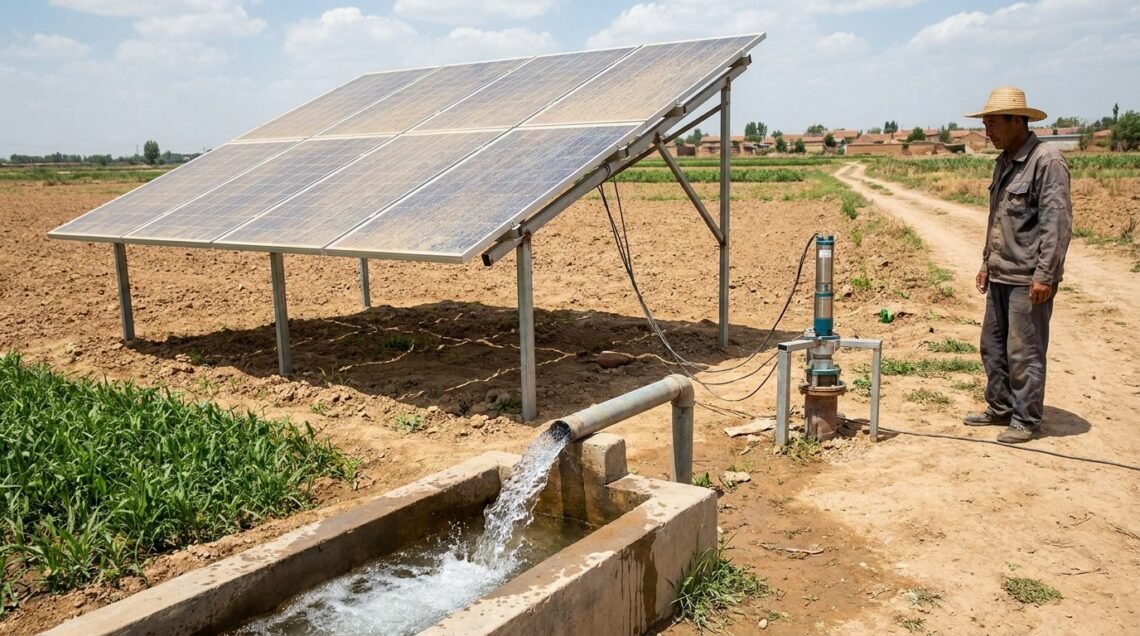
So, you’re wondering how solar water pumps work? Simply put, they use the sun’s energy to pump water. Instead of relying on grid electricity or diesel, a solar panel converts sunlight into electricity, which then powers a motor connected to a pump. This setup allows you to move water from a well, bore, or other source without ongoing fuel costs or grid dependency. It’s a pretty straightforward concept that’s gaining a lot of traction, especially in places where traditional power sources are scarce or expensive.
Table of Contents
Why Solar Water Pumps Are a Big Deal
Solar water pumps are more than just a neat invention; they’re becoming a crucial tool for a lot of people. Think about farmers in remote areas who need to irrigate their crops but don’t have access to reliable electricity. Or communities needing clean drinking water without the expense and hassle of running a diesel generator. These pumps offer a practical, sustainable, and increasingly affordable solution to a fundamental need: water.
Bypassing Traditional Power Challenges
One of the biggest advantages is getting around the limitations of traditional power sources. If you’re off-grid, running a power line can be incredibly expensive, and diesel generators come with their own set of fuel costs, maintenance, and noise pollution. Solar pumps cut out all those headaches.
Economic and Environmental Benefits
From an economic standpoint, once you’ve paid for the initial setup, the “fuel” (sunlight) is free. This means significant savings over the long term, especially compared to rising fuel prices. Environmentally, they produce zero emissions during operation, which is a big win for sustainability.
For those interested in understanding the broader context of solar technologies, the article on how to size an off-grid solar system provides valuable insights. It complements the information found in “Solar Water Pumps Explained” by detailing the essential considerations for designing an efficient solar setup. You can read more about it here: How to Size an Off-Grid Solar System. This resource is particularly useful for anyone looking to optimize their energy use in conjunction with solar water pumping systems.
How Solar Water Pumps Actually Work
Understanding the basic components helps demystify the whole process. It’s not rocket science, but there are a few key pieces that make it all happen.
The Core Components
At its heart, a solar water pump system consists of a few main parts:
- Solar Panels (PV Modules): These are the workhorses. They convert sunlight directly into direct current (DC) electricity. The size and number of panels depend on how much power you need to generate.
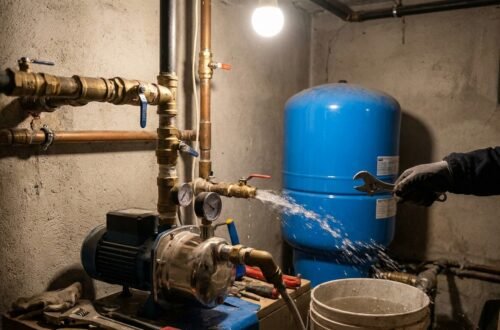
- Pump: This is what actually moves the water. There are different types, like surface pumps for shallow water sources and submersible pumps for deeper wells.
- Motor: The motor is connected to the pump and is powered by the electricity from the solar panels. It can be a DC motor (directly powered by the panels) or an AC motor (which needs an inverter).
- Controller/Inverter: This is a smart bit of kit. If you have a DC pump, the controller manages the power from the panels to the pump. If you have an AC pump, an inverter converts the DC electricity from the panels into alternating current (AC) that the pump motor can use. It also often optimizes the power delivery, ensuring the pump runs efficiently even when sunlight fluctuates.
The Flow of Energy
Here’s a quick breakdown of how the energy moves through the system:
- Sunlight hits the solar panels: The photovoltaic cells in the panels absorb photons from the sun.
- Electricity is generated: This absorption causes electrons to flow, creating a DC electric current.
- Power goes to the controller/inverter: The electricity travels from the panels to the control unit.
- Power is regulated and converted (if needed): The controller ensures the right amount of power goes to the pump and, for AC pumps, converts DC to AC.
- Motor drives the pump: The electric motor gets power and starts turning.
- Water is pumped: The pump, driven by the motor, draws water from its source and moves it to where it’s needed – whether that’s an irrigation system, a storage tank, or a watering trough.
Types of Solar Water Pumps
Not all pumps are created equal. The type you choose depends a lot on your specific needs, like how deep the water is, how much water you need, and what kind of budget you’re working with.
Submersible Pumps
- Where they’re used: These pumps are designed to be fully submerged in the water source – think deep wells, boreholes, or reservoirs.
- Key advantages: They are very efficient at lifting water from significant depths and are often quieter because the motor is underwater. They’re also less prone to cavitation (air bubbles in the pump) issues.
- Considerations: Installation can be more involved, and maintenance requires pulling the pump out of the well. However, recent technological advancements mean they can now access deeper groundwater than before.
Surface Pumps
- Where they’re used: These sit on dry land, above the water source. They’re good for drawing water from shallow wells, rivers, ponds, or tanks where the water level is not too far below the pump.
- Key advantages: Easier to install and maintain since they’re accessible. Generally less expensive for lower head (vertical lift) and flow requirements.
- Considerations: They have limitations on how far they can “suck” water upwards (suction lift). If your water source is very deep, a surface pump won’t work effectively.
DC vs. AC Pumps
This distinction refers to the type of motor powering the pump.
- DC (Direct Current) Pumps: These are typically smaller and run directly off the DC power from the solar panels. They don’t need an inverter, which can simplify the system and reduce costs for smaller setups. Often used in remote areas for basic water needs.
- AC (Alternating Current) Pumps: These are more common for larger pumping applications, requiring more power. Since solar panels produce DC, an inverter is needed to convert it to AC. This adds a component but allows for the use of standard, readily available AC pumps and motors, which can be more powerful and efficient for higher flow rates and depths. The good news is that efficiency and product innovation are constantly advancing, with new patents like Shakti Pumps’ unidirectional solar water pump allowing for grid-tied power generation, further blurring the lines and offering more flexibility.
Applications and Impact
The uses for solar water pumps are incredibly diverse, and their impact is being felt across the globe, especially in developing nations.
Agricultural Irrigation
This is perhaps the most significant application. Farmers can irrigate their fields without relying on expensive diesel or erratic grid electricity. This means more consistent water supply, better crop yields, and greater food security. India, for instance, is seeing a massive push in this area, with programs like PM-KUSUM driving rapid deployment. We’re talking about records being set, like Maharashtra’s 45,911 solar water pump installations in a single month. Companies like Jain Irrigation and Shakti Pumps are landing major contracts for thousands of units, highlighting the scale of this expansion.
Drinking Water Supply
For rural communities, solar pumps can provide a reliable source of clean drinking water, improving health and sanitation. This reduces the time and effort spent collecting water, particularly by women and children, freeing them up for education or other productive activities.
Livestock Watering
Ranchers and herders can use solar pumps to provide water for their animals in remote pastures, reducing the need to move livestock or transport water over long distances.
Fish Farming
Aquaculture operations can benefit from solar pumps for circulating water in ponds or tanks, maintaining water quality and oxygen levels for healthy fish.
Industrial and Commercial Use
While less common than agricultural use, some industrial and commercial sites use solar pumps for specific water transfer needs, particularly where they want to reduce operating costs and their carbon footprint.
Solar water pumps are an innovative solution for sustainable irrigation and water supply, making them increasingly popular among off-grid enthusiasts. If you’re interested in understanding the broader implications of off-grid living, you might find it helpful to explore a related article that discusses the legal aspects of living off the grid. This article provides essential insights into the regulations and laws that can affect your ability to implement solar solutions effectively. For more information, you can read about it here.
The Bigger Picture: Opportunities and Challenges
While solar water pumps offer immense benefits, it’s also important to look at the broader context, including both the exciting opportunities and the critical challenges.
Expanding Markets and Falling Costs
The market for solar water pumps is booming, particularly in regions like India and Africa. This expansion is driven by several factors:
- Falling PV Prices: The cost of solar photovoltaic (PV) panels has dropped dramatically over the years. This makes the initial investment in a solar pump system much more affordable, improving the return on investment.
- Increased Access to Finance: Governments and organizations are increasingly offering subsidies, grants, and financing options to help farmers and communities adopt solar technology.
- Improved Technology: As mentioned, pumps are becoming more efficient, capable of moving more water, and able to access deeper groundwater. This means solar pump solutions are becoming viable for a wider range of applications.
- Major Contracts: The news is filled with major contracts being awarded, like Shakti Pumps’ ₹114.58 crore contract for 4,500 off-grid pumps, showing the confidence and investment flowing into this sector.
Environmental Considerations: Groundwater Concerns
Here’s where we need to be mindful. While solar pumps offer a clean energy solution, their rapid deployment introduces a new set of environmental concerns, particularly around groundwater.
- Increased Extraction: The very efficiency and affordability of solar pumps can lead to increased groundwater extraction. If water is freely available and pumping is essentially free (after the initial investment), there’s a risk of over-pumping.
- Stressed Aquifers: Many regions, especially agricultural areas, already face stressed aquifers due to existing irrigation practices. Adding more efficient, low-cost pumping capacity without proper regulation or monitoring can exacerbate these issues, leading to falling water tables.
- Sustainability: The long-term sustainability of solar-powered irrigation depends on careful management of water resources. This means policies and practices that encourage efficient water use, crop choices appropriate for local water availability, and monitoring of groundwater levels. It’s a critical area that needs attention alongside the rapid deployment.
Future Outlook
Despite the groundwater challenges, the outlook for solar water pumps remains very positive. The technology continues to evolve, becoming more efficient and robust. The drive for sustainable agriculture and energy independence, especially in developing economies, ensures continued growth. The focus will increasingly be on integrating these technologies with smart water management systems and policies to ensure both economic benefits and environmental sustainability. It’s a powerful tool, and like any powerful tool, it needs to be used wisely.
FAQs
What is a solar water pump?
A solar water pump is a device that uses solar energy to pump water from a source, such as a well or a reservoir, to a desired location. It operates using photovoltaic panels to convert sunlight into electricity, which powers the pump.
How does a solar water pump work?
A solar water pump works by using solar panels to generate electricity, which is then used to power the pump. The pump draws water from a source and delivers it to a storage tank or directly to where it is needed, such as for irrigation or livestock watering.
What are the benefits of using a solar water pump?
Using a solar water pump has several benefits, including reduced energy costs, environmental sustainability, and independence from grid electricity. Solar water pumps also require minimal maintenance and can be installed in remote locations where grid power is not available.
What are the different types of solar water pumps?
There are two main types of solar water pumps: submersible and surface. Submersible pumps are installed underwater and are suitable for deep wells, while surface pumps are installed above ground and are used for shallow wells or surface water sources.
What are the considerations for choosing a solar water pump?
When choosing a solar water pump, factors to consider include the water source, water requirements, pump capacity, head height, and solar panel capacity. It is important to select a pump that is suitable for the specific application and location.