Dealing with water pressure when you’re off the grid can feel like a bit of a puzzle. The good news is, it’s definitely solvable with the right approach. You can achieve reliable water pressure in an off-grid home by combining smart pumping technology with effective water storage and distribution methods. Think of it as building your own mini water utility, tailored to your specific needs.
Table of Contents
Understanding the Challenge: Off-Grid Water Pressure
Living off the grid often means you’re not connected to a municipal water supply. This immediately shifts the responsibility for water pressure and supply entirely onto you. Without a central system pushing water into your home, you need to create that pressure yourself, day in and day out. This isn’t just about having a trickle at the tap; it’s about ensuring enough force for showering, running appliances, and general daily use.
The core challenge is consistency. Municipal systems maintain a constant pressure, but off-grid setups can be more dynamic. Reliance on natural sources, power generation limitations, and the need for water storage all play a role in how steady your pressure will be.
For those interested in exploring effective water pressure solutions for off-grid homes, it’s beneficial to also consider the foundational aspects of off-grid living. A related article that provides valuable insights is available at Off-Grid Living for Beginners: Simple Guide. This guide covers essential tips and strategies for establishing a sustainable lifestyle, which can complement your efforts in managing water pressure and other utilities in an off-grid setting.
Solar-Powered Pumping: The Heart of Many Off-Grid Systems
Solar power is almost synonymous with off-grid living, and for good reason. It’s clean, renewable, and increasingly affordable. When it comes to water pressure, solar-powered pumps are a game-changer.
Direct Solar Pumping
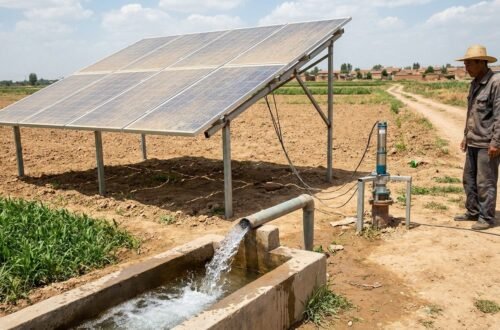
The simplest approach is to directly connect a DC (Direct Current) solar pump to your solar panels. When the sun shines, the pump runs, moving water from your source (like a well or cistern) to your storage.
- How it Works: Panels capture sunlight, generate DC electricity, and power the pump. The more sun, the more water is pumped.
- Pros: Simple setup, low operating costs, environmentally friendly.
- Cons: Pressure and flow are directly dependent on sunlight intensity. This means less water during cloudy periods or at night, unless you have storage.
Smart Solar Pumping Systems
The technology here is evolving rapidly. Manufacturers are integrating smart controllers that optimize the pump’s performance based on available solar power and system needs.
- Grundfos CU 302: This smart controller, recently introduced in places like Australia, is a good example. It offers Bluetooth and Wi-Fi remote monitoring. This means you can keep an eye on your system’s performance from anywhere, ensuring consistent pressure and improving the reliability of your home water system. It helps manage the pump to deliver water as efficiently as possible when solar is available.
- Variable Speed Drives (VSDs): Many modern solar pumps, especially those integrated into booster sets, use VSDs. These allow the pump to adjust its speed based on the actual water demand. This means it doesn’t just run at full blast all the time. It can ramp up when you need more water and slow down when you don’t, saving energy and providing more consistent pressure.
- Xylem’s Lowara Resvari Plus: This European example is a variable-speed booster set designed to deliver constant pressure while adjusting to demand. The goal is to keep pressure steady without wasting energy, leading to lower operating costs. This is a key feature for off-grid living where energy efficiency is paramount.
- Wilo Isar BOOST5: This is a compact boosting system that expands the water-boosting options for homes. Systems like this are crucial for taking a water source and ensuring it reaches your taps with sufficient pressure, often integrating smart controls for efficiency.
The Power of Storage: Tanks and Pressure Vessels
Directly relying on solar power for immediate water pressure can be unreliable. This is where water storage becomes indispensable. Storing water allows you to decouple your water usage from your power generation.
Gravity-Fed Storage Tanks
This is a classic and incredibly reliable method. If you can elevate your water storage tank, gravity will do the work of providing pressure.
- How it Works: You pump water into a tank situated at a higher elevation than your home. The weight of the water creates pressure that pushes it down through your pipes.
- Pros: Extremely simple, no electricity required for pressure, very reliable.
- Cons: Requires a suitable location for an elevated tank, and the pressure is limited by the height difference. A taller tank means higher pressure. You might need a substantial structure to support a large tank.
- Practical Tip: For a typical shower needing around 30-40 PSI (pounds per square inch), you’ll need a tank elevation of roughly 70-90 feet (about 20-30 meters) above your showerhead.
Pressure Tanks (Hydro-Pneumatic Tanks)
These tanks are a bit more sophisticated and are essential for systems that don’t rely solely on gravity or for supplementing gravity-fed systems.
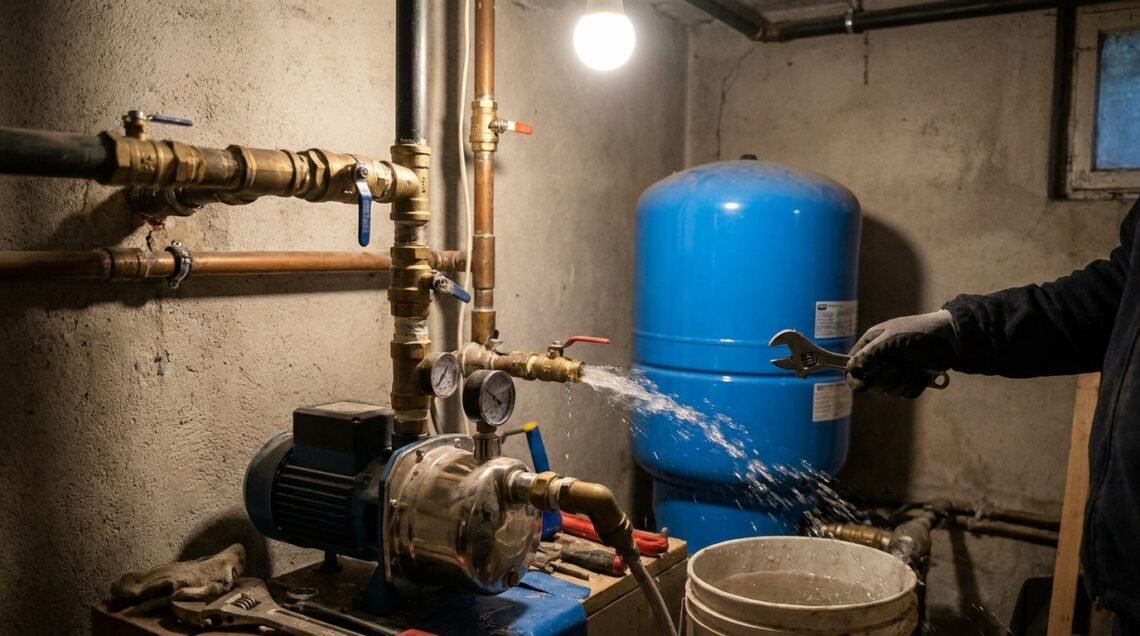
- How they Work: A pressure tank contains water and compressed air. As you use water, water leaves the tank, and the air expands, maintaining pressure. When the pump refills the tank, it compresses the air again.
- Types:
- Bladder Tanks: These have a flexible bladder that holds the water, separating it from the air. This prevents waterlogging of the air and maintains consistent pressure. They are generally more durable.
- Diaphragm Tanks: Similar to bladder tanks, but use a flexible diaphragm to separate water and air.
- Conventional Tanks: These rely on an air charge that can be absorbed by the water over time, requiring periodic air replenishment.
- Role in Off-Grid: Pressure tanks are crucial for smoothing out pressure fluctuations. They can store a reserve of pressurized water, so the pump doesn’t have to kick on for every little bit of water used. This reduces pump cycling, extending its life, and provides a more immediate and stable pressure at the tap.
- Integration: They are often used in conjunction with solar pumps, either storing pressurized water directly or working with a separate pump to maintain pressure in a larger storage tank.
Choosing the Right Pump Type for Off-Grid Reliability
The type of pump you choose is critical. For off-grid applications, you’re looking for efficiency, durability, and the ability to work with your power source.
DC Demand Pumps
These are specifically designed for off-grid use and often run on direct current from solar panels or batteries.
- How they Work: They directly draw water from your source and can be used for both filling storage tanks and sometimes for direct distribution with a pressure tank.
- Popular Choices: Discussions in off-grid communities frequently highlight DC demand pumps as a practical choice for homes needing steadier pressure. They are designed to be efficient and often have built-in controls.
- Considerations: Match the pump’s flow rate and head (the maximum height it can pump water) to your needs and your water source depth.
Jet Pumps (Submersible or Shallow Well)
Jet pumps are common for drawing water from wells.
- Submersible Jet Pumps: These are placed down inside the well, below the water level. They are very efficient for deeper wells.
- Shallow Well Jet Pumps: These are mounted above ground and are suitable for wells with a water level not exceeding about 25 feet (7.6 meters).
- How they Work: They use a jet assembly (an impeller and a venturi) to create suction.
- Off-Grid Use: They can be powered by DC electricity (for smaller systems) or AC electricity from an inverter if you have a battery bank. They are often paired with pressure tanks for consistent delivery.
Submersible Pumps
These are placed entirely underwater in the well.
- Pros: Very efficient for deeper wells, quiet operation, less prone to priming issues.
- Cons: Can be more complex to install and repair as they are submerged.
- Off-Grid Application: Ideal for drawing water from deep wells and can be powered by solar (often with an inverter for AC models or direct DC models). They work well with pressure tanks.
For those exploring sustainable living, understanding water pressure solutions for off-grid homes is essential, especially when considering the overall setup of your living space. A well-designed water system can significantly enhance your daily activities, making them more efficient and enjoyable. If you’re also interested in optimizing your food storage and pantry organization, you might find this article on off-grid pantry setup for beginners particularly helpful, as it complements the water management strategies by ensuring that your food supplies are well-preserved and easily accessible.
The “Pump and Store” Strategy: A Proven Off-Grid Approach
This is one of the most common and effective design trends in off-grid water systems. The principle is simple: capture water when you have power, and use it when you need it, regardless of current power generation.
- How it Works:
- Pump Water: During daylight hours, when solar panels are generating electricity, a solar pump draws water from your source (well, cistern, rainwater harvesting tank).
- Store Water: This water is pumped into a storage tank, often an elevated tank for gravity pressure or a ground-level tank that feeds into a pressure tank system.
- Distribute Water: Later, when you need water, you draw from the storage tank. This can be via gravity (if elevated) or by using a pressure tank and a smaller, more efficient pump to maintain consistent pressure.
- Benefits:
- Maximizes Solar Use: You pump when the sun is out, making the most of your available energy.
- Ensures Availability: You have water even on cloudy days or at night.
- Reduces Pump Cycling: The main pump doesn’t need to run constantly to meet demand.
- Consistent Pressure: When combined with a pressure tank or gravity feed, you get reliable pressure.
- System Design: This often involves a larger primary pump for filling the storage tank and potentially a secondary, smaller pump (or reliance on gravity) to distribute water from the storage tank to the house, usually through a pressure tank.
Advanced Controls and Monitoring: The Future of Off-Grid Water
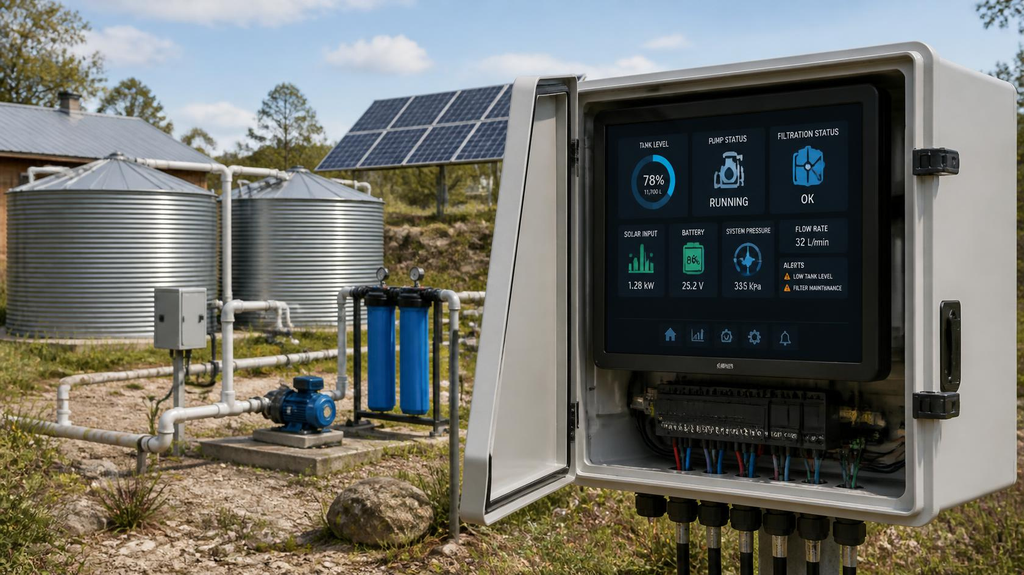
While older off-grid systems might have been simpler, newer technologies are making them much more sophisticated and user-friendly.
Smart Controllers
As mentioned with the Grundfos CU 302, smart controllers are becoming standard.
- What They Do: They monitor system parameters like water levels, pump performance, pressure, and available power. They can optimize pump operation, prevent dry running, and alert you to potential issues.
- Remote Monitoring: Bluetooth and Wi-Fi capabilities allow you to check your system’s status from your phone or computer. This is invaluable for troubleshooting and ensuring your water supply is always functioning as it should.
- Efficiency Boost: These controllers can fine-tune how the pump operates, ensuring it’s not overworking or wasting energy, which is critical when your power source is limited.
Variable Speed Drives (VSDs)
VSDs, often integrated into modern pumps and booster sets, are a significant advancement.
- Constant Pressure: The primary benefit is maintaining a constant, desired pressure. As you turn on more taps or appliances, the VSD senses the drop in pressure and increases the pump speed to compensate. When demand decreases, it slows the pump down.
- Energy Savings: By only using the necessary amount of power to meet demand, VSDs can significantly reduce energy consumption compared to pumps that run at full speed regardless of demand. This is a huge win for off-grid systems where every watt counts.
- Reduced Wear and Tear: Less frequent starting and stopping at full power also reduces stress on the pump motor, potentially extending its lifespan.
Practical Considerations for Your Off-Grid Water System
Beyond the technology, there are practical steps to ensure your system works smoothly.
Water Source Assessment
- Well Depth and Yield: How deep is your well? How much water can it reliably produce (its yield)? This dictates the type and size of pump you’ll need.
- Water Quality: Will you need filtration or treatment? This affects the pump and pipework materials.
- Rainwater Harvesting: If you’re relying on rainwater, what’s your roof catchment area, and what’s your average rainfall? How large does your storage need to be?
Pipe Sizing and Layout
- Friction Loss: Larger diameter pipes have less friction loss, meaning water flows more easily and you maintain more pressure over distance. Undersized pipes can cripple even the most powerful pump.
- Number of Fixtures: Plan your pipe layout to efficiently serve all your water needs.
Battery Storage (Optional but Recommended)
While you can aim for a direct solar-to-pump system, incorporating batteries offers a significant advantage.
- What They Do: Batteries store excess solar energy generated during peak sunlight hours. This stored energy can then be used to power pumps or other household loads when the sun isn’t shining.
- Benefits: Ensures consistent power for pumps, allows for pumping at any time, and provides backup power for other essential household needs.
- Considerations: Battery systems add cost and require maintenance, but they greatly enhance the reliability and flexibility of your off-grid water system.
Maintenance and Monitoring
- Regular Checks: Periodically check your pump, pressure tank, filters, and solar panels.
- Listen to Your System: Unusual noises from the pump can indicate a problem.
- Monitor Pressure: Pay attention to your pressure gauge. Significant drops or fluctuations warrant investigation. Smart controllers can help with this by sending alerts.
By combining a well-chosen pump with effective storage and modern control systems, you can create a robust and reliable water pressure solution for your off-grid home. It’s about making smart choices with the technology available and understanding how to best harness your resources.
FAQs
What are some common water pressure issues in off-grid homes?
Some common water pressure issues in off-grid homes include low water pressure, fluctuating water pressure, and inconsistent water flow.
What are some solutions for improving water pressure in off-grid homes?
Some solutions for improving water pressure in off-grid homes include installing a pressure tank, using a booster pump, and implementing a rainwater harvesting system.
How does a pressure tank help improve water pressure in off-grid homes?
A pressure tank helps improve water pressure in off-grid homes by storing water under pressure, which allows for consistent and steady water flow throughout the home.
What is a booster pump and how does it improve water pressure in off-grid homes?
A booster pump is a device that helps increase water pressure in off-grid homes by actively pumping water to create higher pressure and improve water flow.
What are the benefits of using a rainwater harvesting system to improve water pressure in off-grid homes?
Using a rainwater harvesting system can help improve water pressure in off-grid homes by providing a sustainable and reliable source of water, which can be used to supplement existing water sources and increase overall water pressure.