
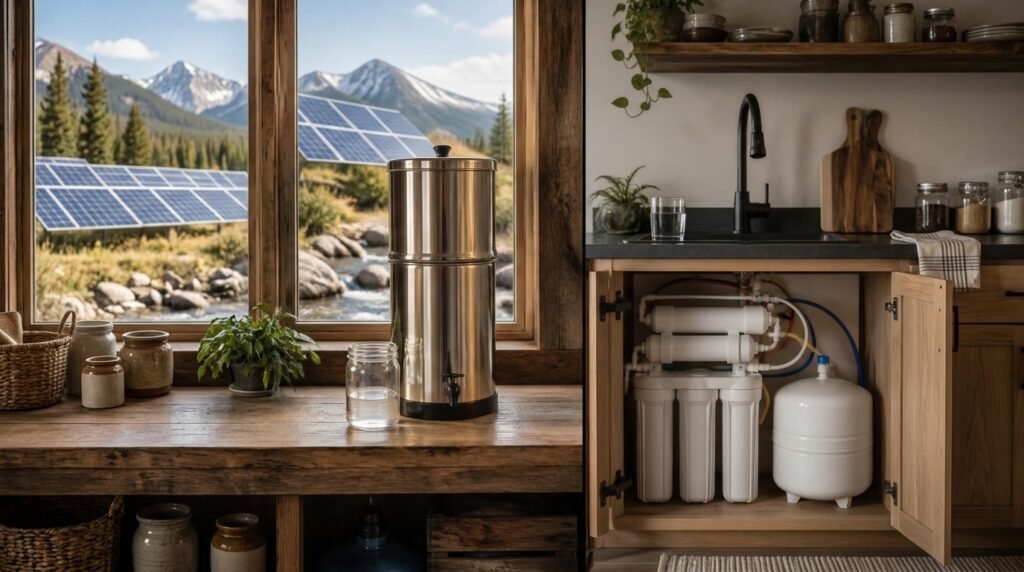
When you’re living off the grid, clean water is a non-negotiable. Berkey vs Reverse Osmosis are the two big contenders for filtering that water. To cut right to it, for most off-grid scenarios, Berkey-style gravity filters are generally the more practical choice because they don’t need electricity, plumbing, or water pressure. RO is fantastic for comprehensive purification, but its requirements often make it less suitable for truly off-grid setups.
Table of Contents
Why Berkey-Style Filters Shine Off-Grid
Berkey filters, and similar gravity-fed systems, really come into their own when you’re away from the municipal grid. Their simplicity is their superpower.
No Power, No Problem
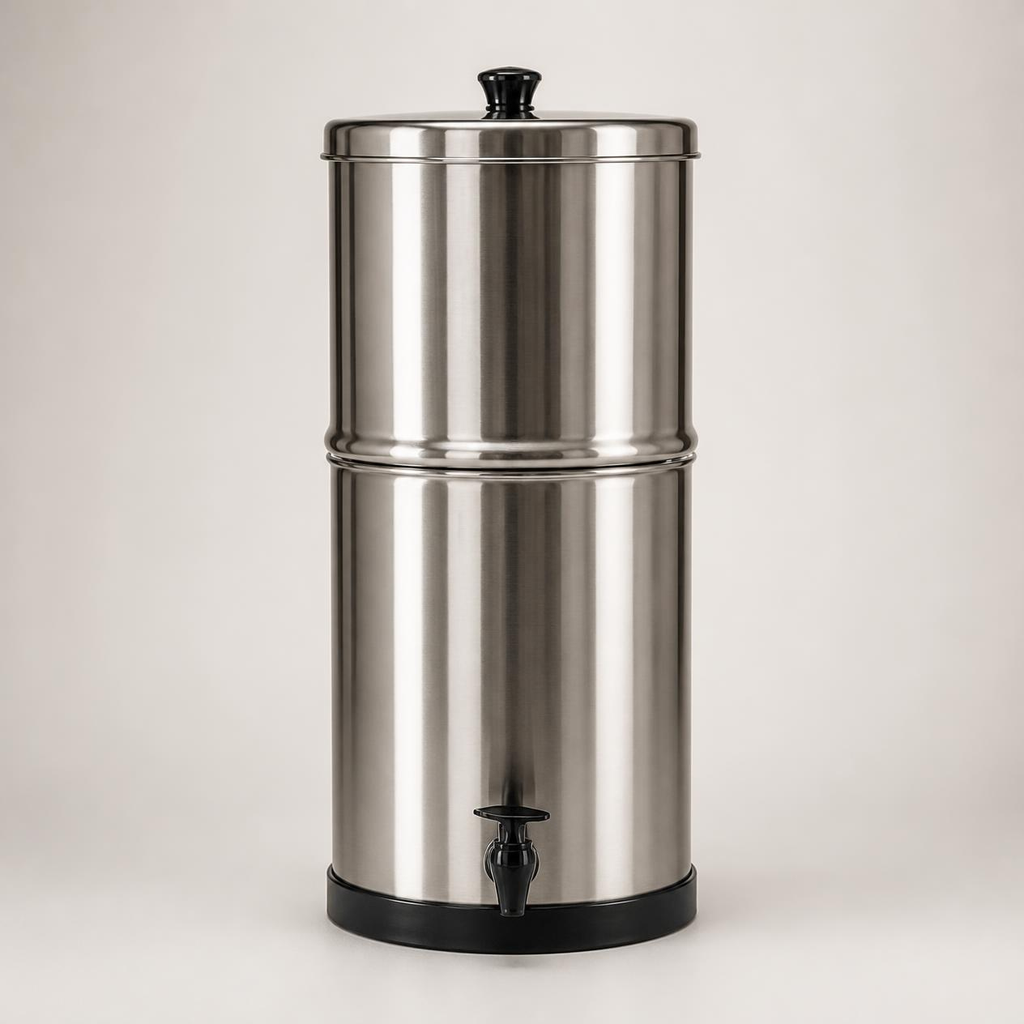
This is probably the biggest selling point for off-grid living. Berkey systems operate purely on gravity. You pour water into the top chamber, and it drips through the filters into the bottom chamber, ready to drink.
- Reliance on Gravity: No pumps, no batteries, no solar panels needed to run the filter itself. This is huge when every watt of power is precious.
- Emergency Preparedness: Because they don’t need power, they’re excellent for emergency kits and situations where power might be out for extended periods.
Portability and Ease of Setup
You can literally pick up a Berkey and move it. This flexibility is a major advantage for cabins, rentals, camping, or even just moving it from your kitchen to your outdoor shower setup.
- Install-Free: There’s no plumbing involved. You just assemble the chambers and filters, and you’re good to go.
- Versatile Placement: They can sit on any sturdy surface, making them adaptable to various living spaces, temporary or permanent.
Cost-Effective Long-Term
While the initial outlay for a Berkey can seem like an investment, the filter lifespan and lack of ongoing utility costs often make them more economical over time for off-grid users.
- Long Filter Life: Berkey filters are known for their extended lifespan, meaning fewer replacements.
- No Water Waste: Unlike RO systems, Berkey filters don’t send any water to a drain, meaning every drop you collect and filter is available for use. This is crucial where water resources are limited.
When considering water purification methods for off-grid living, it’s essential to weigh the benefits of Berkey filters against reverse osmosis systems. Both options have their advantages, but understanding how they fit into a broader off-grid lifestyle is crucial. For those interested in sustainable energy solutions that complement their water purification choices, you might find the article on solar power particularly insightful. It discusses the feasibility of powering an entire house with solar energy, which could enhance your off-grid experience. You can read more about it here: Can Solar Successfully Power an Entire House?.
Understanding Reverse Osmosis Off-Grid
Reverse Osmosis systems are champions of purification, capable of removing a vast array of contaminants. However, their design makes them a tougher fit for many off-grid scenarios.
The Need for Infrastructure
This is where RO systems hit a snag for true off-grid living. They weren’t designed for isolated cabins or temporary camps.
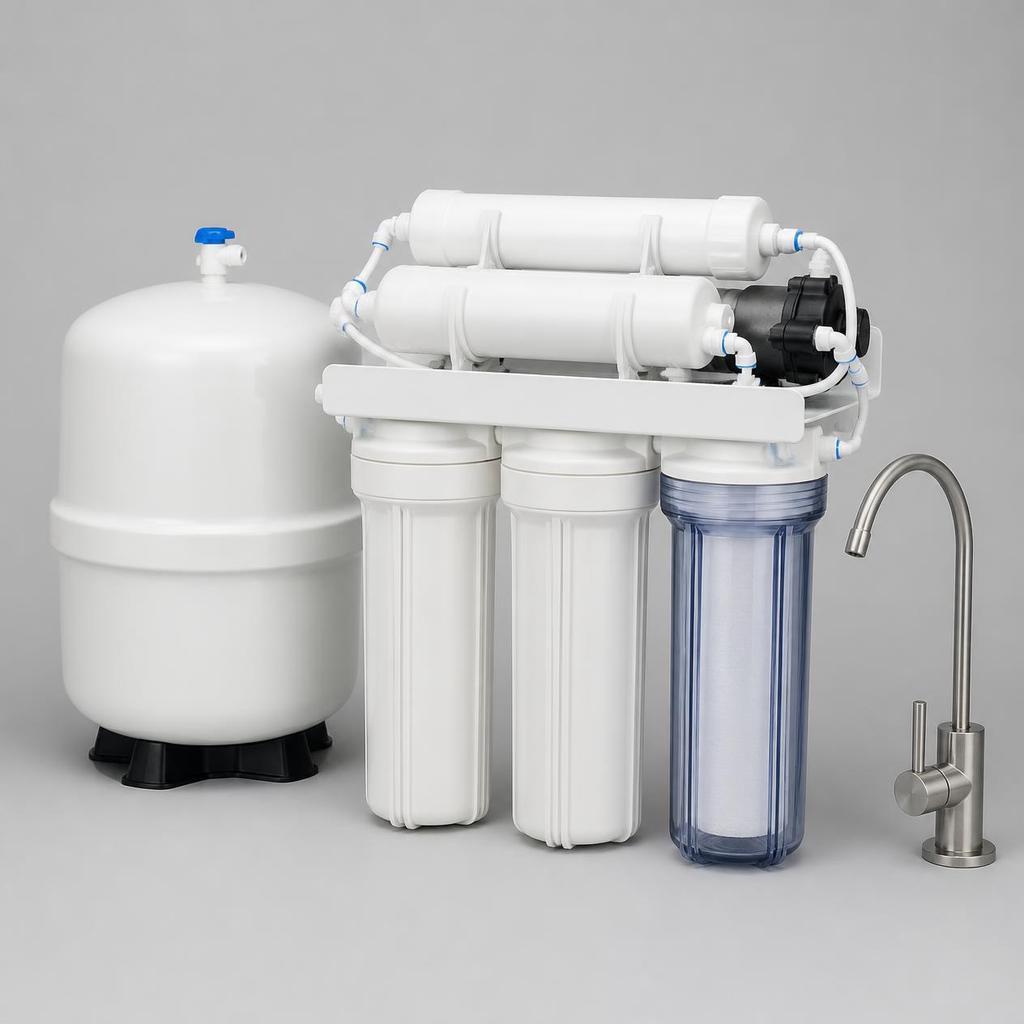
- Electricity Requirement: RO systems typically need electricity to run a pump for adequate water pressure, or they rely on significant incoming water pressure to function efficiently. Without consistent power, they’re non-starters.
- Plumbing Integration: Most RO systems are designed to be installed under a sink, requiring connection to your water lines and a drain. This is often an engineering challenge in off-grid setups that might have simpler plumbing or rely on hand pumps.
- Water Pressure Dependent: For the RO membrane to effectively push water through, you need sufficient water pressure. Off-grid systems, especially those relying on gravity-fed tanks, often don’t have this.
Comprehensive Contaminant Removal
There’s no denying that RO is incredibly thorough when it comes to purification. If your water source has specific, difficult-to-remove contaminants, RO often provides the best solution.
- Dissolved Solids Reduction: RO is excellent at lowering Total Dissolved Solids (TDS), which Berkey systems do not affect. This includes minerals, salts, and other inorganic matter.
- Targeting Specific Contaminants: For fluoride, arsenic, nitrates, and even newer concerns like PFAS, RO generally offers superior removal rates compared to gravity filters. If these are known issues in your water source, RO’s capabilities are very appealing.
The Water Waste Conundrum
This is a major consideration for anyone living off-grid where water conservation is paramount.
- Drain Water: RO systems produce ‘waste’ water that goes down the drain. For every gallon of purified water, several gallons can be sent to waste, depending on the system and water pressure.
- Resource Management: In an off-grid setup where you’re collecting rainwater, hauling water, or relying on a well with limited output, wasting water can be a deal-breaker.
The Certification Landscape
Certification is a hot topic for water filters, and it’s worth understanding the differences between Berkey-style filters and RO systems.
RO’s Established Certification
Reverse Osmosis systems generally have a clearer and broader certification story.
- Broad NSF/ANSI Standards: Many RO systems are certified to specific NSF/ANSI standards for contaminant reduction, giving consumers a clear benchmark for performance. This includes standards for things like lead, cyst reduction, and often a long list of other specific chemicals.
- Third-Party Validation: This level of certification provides strong third-party validation of the system’s claims for purification effectiveness.
Berkey’s Evolving Certification Status
While Berkey filters are highly effective, their certification journey is a bit different and often a point of discussion.
- Specific Element Certifications: Several 2026 sources note that specific Berkey filter elements or even some entire models now have certain NSF/ANSI certifications. This is an important distinction – it means parts of the system or certain performance aspects have been tested.
- Not a Broad System Certification: However, it’s crucial to understand that Berkey systems still don’t typically carry the same broad system-wide certification for comprehensive contaminant reduction as many RO systems do. They also do not lower TDS.
- Performance vs. Certification: Many users vouch for Berkey’s performance based on independent lab tests, even if the comprehensive NSF/ANSI system certification isn’t always present in the same way as RO.
The Trade-off: Portability vs. Purity Max
In essence, the choice between Berkey and RO for off-grid living boils down to a fundamental trade-off that remains consistent in 2026.
Berkey: Practicality and Independence
If your priority is a filter that works without any external inputs, is easy to move, and conserves every drop of water, Berkey is your go-to.
- Zero-Power Operation: Unbeatable for true off-grid independence.
- Minimalist Setup: No fuss, no muss, just clean water.
- Water Conservation: Every drop matters, and Berkey respects that.
RO: Maximum Purification with Caveats
If you have a reliable source of power and water pressure, and your primary concern is removing the absolute widest range of contaminants, including dissolved solids, then an RO system might be worth considering, but with careful planning.
- Superior Contaminant Reduction: For specific, stubborn contaminants, RO is often the gold standard.
- Infrastructure Dependent: This is the big “if.” You need the power, plumbing, and pressure to make it work.
- Water Waste Management: You’ll need a plan for the waste water, especially if your water supply is limited.
When considering water filtration options for off-grid living, many people weigh the benefits of Berkey systems against reverse osmosis setups. Both methods have their advantages, but understanding how to maintain your water supply is equally important. For instance, protecting your water pipes from freezing is crucial in colder climates, as it can prevent costly damage and ensure a steady flow of clean water. To learn more about safeguarding your plumbing, check out this informative article on protecting water pipes from freezing.
Best Off-Grid Consensus for 2026
Given all these factors, the consensus for off-grid living in 2026 hasn’t changed dramatically:
Choose Berkey for True Off-Grid Independence
If you’re in a cabin without grid power, camping, or setting up an emergency water station, a Berkey-style gravity filter is the most practical, reliable, and straightforward solution. It handles bacteria, cysts, viruses, heavy metals, and many chemicals effectively, all without needing a single watt of power or a plumber.
- Reliable in Any Situation: Power outages, remote locations, emergency scenarios – the Berkey just keeps filtering.
- Self-Sufficient: It aligns perfectly with the philosophy of off-grid living.
Consider RO for “Hybrid” Off-Grid or Specific Needs
If your “off-grid” setup actually has a robust solar power system, a reliable well with good pressure, and a comprehensive plumbing system, and you have a specific concern about contaminants like fluoride or arsenic that RO excels at removing, then it might be a viable option.
- When Power Isn’t an Issue: If you have surplus power and pressure, RO’s benefits become more accessible.
- Targeted Contaminant Removal: If lab tests of your water show high levels of contaminants that RO is uniquely good at removing, and you have the infrastructure, it’s worth considering.
- Managing Waste: You’ll need to figure out how to handle the waste water responsibly and sustainably.
Berkey vs Reverse Osmosis ?
Ultimately, the best choice depends on your specific off-grid setup, your water source, and your priorities. For simplicity, reliability, and true independence from external resources, Berkey-style filters often win out for most off-grid adventurers. If you have the infrastructure to support it and specific purification needs, RO can be a powerful tool, but it’s essential to understand its demands.
FAQs
What is a Berkey water filter system?
A Berkey water filter system is a gravity-fed water filtration system that uses a combination of carbon filters and other media to remove contaminants from water.
How does reverse osmosis work?
Reverse osmosis is a water purification process that uses a semipermeable membrane to remove ions, molecules, and larger particles from drinking water.
Which is better for off-grid living, Berkey or reverse osmosis?
The choice between Berkey and reverse osmosis for off-grid living depends on factors such as water quality, maintenance requirements, and energy availability. Berkey systems are portable and do not require electricity, while reverse osmosis systems are more effective at removing a wider range of contaminants.
Are there any drawbacks to using a Berkey water filter system?
One drawback of using a Berkey water filter system is that it may not be as effective at removing certain contaminants compared to reverse osmosis systems. Additionally, Berkey filters may need to be replaced more frequently depending on water quality.
What are the maintenance requirements for a reverse osmosis system?
Maintenance requirements for a reverse osmosis system typically include replacing filters and membranes on a regular basis, as well as ensuring proper system cleaning and sanitization to prevent bacterial growth.