
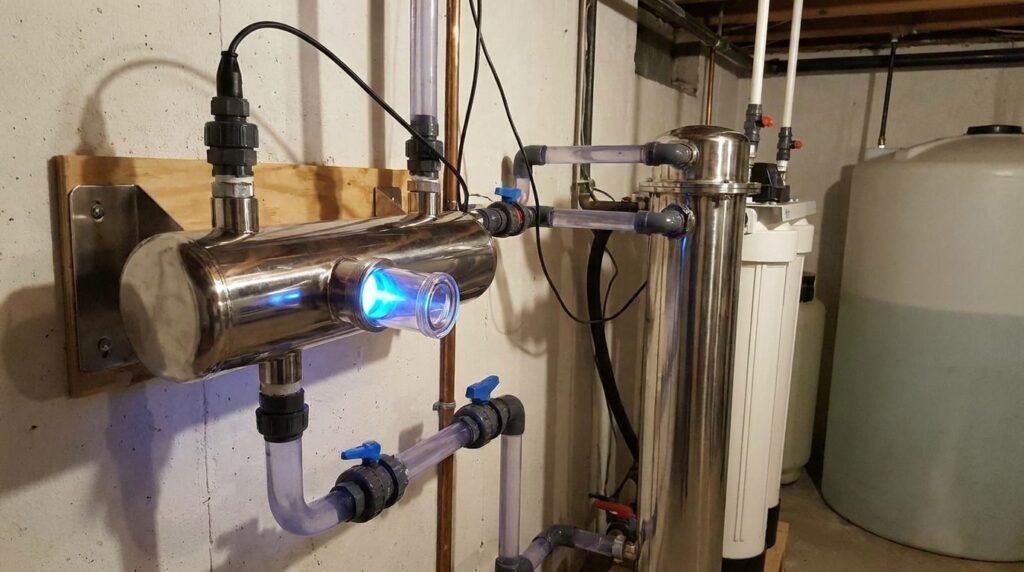
UV water purification systems use ultraviolet light to disable harmful microorganisms in water, making it safe to drink or use. Instead of chemicals, they rely on a specific wavelength of UV light that scrambles the DNA and RNA of bacteria, viruses, and other pathogens, preventing them from reproducing and causing illness. This is a practical, chemical-free way to disinfect water, often used as a final stage in a multi-stage filtration system or for specific point-of-use applications.
Table of Contents
How UV Disinfection Works Its Magic
At its core, UV water purification is a physical process, not a chemical one. Think of it like this: certain wavelengths of UV light, specifically in the germicidal range (around 200-280 nanometers, with 254 nm being particularly effective), are powerful enough to mess with the genetic material inside microorganisms.
The Science Behind UV-C Light
When microbes like bacteria, viruses, and protozoa pass through a UV water purification system, they’re exposed to this intense UV-C light. This energy is absorbed by their DNA and RNA. What happens next is crucial: the UV light causes tiny defects in their genetic code. These defects, often called “dimers,” essentially render the microbes unable to replicate. They can’t grow, can’t reproduce, and therefore, can’t cause infection or illness. They’re effectively “inactivated.”
It’s important to understand that UV light doesn’t remove anything from the water. It doesn’t filter out sediment, chemicals, or heavy metals. It purely targets the living organisms. This is why UV systems are almost always paired with other filtration methods, like sediment and carbon filters, to ensure truly clean and safe water. The pre-filtration removes particles that could “shadow” microbes from the UV light, reducing its effectiveness.
Key Components of a UV System
A typical UV water purification system usually consists of a few essential parts:
- UV Lamp: This is the heart of the system, emitting the germicidal UV-C light. Most traditional systems use low-pressure mercury vapor lamps, which are highly efficient at producing the 254 nm wavelength. Newer systems are increasingly using UV-C LEDs, which offer advantages in terms of size, durability, and on-demand operation.
- Quartz Sleeve: The UV lamp is housed inside a protective quartz sleeve. This sleeve is transparent to UV light but keeps the lamp dry and protected from the water flowing through the system. It also helps maintain an optimal temperature for the lamp’s operation.
- Reaction Chamber (Stainless Steel Housing): This is the main body where the water flows. It’s usually made of stainless steel because it’s reflective, which helps maximize the UV exposure as water passes around the quartz sleeve.
- Ballast/Controller: This electronic component powers the UV lamp, regulating the electrical current to ensure it operates at the correct intensity. Many modern ballasts also include indicators for lamp life, system malfunctions, and even alarms to alert you when the lamp needs replacing.
- Flow Restrictor (Optional but Recommended): In some systems, a flow restrictor is used to ensure water doesn’t pass through the UV chamber too quickly, guaranteeing adequate exposure time for disinfection.
The water enters the chamber, flows around the quartz sleeve (and the UV lamp inside it), gets exposed to the UV-C light, and then exits, disinfected. It’s a simple, continuous flow process.
For those interested in understanding how UV water purification systems work, you may also find it beneficial to explore the article on the best off-grid water pumps, which provides insights into various water pumping solutions that can complement your purification efforts. This resource can help you choose the right pump to ensure a steady supply of water for your UV system. You can read more about it here: Best Off-Grid Water Pumps Compared.
Where UV Water Treatment Shines
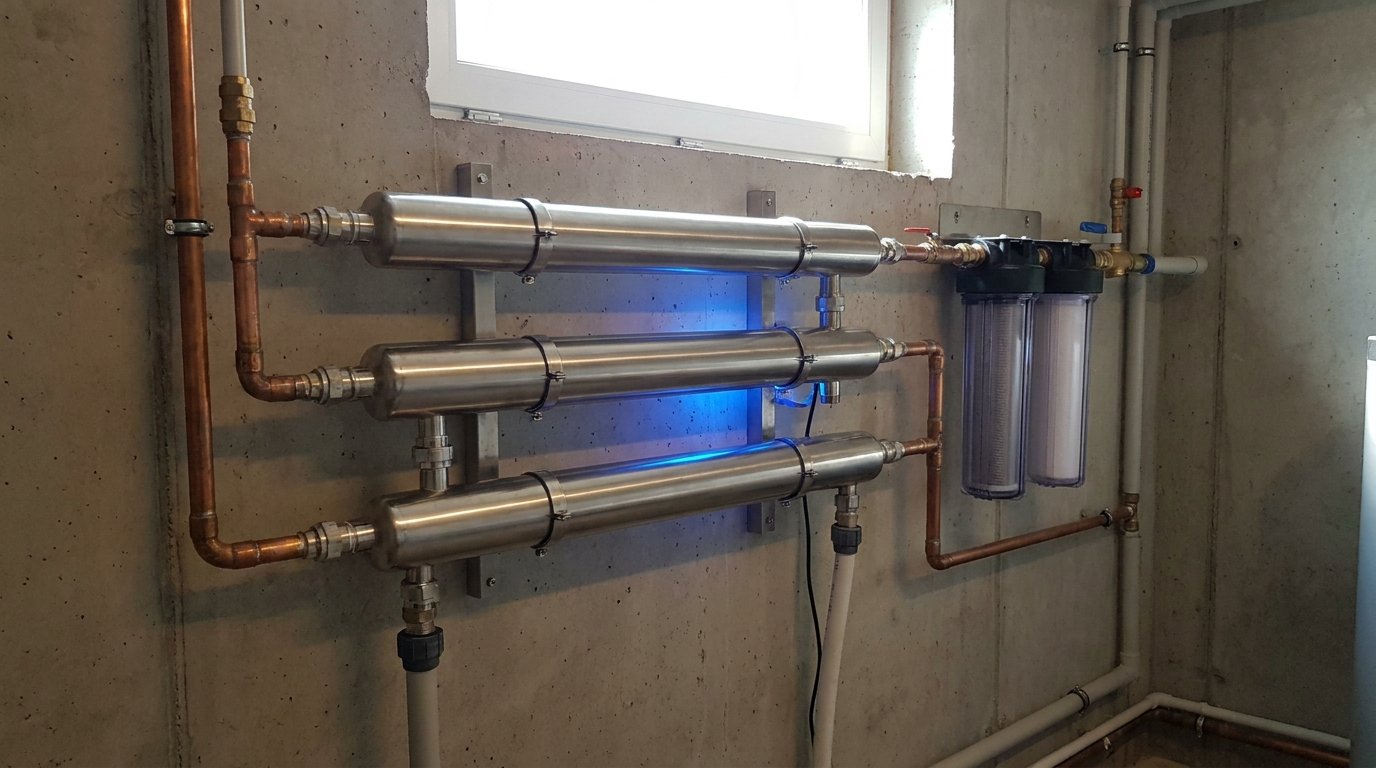
UV water purification is a versatile technology with a growing range of applications, from ensuring safe drinking water in homes to large-scale industrial and municipal uses. Its chemical-free nature and effectiveness against a broad spectrum of pathogens make it an attractive option in many scenarios.
Home Water Safety
For homeowners, UV systems offer peace of mind, especially if their water source is a private well, or if they’re concerned about municipal water quality.
- Point-of-Entry (POE) Systems: These are installed where the main water line enters the house, treating all water used for drinking, cooking, bathing, and even laundry. They typically come after other filters like sediment and carbon, ensuring comprehensive treatment. Systems like the iSpring WRO4000 are even integrating UV with multiple other treatment stages (sediment, RO, ultrafiltration) into a single, centralized whole-house unit, simplifying installation and maintenance.
- Point-of-Use (POU) Systems: These are smaller units installed at a specific tap, like under the kitchen sink, providing disinfected water for drinking and cooking. This is a common setup for reverse osmosis (RO) systems, where UV acts as a final safeguard against any microbes that might bypass the RO membrane. The increasing adoption of UV-LEDs is making these compact POU systems even more practical due to their smaller footprint and instant-on capabilities.
- Well Water Treatment: Many well water sources are susceptible to bacterial contamination. A UV system provides a reliable, chemical-free way to ensure the well water is microbiologically safe without altering its taste or odor.
Commercial and Industrial Applications
Beyond homes, UV technology is a powerhouse in various commercial and industrial settings where water quality is paramount.
- Food and Beverage Production: Breweries, bottling plants, dairies, and food processing facilities use UV to disinfect process water, rinse water, and even the final product, preventing microbial spoilage and ensuring product safety.
- Pharmaceutical and Cosmetics: In these industries, ultra-pure water is often a critical ingredient. UV systems are integral to ensuring that water used in manufacturing processes is free from microorganisms, meeting stringent regulatory requirements. Newer UV-LED sterilizers are finding their way into these applications, offering precision and efficiency.
- Hospitals and Healthcare: UV water purification is used in healthcare settings for various purposes, including disinfecting water for laboratories, dialysis machines, and even preventing Legionella outbreaks in water systems.
- Aquaculture and Hydroponics: Maintaining sterile water is crucial in fish farming and soilless agriculture to prevent disease and promote healthy growth. UV systems provide an effective way to achieve this without introducing harmful chemicals.
- Wastewater Treatment and Reuse: With increasing pressure on water resources, wastewater reuse is becoming more common. UV is a key disinfection step in advanced wastewater treatment plants, ensuring that effluent discharged or reused for irrigation is safe. Open-channel UV systems are specifically designed for these larger flows, showing significant advancements in this area.
- Cooling Towers: UV can help control microbial growth, including Legionella, in cooling tower water, reducing the need for chemical biocides.
- Swimming Pools and Spas: While often used in conjunction with chlorine, UV can significantly reduce the amount of chlorine needed, improving water quality and reducing irritants.
Emerging and Specialized Uses
The field of UV technology is not static; it’s constantly evolving, with new research expanding its capabilities beyond simple disinfection.
- PFAS Destruction: Groundbreaking research, like that from UC Riverside, is showing that UV-driven chemistry can effectively break down “forever chemicals” (PFAS) in water. By combining UV with sulfite, researchers achieved 95% destruction of PFAS in drinking water tests within 45 minutes. This highlights UV’s potential beyond just biological inactivation, moving into chemical remediation.
- Surface and Air Disinfection: While this article focuses on water, it’s worth noting that UV-C technology is also used for disinfecting surfaces and air in various environments, especially in healthcare and public spaces, underscoring its broad germicidal power.
The market for these systems is robust, with projections showing significant growth in the commercial UV water purifier market. This growth is driven by increasing awareness of water quality, stricter regulations, and the continuous innovation in UV technology itself, particularly with the advancements in UV-LEDs.
Benefits and Drawbacks: A Balanced View
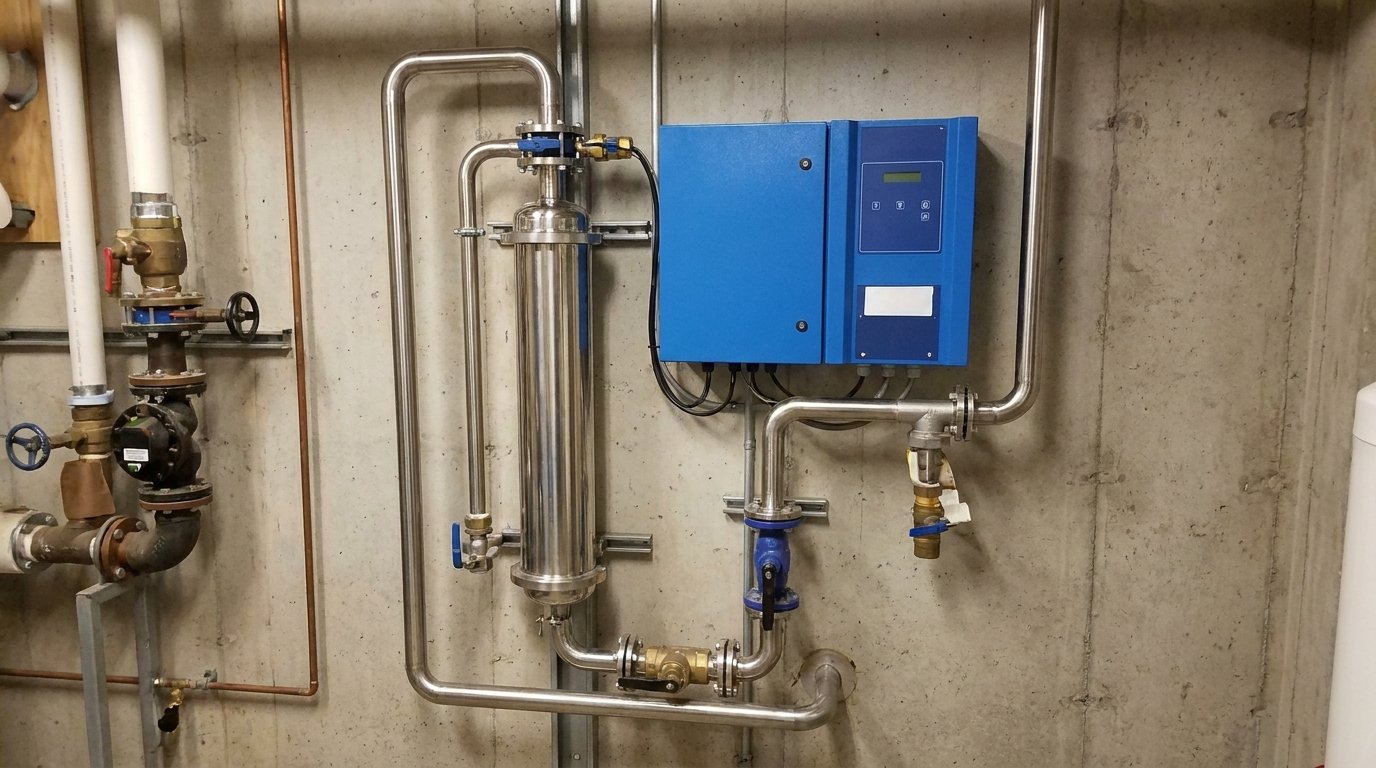
Like any technology, UV water purification comes with its own set of advantages and disadvantages. Understanding these can help you decide if it’s the right choice for your specific needs.
The Upsides of UV Purification
There’s a lot to like about UV systems, which explains their growing popularity.
- Highly Effective Against Microorganisms: This is the primary benefit. UV light is extremely good at inactivating a wide range of bacteria (E. coli, Salmonella), viruses (Hepatitis, Poliovirus), cysts (Giardia, Cryptosporidium), and other pathogens. In fact, systems are independently certified with claims of 99.999%+ microbial inactivation, which is a very high standard.
- Chemical-Free Process: Unlike chlorination, UV doesn’t add any chemicals to your water. This means no chemical taste, odor, or potentially harmful byproducts (like trihalomethanes, which can form with chlorine). This is a big plus for those concerned about chemical exposure or who prefer a more “natural” purification method.
- No Change to Water Taste or Odor: Because no chemicals are involved and nothing is physically removed from the water (like minerals), UV treatment doesn’t alter the water’s natural taste, color, or odor.
- Fast and Immediate Disinfection: The disinfection process is instantaneous as water passes through the UV chamber. There’s no contact time required, unlike some chemical treatments. You get disinfected water on demand.
- Environmentally Friendly: Without the use of chemicals, there’s no risk of chemical spills or discharges. UV treatment is a relatively low-energy process compared to some other advanced purification methods.
- Low Maintenance (Mostly): While lamps need replacing, the day-to-day operation is fairly hands-off. Modern systems often include alarms for lamp failure or scheduled replacement, making maintenance even simpler.
- Effective Against Chlorine-Resistant Cysts: Some microorganisms, like Cryptosporidium and Giardia, are resistant to chlorine disinfection. UV light, however, is highly effective against these tough-to-kill cysts, which is a significant advantage.
- Improving Technology: With the rise of UV-C LED systems, we’re seeing more compact, durable, and energy-efficient options. High-flow UV-C LED systems, like the 200 LPM unit from MASSPHOTON, are scaling up, indicating a promising future for this technology in larger applications.
Potential Downsides and Considerations
No system is perfect, and UV purification has a few points to consider before committing.
- Doesn’t Remove Other Contaminants: This is crucial. UV only inactivates microorganisms. It does not remove sediment, rust, heavy metals, chlorine, volatile organic compounds (VOCs), or other chemical pollutants. This is why pre-filtration (sediment filter, carbon filter) is almost always a necessity for effective UV operation. Cloudy water or water with high turbidity will shield microbes from the UV light, reducing its efficacy.
- Requires Electricity: UV systems need a constant power supply to operate. In areas prone to power outages, this could be a concern unless a backup power source is available. No power means no disinfection.
- Lamp Replacement and Maintenance: UV lamps have a limited lifespan, typically around 9,000-12,000 hours (about one year of continuous use). They need to be replaced annually, even if they’re still glowing, because their germicidal effectiveness diminishes over time. The quartz sleeve also needs occasional cleaning to prevent mineral buildup that can block UV light. These are ongoing maintenance costs and tasks.
- No Residual Disinfection: Unlike chlorine, which leaves a residual disinfectant in the water to prevent recontamination downstream, UV provides no such residual protection. If water is contaminated after passing through the UV system, it can become unsafe again.
- Cost: While often considered a good investment for health, the initial purchase price can be higher than some basic filtration systems. There are also ongoing costs for lamp replacement and electricity.
- Temperature Sensitivity: Some older or lower-quality UV lamps can be sensitive to extreme water temperatures, which might affect their performance. However, most modern systems are designed to operate effectively within typical residential water temperature ranges.
- UV-LEDs are Still Evolving for Large Flows: While UV-LED technology is rapidly advancing and great for point-of-use, scaling up to very high flow rates for whole-house or municipal applications with LEDs is still an area of ongoing development and cost reduction, though significant strides are being made.
Weighing these pros and cons against your specific water quality concerns, budget, and lifestyle will help you determine if a UV water purification system is the right fit for you. Often, when integrated into a comprehensive water treatment solution, the benefits of UV far outweigh its limitations.
Getting Started: Installation and Maintenance
Once you’ve decided a UV system is right for you, understanding the basics of installation and ongoing maintenance will ensure it operates effectively and reliably for years. It’s not overly complicated, but a little know-how goes a long way.
Setting Up Your UV System
Installation will vary depending on whether you’re putting in a whole-house (Point-of-Entry) system or a smaller Point-of-Use unit, but some principles are universal.
- Pre-Filtration is Paramount: I can’t stress this enough. Before the UV unit, you absolutely must have pre-filtration. At a minimum, a 5-micron sediment filter is usually required. This removes particulate matter (dirt, rust, sand) that could physically shield microorganisms from the UV light, rendering the disinfection ineffective. Turbidity in the water also absorbs UV light, reducing its intensity. For municipal water or water with chemical concerns, a carbon filter before the UV unit is also highly recommended to remove chlorine and other chemicals, which can impact the life of the quartz sleeve and potentially interfere with UV effectiveness. Some advanced whole-home systems, like the iSpring WRO4000, come with integrated multi-stage filtration (sediment, RO, UF) specifically for this reason.
- Location, Location, Location: Choose a spot that’s easily accessible for future maintenance (lamp and sleeve changes). It should be protected from extreme temperatures and direct sunlight. For POE systems, it’s typically installed on the main water line after your pressure tank (if you have one) and after any pre-filters, but before any branch lines to appliances that don’t need disinfected water (like outdoor spigots).
- Plumbing Connections: Most UV units use standard plumbing connections (e.g., NPT or quick-connect fittings). You’ll likely need basic plumbing tools, thread sealant, and possibly some PEX or copper pipe and fittings. If you’re not comfortable with plumbing, hiring a professional is a good idea to prevent leaks and ensure proper flow.
- Electrical Connection: The UV system needs a dedicated electrical outlet. Ensure it’s a grounded outlet and that the system’s ballast is properly connected. Newer UV-LED systems offer more flexibility in power requirements due to their efficiency.
- Follow Manufacturer Instructions: Every UV system will come with its own specific installation manual. Read it thoroughly. It will detail recommended clearances, specific pre-filtration requirements, and how to properly assemble the lamp, sleeve, and housing.
Keeping Your UV System Running Smoothly
Regular, simple maintenance is key to ensuring your UV system continues to provide safe water.
- UV Lamp Replacement (Annually): This is the most critical maintenance task. UV lamps have a lifespan, typically 9,000 to 12,000 hours (about one year of continuous use). Even if the lamp appears to be glowing, its germicidal intensity diminishes over time. Mark your calendar or rely on your system’s alarm (many modern systems have visual or audible alarms for lamp life). Always replace with the manufacturer’s specified lamp.
- Quartz Sleeve Cleaning/Replacement: Over time, minerals and scale can build up on the outside of the quartz sleeve. This buildup can block the UV light, reducing disinfection effectiveness. Inspect the sleeve annually when you replace the lamp. If it’s coated, remove it carefully (wearing gloves) and clean it with a soft cloth and a mild acid cleaner (like citric acid or vinegar). Rinse thoroughly. If the sleeve is cracked, scratched, or heavily etched, it needs to be replaced.
- Pre-Filter Replacement: Remember those pre-filters? They’re crucial. Replace sediment and carbon filters according to the manufacturer’s recommendations, typically every 3-6 months, or sooner if you notice a drop in water pressure or water quality. Neglecting pre-filters will lead to premature fouling of your UV system’s quartz sleeve and reduced effectiveness.
- Visual Inspection: Periodically check the UV system for any signs of leaks, damage, or wear. Ensure indicator lights are functioning correctly. Many systems now have advanced monitoring, which can alert you to issues even before they become visible.
- Power Supply Check: Ensure the ballast and power connection are secure and free from moisture.
By following these simple guidelines for installation and maintenance, your UV water purification system will be a reliable guardian of your water quality, providing chemical-free disinfection day in and day out.
For those interested in enhancing their off-grid living experience, understanding UV water purification systems is crucial. These systems provide a reliable method for ensuring safe drinking water, which is essential for any sustainable lifestyle. If you’re looking to complement your water purification knowledge with insights on setting up an off-grid pantry, you might find this article on off-grid pantry setups particularly helpful. It offers practical tips that can help you maintain a well-stocked and efficient food storage system while living off the grid.
UV-LEDs vs. Traditional UV Lamps: What’s the Difference?
| Metric | Description | Typical Value | Unit |
|---|---|---|---|
| UV Dose | Amount of UV energy delivered to water | 30-40 | mJ/cm² |
| Flow Rate | Volume of water treated per minute | 2-10 | liters per minute (L/min) |
| Wavelength | UV light wavelength used for disinfection | 254 | nanometers (nm) |
| Lamp Life | Operational lifespan of UV lamp | 9000-12000 | hours |
| Water Turbidity | Clarity of water affecting UV penetration | <1 | NTU (Nephelometric Turbidity Units) |
| Disinfection Rate | Effectiveness in killing microorganisms | 99.99 | % (log 4 reduction) |
| Power Consumption | Energy used by the UV system | 15-40 | watts |
The world of UV water purification is seeing a significant shift with the rise of UV-LED technology. While traditional mercury-vapor lamps have been the standard for decades, LEDs are quickly gaining ground, especially in certain applications. Understanding the differences is key to appreciating where the technology is headed.
Traditional UV Lamps (Mercury Vapor)
These are the workhorses that have dominated the UV disinfection market for a long time.
- How They Work: Traditional UV lamps typically use mercury vapor enclosed in a quartz tube. When electricity passes through the mercury vapor, it excites the mercury atoms, causing them to emit UV-C light, primarily at a wavelength of 254 nm. This specific wavelength is highly effective for germicidal action.
- Advantages:
- Proven Technology: They’ve been around for ages, so their effectiveness is well-understood and documented across various applications.
- High Power Output: Traditional lamps can generate a lot of UV power, making them suitable for high-flow, large-scale applications, including municipal and industrial systems.
- Cost-Effective (Per Watt of UV): For high-power output, the cost per unit of UV energy generated is generally lower than current UV-LEDs.
- Disadvantages:
- Mercury Content: This is the big one. Mercury is a hazardous heavy metal, posing environmental and health risks if lamps break or are improperly disposed of. Regulations like RoHS are tightening requirements around mercury, making mercury-free alternatives more attractive.
- Warm-up Time: Mercury lamps need a few minutes to reach full germicidal intensity after being turned on. This means they’re typically left on continuously, even when water isn’t flowing, to ensure instant disinfection when needed.
- Shorter Lifespan (Relative to LEDs): While lasting about a year of continuous use, their operational lifespan is often shorter than what UV-LEDs can offer in terms of total disinfection events.
- Heat Generation: They generate a fair amount of heat, which can sometimes impact water temperature in low-flow scenarios.
- Fixed Wavelength: They primarily emit at 254 nm. While effective, some research suggests other wavelengths might be more optimal for specific pathogens or applications.
- Fragile: The glass construction makes them susceptible to breakage.
UV-C LEDs
UV-LEDs represent the future of germicidal UV, leveraging semiconductor technology similar to the LEDs in your home lighting.
- How They Work: Instead of mercury vapor, UV-LEDs use semiconductor materials that, when electricity passes through them, emit light at specific UV-C wavelengths. Manufacturers can fine-tune these to target specific germicidal ranges, often around 260-280 nm, which is increasingly recognized for its strong germicidal properties.
- Advantages:
- Mercury-Free: This is a major environmental and safety advantage, eliminating concerns about mercury disposal and accidental release. This aligns with global regulatory pushes like RoHS.
- Instant On/Off: UV-LEDs reach full germicidal intensity immediately. This allows for “on-demand” disinfection, where the unit only turns on when water is flowing, saving energy and extending the product lifespan.
- Longer Lifespan: UV-LEDs typically boast significantly longer operational lifespans than mercury lamps, often tens of thousands of hours, which can translate to fewer replacements over the life of the system.
- Compact Size and Design Flexibility: Their small size allows for much more compact and innovative system designs, particularly for point-of-use (POU) applications or integration into other appliances.
- Durability: Being solid-state devices, they are much more resistant to shock and vibration than fragile glass mercury lamps.
- Tunable Wavelengths: Manufacturers can design LEDs to emit at specific wavelengths, potentially optimizing disinfection for certain pathogens or allowing for broader applications beyond just disinfection (like PFAS degradation).
- Lower Heat Output (in some cases): While they do generate heat, it’s often more manageable than mercury lamps, especially in smaller applications.
- Disadvantages:
- Higher Upfront Cost (Currently): While costs are rapidly decreasing, high-power UV-LED systems still tend to have a higher initial price point than equivalent mercury-lamp systems.
- Power Output Limitations (Historically): Traditionally, UV-LEDs couldn’t match the raw power output of mercury lamps for very high flow rates. However, this is changing rapidly; high-flow UV-C LED systems (like the 200 LPM unit mentioned earlier) are now scaling up, pushing performance boundaries.
- Thermal Management: LEDs generate heat at the chip level, and effective thermal management is crucial to maintain their performance and lifespan. Poor thermal design can lead to premature failure.
- Evolving Standards: While new standards like China’s WS/T 10050-2026 are emerging, the regulatory and certification landscape for UV-LEDs is still catching up to the technology’s rapid advancement.
The Future is Bright (and LED-Lit)
The trend is clear: UV-LEDs are becoming more powerful, more efficient, and more cost-effective. While traditional UV lamps will likely remain relevant for very large-scale, high-flow applications for some time, UV-LEDs are poised to dominate point-of-use, whole-home, and increasingly, commercial and industrial markets due to their environmental benefits, performance characteristics, and design flexibility. This expansion is driven by improved optical output and lower costs, making them a compelling alternative.
Considering a UV System: Key Questions to Ask
Before you invest in a UV water purification system, it’s a good idea to ask yourself (and potentially your water treatment professional) a few practical questions. This will help you choose the right system and ensure it meets your specific needs.
What’s My Water Source and Quality?
This is probably the most important starting point.
- Well Water: If you have a private well, a UV system is often highly recommended due to the potential for bacterial and viral contamination. However, well water often has high levels of sediment, iron, or hardness, which will require robust pre-filtration. Get your well water tested to understand its specific characteristics (turbidity, iron, manganese, hardness, pH, bacteria).
- Municipal Water: If you’re on city water, UV can act as an extra layer of protection against potential system failures, aging infrastructure, or boil water advisories. Pre-filtration for sediment and a carbon filter to remove chlorine (which UV does not) are still good ideas.
- Turbidity/Cloudiness: Is your water often cloudy or does it contain visible particles? UV light cannot penetrate suspended solids effectively. If your water isn’t clear, you will need appropriate pre-filters (usually a 5-micron sediment filter at minimum, potentially a sub-micron filter or even an ultrafiltration system for very turbid water) before the UV unit.
- Hardness/Minerals: Hard water can cause scale to build up on the quartz sleeve, blocking UV light. If you have hard water, consider a water softener before the UV unit, or be prepared to clean the quartz sleeve more frequently.
What’s My Flow Rate Requirement?
UV systems are rated by the flow rate they can effectively treat (gallons per minute or liters per minute).
- Whole-House (POE): For a typical home, you’ll want a system that can handle the peak flow demand when multiple fixtures are in use (e.g., shower, washing machine, dishwasher simultaneously). This might be anywhere from 8-15 GPM (30-55 LPM) or higher. Systems are available, and increasingly, high-flow UV-C LED systems are scaling up to meet these demands.
- Point-of-Use (POU): For a single tap (like under the kitchen sink), a much smaller flow rate (e.g., 0.5-2 GPM or 2-7 LPM) is sufficient. UV-LEDs are particularly well-suited for these compact applications due to their size and on-demand operation.
- Future Needs: Consider if your water usage might increase in the future (e.g., adding more bathrooms, a larger family).
What Level of Disinfection Do I Need?
Most residential and commercial UV systems are designed for high levels of microbial inactivation (e.g., 99.99% or 99.999%).
- Specific Pathogens: If you have known issues with specific chlorine-resistant pathogens like Cryptosporidium or Giardia, UV is an excellent choice, as it’s highly effective against them.
- Certifications: Look for systems that are certified by reputable third-party organizations (like NSF International or WQA) to ensure they meet performance standards. Independent certification, as seen with some new UV-C LED systems, provides an extra layer of assurance.
What Are the Ongoing Costs and Maintenance?
Beyond the initial purchase, there are recurring expenses.
- Lamp Replacement: UV lamps need to be replaced annually. What’s the cost of a replacement lamp for the system you’re considering?
- Pre-Filter Replacement: How often do the pre-filters need changing, and what do they cost? Factor this into your annual budget.
- Electricity Consumption: While generally low, it’s an ongoing cost. UV-LED systems often offer energy savings due to their instant on/off capabilities.
- DIY vs. Professional Maintenance: Are you comfortable with basic plumbing to change lamps and filters, or will you need to hire a professional?
What Are the System’s Features?
Modern UV systems come with various features that can enhance convenience and reliability.
- Lamp Life Indicator/Alarm: Essential for knowing when to replace the lamp.
- Flow Sensor: Allows the system to turn on/off with water flow, saving energy (common with UV-LEDs).
- UV Intensity Monitor: Some higher-end systems can monitor the actual UV light intensity, ensuring it’s always at an effective level.
- System Status Alarms: Alerts for lamp failure, power issues, or other malfunctions.
- Integrated Monitoring: Advanced systems, like some whole-house units, now offer comprehensive monitoring of various water parameters, providing a more complete picture of your water quality and system health.
By thoroughly addressing these questions, you’ll be well-equipped to select a UV water purification system that reliably provides safe, disinfected water for your home or business.
FAQs
What is a UV water purification system?
A UV water purification system uses ultraviolet light to disinfect water by inactivating bacteria, viruses, and other microorganisms present in the water.
How does a UV water purification system work?
UV water purification systems use a UV lamp to emit UV light that penetrates the cell walls of microorganisms, disrupting their DNA and preventing them from reproducing.
Are UV water purification systems effective?
Yes, UV water purification systems are highly effective at eliminating harmful microorganisms from water, providing a reliable method of water disinfection.
What are the advantages of using a UV water purification system?
Some advantages of using a UV water purification system include its ability to effectively disinfect water without the use of chemicals, its low maintenance requirements, and its environmentally friendly operation.
Are there any limitations to UV water purification systems?
UV water purification systems are not effective at removing sediment, chemicals, or other impurities from water. Additionally, the effectiveness of UV light can be reduced by factors such as water turbidity or the presence of certain contaminants.