So, you’re thinking about going off-grid and need to figure out the best solar panel mounting options to get your solar panels up and running. That’s a smart move! When it comes to mounting your panels, especially for an off-grid setup, there isn’t a single “magic bullet” answer. The best option really depends on your specific situation, like the type of roof you have (or if you have one at all!), how much space you have, and even what kind of weather you deal with. Let’s break down the most practical choices out there.
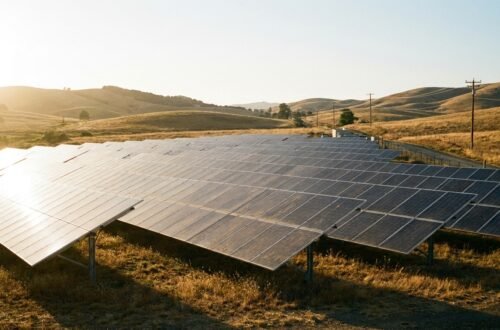
If you’ve got a bit of land to play with, ground mounts are often the go-to for off-grid homes. They offer a lot of advantages, especially if you’re looking for something that can grow with your needs or needs a bit of tweaking.
Table of Contents
Why Ground Mounts Shine for Off-Grid Living
Think of ground mounts as your most adaptable option. You’re not constrained by the shape or angle of your roof, which opens up a lot of possibilities for maximizing sun exposure throughout the year.
- Scalability: Need more power down the line? Adding more panels to a ground mount system is usually straightforward. You can expand your array as your energy demands increase without major headaches. This is a big plus for off-grid living where you might be figuring things out as you go.
- Tilt and Orientation Control: This is a huge benefit. With ground mounts, you can set the precise tilt angle for your panels to catch the sun best at different times of the year. You can also orient them perfectly south (in the Northern Hemisphere) for maximum energy capture. Being able to adjust these seasonally can significantly boost your power generation, which is critical when you’re relying solely on solar.
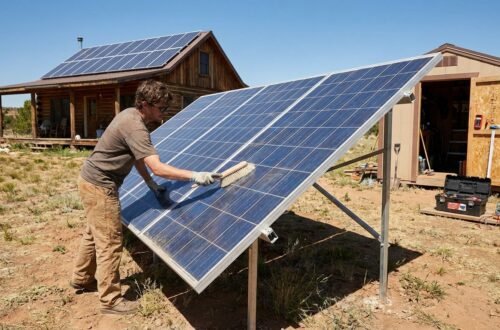
- Easier Maintenance and Access: Let’s be honest, climbing on a roof isn’t everyone’s idea of fun, especially if you need to do regular cleaning or checks. Ground mounts put your panels at a more accessible height, making them easier to inspect, clean, and service. This practicality is a big deal for off-grid systems that need to run reliably.
- Common for Cabins and Farms: You’ll see ground mounts everywhere from remote cabins to agricultural properties. This isn’t just a trend; it’s because they’re a solid, reliable choice for situations where space isn’t an issue and you need a robust system.
Different Flavors of Ground Mounts
Not all ground mounts are created equal, and the specifics can matter for your off-grid setup.
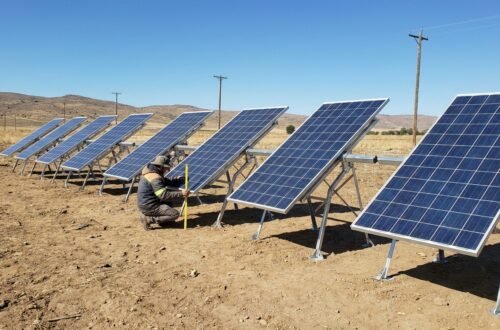
- Fixed Ground Mounts: These are the most common and straightforward. You set them at a specific tilt and they stay put. They’re great if you can find a good all-year-round angle or if you plan to adjust them seasonally yourself. They tend to be the most cost-effective and simplest to install.
- Adjustable Ground Mounts: If you’re serious about squeezing every last watt out of your panels, adjustable ground mounts are worth considering. These allow you to change the tilt angle of your panels manually a few times a year (e.g., steeper in winter, shallower in summer). While they require a bit more effort, the potential gain in energy production can be significant for an off-grid home where every bit of power counts.
- Pole Mounts: While often considered a type of ground mount, pole mounts deserve a special mention, especially for smaller off-grid systems or when roof space is a no-go. They involve mounting your panels on a single, sturdy pole. This lifts the panels up, away from shade, and can offer excellent sun exposure. They’re particularly good for:
- Limited Roof Space: If your roof is small, oddly shaped, or simply not suitable for solar, a pole mount in your yard is a great alternative.
- Better Sun Exposure: By elevating the panels, you can often avoid shade from trees, buildings, or other obstructions that might be present at ground level.
- Easier Access: Like other ground mounts, pole mounts generally offer good access for maintenance.
- Smaller Systems: For a basic off-grid cabin or a remote shed, a single or dual-panel pole mount can be an efficient and effective solution. They are often simpler and less expensive than larger ground mount arrays.
- Foundation Considerations: The “ground” in ground mount isn’t always just dirt. Depending on your soil type and local wind/snow loads, you’ll need a solid foundation. This could mean concrete footings, driven posts, or screw piles. This is an important detail to research for your specific location to ensure stability.
When considering the best solar panel mounting options for off-grid homes, it’s also essential to understand the overall costs associated with setting up an off-grid solar system. For a comprehensive breakdown of expenses and factors to consider, you can refer to the article on the cost of off-grid solar systems for small homes. This resource provides valuable insights that can help you budget effectively while planning your solar installation. For more information, check out the article here: Off-Grid Solar System Cost for Small Home.
Pole Mounts: High and Mighty for Clear Skies
Pole mounts are a fantastic option when you need to get your panels up and away from potential obstructions. They’re particularly well-suited for off-grid setups where you might have less ideal roof situations.
When Pole Mounts Make Sense
Think of pole mounts as a way to elevate your solar array for maximum benefit. They offer a distinct set of advantages for off-grid users.
- Overcoming Shade: This is a big one. If your property has trees, hills, or nearby buildings that cast shadows, a pole mount can lift your panels above these obstructions, ensuring consistent sunlight throughout the day. This is crucial for an off-grid system that needs reliable power.
- Ideal for Limited Roofs: Not all off-grid homes have large, unobstructed roofs. If your roof is small, complex, or already has a lot of vents and chimneys, a pole mount in your yard can be a much simpler and more effective solution than trying to squeeze panels onto a problematic roof.
- Easier Access for Maintenance: Similar to ground mounts, pole mounts typically bring your panels to a more manageable height than a roof. This makes cleaning, inspections, and any minor repairs much easier and safer.
- Tracking Systems: Some pole mount systems can be equipped with trackers that follow the sun’s path across the sky. While this adds complexity and cost, it can significantly increase energy production, which is a big win for off-grid systems looking to maximize every available ray of sunshine.
- Smaller System Efficiency: For basic off-grid needs, like powering a small cabin, shed, or even a remote monitoring station, a single or dual-panel pole mount can be a very efficient and cost-effective way to get started. They are often less complicated and require less material than larger ground mounts.
Types of Pole Mounts
The core idea is simple, but there are variations.
- Single Pole Mounts: The most common type, where panels are attached to a single, robust pole. These can be fixed tilt or adjustable.
- Array Pole Mounts: For larger arrays, you might see systems where multiple poles support a larger structure, still elevated above ground level.
- Foundation: Like ground mounts, pole mounts require a secure foundation, typically a concrete base, to withstand wind and weather. The depth and size of this foundation will depend on your local conditions and the size of your array.
Standing-Seam Metal Roof Mounts: A Roof-Friendly Approach
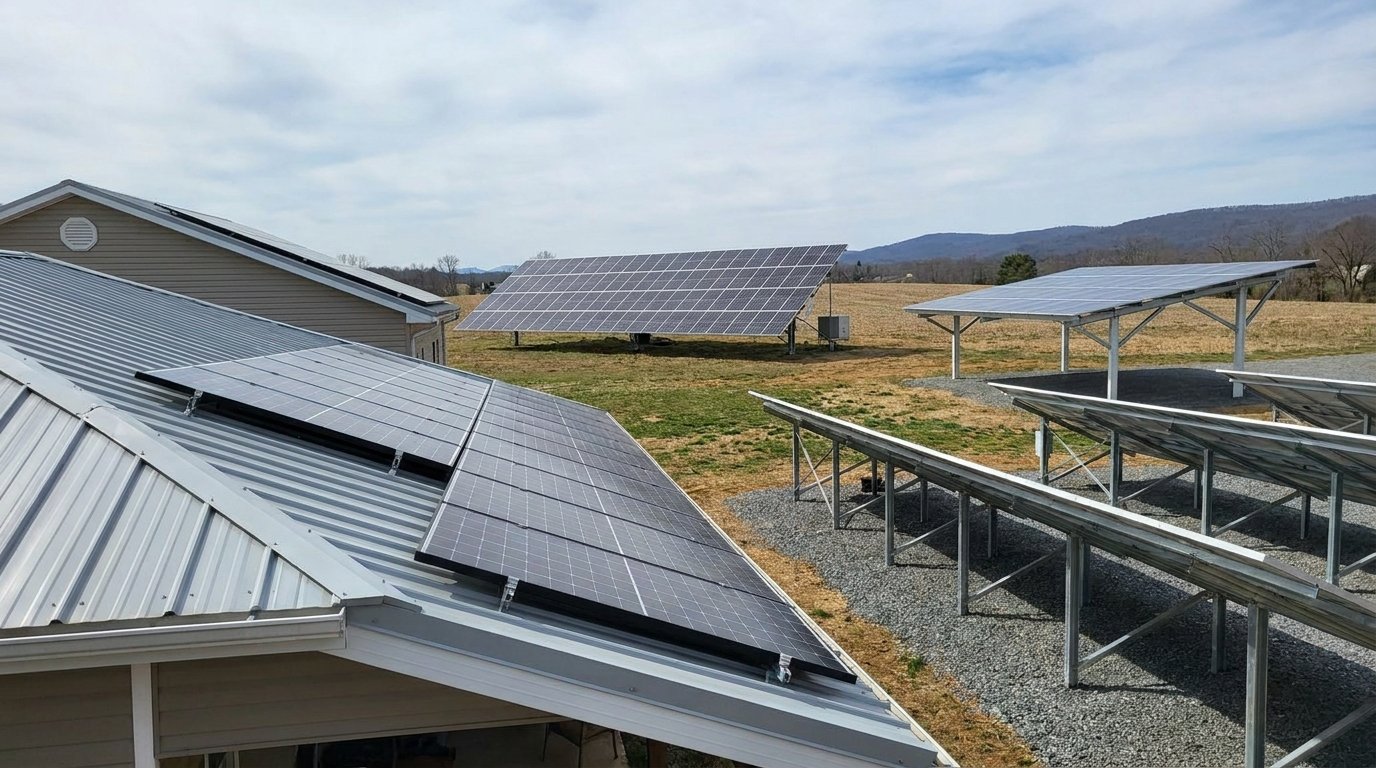
If you have a metal roof, specifically a standing-seam type, you’re in luck. This is a really innovative and practical mounting solution that often bypasses the need to drill holes into your roof.
The Advantages of Standing-Seam Metal Mounts
This type of mount is often praised for its low impact and secure attachment.
- No Roof Penetrations: This is the headline feature. Standing-seam metal roof mounts typically clamp directly onto the raised seams of the metal roofing panels. This means no drilling, no holes, and therefore, no potential leak points. For many off-grid homeowners, avoiding roof leaks is a huge priority.
- Durability and Longevity: Metal roofs are known for their durability, and these mounting systems are designed to match. They are often made from corrosion-resistant materials like aluminum and stainless steel, ensuring they can withstand the elements for decades, just like your roof.
- Sleek Integration: The way these mounts attach often results in a cleaner, more integrated look compared to some other roof mounting methods. The rails can often be attached directly to the clamps, creating a low-profile system.
- Versatility: While specific to standing-seam metal, these mounts can accommodate a wide range of panel sizes and configurations.
- Ease of Installation (relatively): While still requiring some skill, the lack of drilling and the direct clamping mechanism can make installation quicker and less labor-intensive than some other roof mount systems.
How They Work
The magic is in the clamp.
- Clamping Mechanism: Specialized clamps are designed to grip the vertical seams of the standing-seam metal roof. These clamps distribute the weight and wind loads effectively without piercing the roofing material itself.
- Rail Attachment: Once the clamps are securely in place, rails are attached to them. These rails then serve as the platform for mounting your solar panels.
Rail-Mounted Roof Systems: The Standard for Many Homes
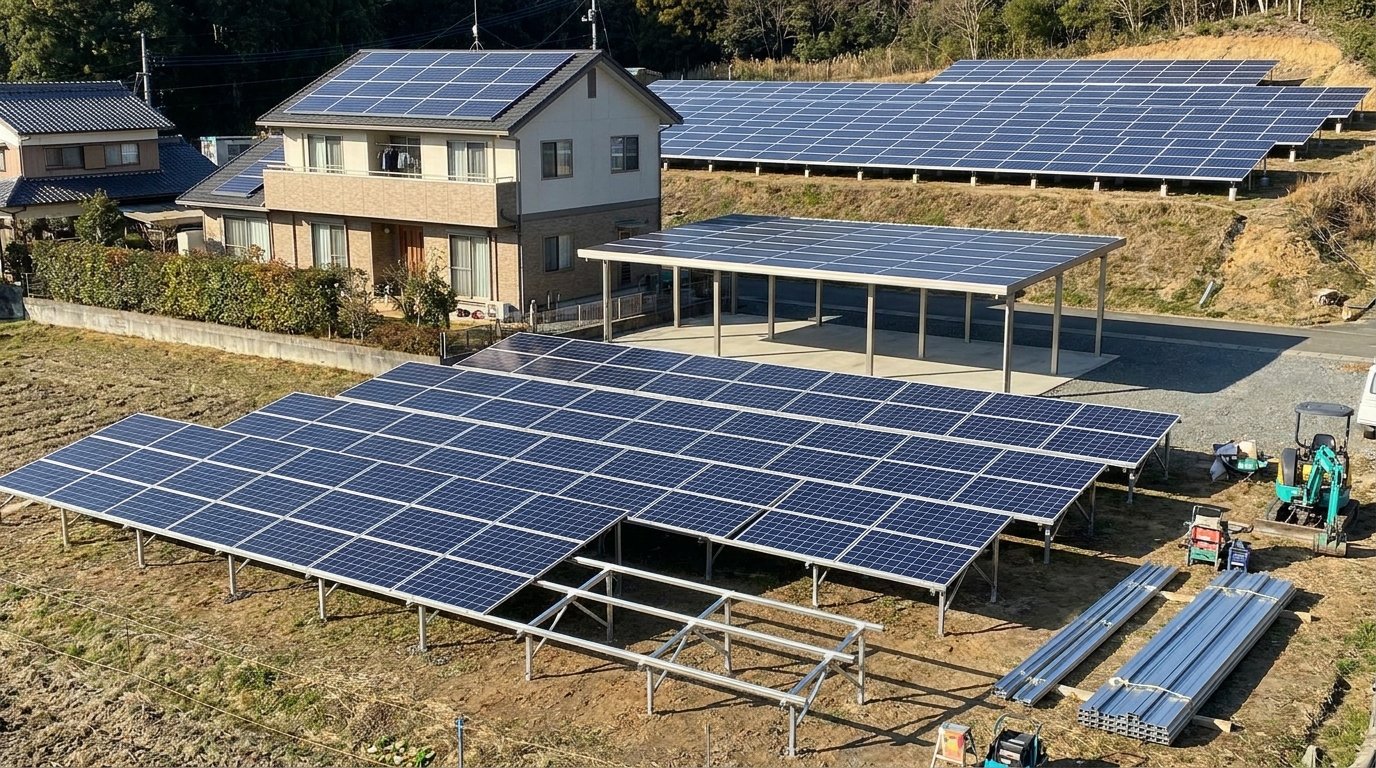
When people think of solar panels on a house, they often picture this. Rail-mounted systems are the workhorse for shingle roofs and most pitched roofs, offering a tried-and-true method for attaching panels.
Why Rail Mounts Are Still Popular
Despite newer technologies, rail mounts remain a strong contender for good reasons.
- Broad Compatibility: These systems are designed to work with a vast majority of shingle roofs and other common pitched roofing materials like asphalt, tile (with appropriate adapters), and even some wood shake roofs.
- Proven Track Record: Rail-mounted systems have been around for a long time. They are well-understood, have undergone extensive testing, and installers are very familiar with them. This translates to reliability.
- Moderate DIY Difficulty: While professional installation is always recommended for safety and optimal performance, rail-mounted systems are often considered moderately DIY-friendly for those with good carpentry skills and a willingness to learn. Many off-grid homeowners who are hands-on might consider this.
- Cost-Effectiveness: For standard roof types, rail-mounted systems are often the most cost-effective roof-based solution. The materials are readily available, and installation labor is generally straightforward.
The Anatomy of a Rail Mount System
It’s a system of interconnected parts designed for strength.
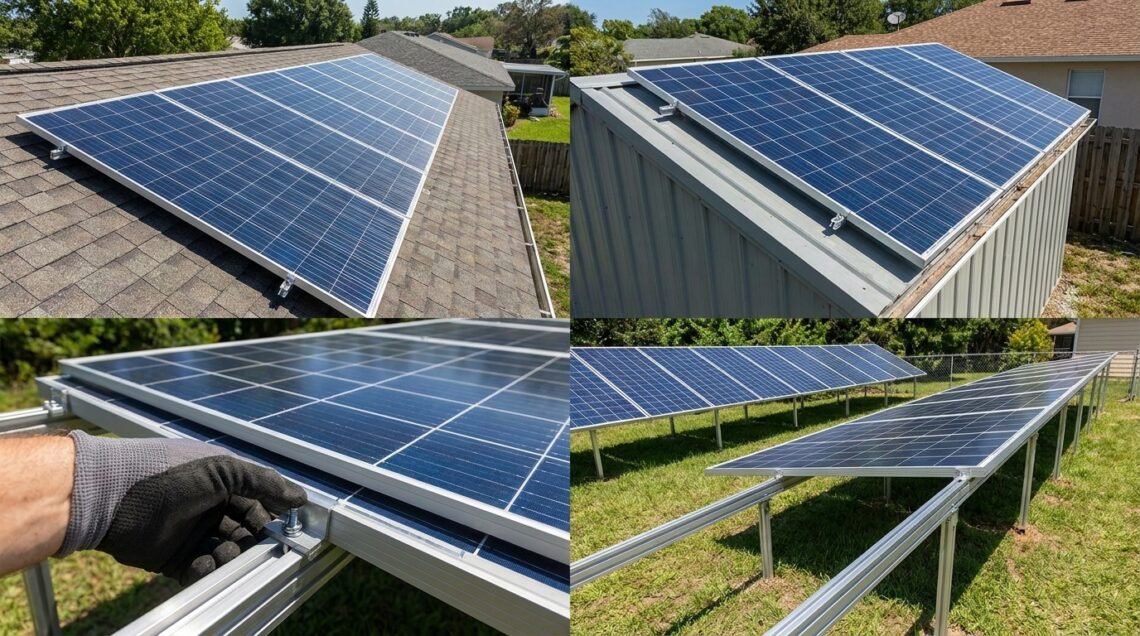
- Rooftop Attachments (L-Feet or Stand-offs): These are the first point of contact with your roof. They are typically screwed into the roof rafters (the structural beams underneath your roof decking) to provide a secure anchor point. They are flashed and sealed meticulously to prevent water intrusion.
- Rails: Long aluminum or steel rails are then attached to these rooftop attachments. The panels will sit directly on these rails.
- Panel Clamps: The solar panels are secured to the rails using specialized clamps. There are usually “mid-clamps” that hold two panels together and “end-clamps” that secure the panels at the edges of the array.
- Flashing and Sealing: This is absolutely critical. Every attachment point that goes through the roof needs to be properly flashed and sealed with a weatherproof material (like roofing tar or specialized sealing compounds) to prevent water damage.
When considering the best solar panel mounting options for off-grid homes, it’s also important to understand the fundamental aspects of off-grid living. A related article that provides valuable insights is 10 Essential Off-Grid Living FAQs for Beginners, which covers various topics that can help newcomers navigate the challenges and benefits of living off the grid. This resource can complement your understanding of solar panel installations and ensure that you make informed decisions for your sustainable lifestyle.
Ballasted Mounts: For Flat Surfaces Without Penetrations
| Mounting Option | Pros | Cons |
|---|---|---|
| Ground Mount | Easy access for maintenance, adjustable tilt for optimal sun exposure | Requires open space, potential for shading |
| Pole Mount | Elevates panels for better sun exposure, adjustable tilt | Requires sturdy pole installation, potential for shading |
| Rooftop Mount | Utilizes existing space, no additional land required | May require structural reinforcement, limited tilt options |
If you have a flat roof (like on a garage, shed, or some commercial-style buildings) or even a level patch of ground, ballasted mounts offer a way to secure your solar panels without drilling holes.
When Ballasted Mounts are a Good Fit
These are about weight and stability, not anchors.
- No Roof Penetrations: This is the primary benefit. Instead of screwing into your roof structure, ballasted systems use the weight of heavy objects (like concrete blocks or specialized trays filled with gravel) to hold the entire array in place. This is a huge advantage for flat roofs where penetrations can be a major leak concern.
- Ideal for Flat Roofs: They are specifically designed for the geometry of flat roofs. The panels are often tilted at a shallower angle than on a pitched roof to optimize sun exposure while keeping the system stable under its own weight.
- Ground Applications: They can also be used on level ground, acting as a simpler alternative to traditional ground mount foundations, especially in areas where ground penetration might be difficult or undesirable.
- Reversibility: Because they don’t involve permanent attachments, ballasted systems are often a good choice if you anticipate needing to move the system later or if you’re renting a property.
The Trade-offs of Ballasted Mounts
There’s always a give and take.
- Significant Weight: The major consideration here is weight. You need to be absolutely sure your flat roof structure (or the ground beneath it) can support the considerable load of the panels and the ballast. This often requires a structural engineer’s assessment for roof installations.
- Wind Uplift Concerns: While ballast provides downward force, wind can create uplift. The design of the ballast system and the array itself must account for local wind speeds and conditions to prevent the panels from being blown away.
- Limited Tilt Options: Ballasted systems are usually pre-tilted or have a fixed tilt angle. You typically don’t have the same adjustability for seasonal tilt changes as you do with ground mounts.
- Shading Considerations: The shallower tilt angle used in many ballasted systems means you need to be very mindful of potential shading from nearby objects, especially during lower sun angles.
When considering the best solar panel mounting options for off-grid homes, it’s also beneficial to explore how to effectively maintain your solar energy system. A related article that provides valuable insights on this topic can be found here. Understanding both mounting solutions and maintenance strategies will ensure that your solar setup operates efficiently and lasts for many years, maximizing your investment in renewable energy.
Key Considerations for Your Off-Grid Mounting Choice
Beyond just the type of mount, there are several crucial factors to keep in mind when making your decision. These are the details that will determine the long-term success and reliability of your off-grid solar system.
Wind and Snow Load Ratings
This is non-negotiable for off-grid living. Your mounting system needs to be robust enough to handle the toughest weather your area throws at it.
- Local Climate: Research the typical wind speeds and snow accumulation in your region. This information will dictate the strength and type of mounting hardware you need. Don’t guess; look up official data.
- Certification Standards: Mounting systems are often rated for specific wind and snow loads. Ensure the system you choose meets or exceeds these requirements for your location.
- Structural Integrity: For ground and pole mounts, the foundation is paramount. For roof mounts, the attachment points to your rafters are critical. A system that fails in a storm will leave you powerless.
Tilt Adjustability and Seasonal Optimization
Maximizing your energy harvest is key when you’re off-grid.
- Fixed vs. Adjustable: As discussed, adjustable mounts offer more flexibility. If you’re in a location with distinct seasons and significant variations in sun angle, the ability to adjust your tilt can lead to a noticeable increase in power generation throughout the year.
- Ease of Adjustment: If you opt for an adjustable system, consider how easy it is to make those adjustments. You’ll be doing it yourself, so a simple, tool-less adjustment mechanism can be a big plus.
- Permanent Tilt: If you choose a fixed tilt, aim for an angle that provides the best overall annual production. This is often a compromise, but it’s still much better than a poorly oriented array.
Corrosion Resistance and Material Durability
Your mounting system will be exposed to the elements 24/7, so durability is paramount.
- Material Choice: Look for materials like anodized aluminum, stainless steel, and galvanized steel. These are resistant to rust and corrosion, which is especially important in humid or coastal environments.
- Coatings and Finishes: High-quality coatings can further protect the mounting hardware from degradation over time.
- Longevity: Think of your mounting system as a long-term investment. You want it to last as long as your solar panels, ideally 25 years or more.
Panel Size and Compatibility
Not all panels are the same size or shape, and your mounting hardware needs to accommodate this.
- System Design: When selecting a mounting system, confirm its compatibility with the specific dimensions and mounting hole patterns of the solar panels you plan to use.
- Rack Versatility: Some racking systems are more versatile than others and can be easily adapted to different panel sizes. This can be helpful if you’re not yet set on a particular panel model.
- Weight Capacity: Ensure the mounting system can support the weight of your chosen panels without issue.
Recent Trends in Off-Grid Kits
It’s worth noting what’s currently being bundled with off-grid solar packages.
- Bundled Racking: Many vendors selling off-grid solar kits will include the necessary racking hardware. You’ll typically see options for either roof mounts or dedicated ground mounts. This reinforces that these remain the most practical and commonly adopted mounting paths for off-grid homes.
- Focus on Practicality: Current product guides and vendor recommendations emphasize choosing mounts based on the practical considerations mentioned above – wind/snow load, adjustability, corrosion resistance, and panel compatibility. They’re less about pushing a single “best” option and more about guiding you to the right fit for your unique setup.
Choosing the right solar panel mounting for your off-grid home is a foundational step. By carefully considering your property, local conditions, and energy needs, you can select a system that’s not only functional but also reliable for years to come.
FAQs
What are the best solar panel mounting options for off-grid homes?
The best solar panel mounting options for off-grid homes include roof mounts, ground mounts, and pole mounts. Each option has its own advantages and considerations, such as space availability, sun exposure, and installation cost.
What are the advantages of roof mounts for solar panels?
Roof mounts are a popular choice for off-grid homes because they utilize existing space and do not require additional land. They are also generally less expensive than ground or pole mounts and can provide good sun exposure if the roof has a favorable orientation.
What are the advantages of ground mounts for solar panels?
Ground mounts are ideal for off-grid homes with ample land space. They allow for easy access and maintenance of the solar panels and can be adjusted for optimal sun exposure. Ground mounts also do not require any roof penetrations, which can be a concern for some homeowners.
What are the advantages of pole mounts for solar panels?
Pole mounts are a versatile option for off-grid homes, as they can be installed in various locations on the property to maximize sun exposure. They also allow for easy adjustment of the panel angle and height, and can be a good option for homes with limited roof or ground space.
What factors should be considered when choosing a solar panel mounting option for an off-grid home?
When choosing a solar panel mounting option for an off-grid home, factors to consider include the available space, sun exposure, installation cost, maintenance access, and any local regulations or restrictions. It’s important to assess the specific needs and conditions of the property to determine the best mounting option.