So, you’re diving into the world of solar power, and you’ve probably come across two acronyms: MPPT and PWM. They both do the same fundamental job – charging your batteries from solar panels – but how they go about it makes a big difference. The short answer to “MPPT vs PWM?” is that MPPT controllers are generally more efficient and can squeeze more power out of your solar array, especially in less-than-ideal conditions. PWM controllers are simpler, cheaper, and perfectly fine for smaller, less demanding systems.
Let’s break down what’s really going on under the hood and figure out which one might be the right fit for your off-grid setup, RV, or whatever solar project you’ve got brewing.
Before we get into the nitty-gritty of MPPT and PWM, it’s helpful to remember why we need a charge controller in the first place. Imagine your solar panels are like a garden hose filling up a bucket (your battery). If you just connect the hose directly, the water pressure (voltage and current) from the hose might be too high for the bucket, causing it to overflow or even get damaged.
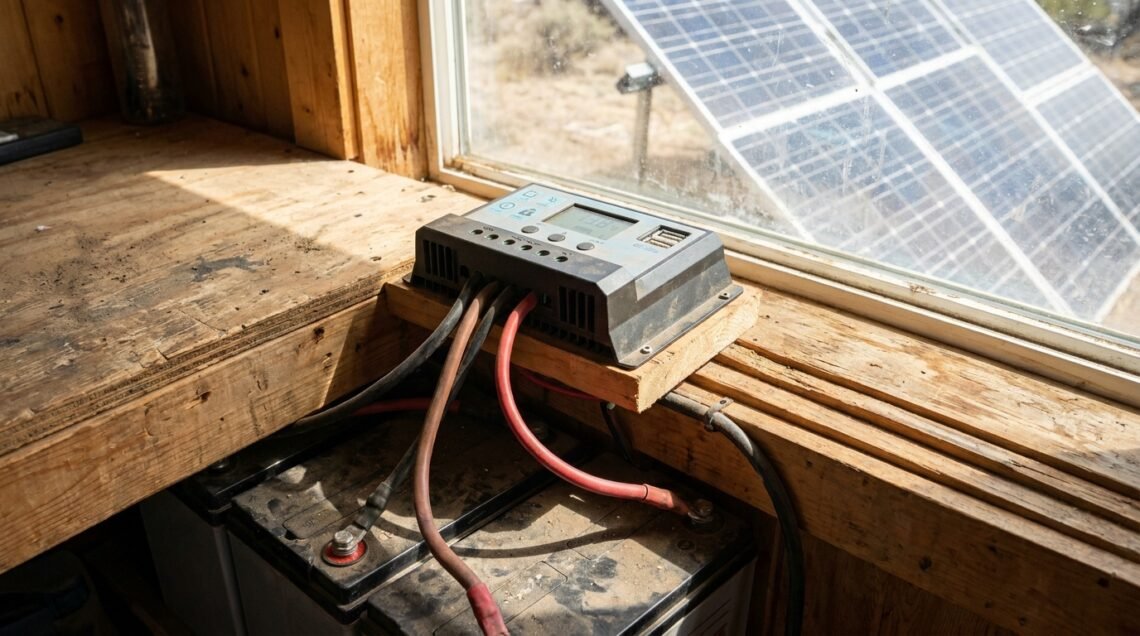
A charge controller acts as a smart valve between your solar panels and your battery. Its primary job is to regulate the flow of electricity to prevent overcharging, which can permanently damage your batteries. It also stops the battery from discharging back through the solar panels at night when there’s no sun. Beyond these crucial protection functions, they also play a significant role in maximizing the energy you get from your panels.
Table of Contents
The Core Function: Protecting Your Batteries
- Preventing Overcharging: This is paramount. Batteries have specific voltage limits. If you exceed these, you can cause gassing (in lead-acid batteries), damage internal components, and significantly shorten their lifespan. A charge controller stops the charging process once the battery is full.
- Preventing Deep Discharge: If a battery is drained too much, it can also be damaged. Some controllers also have low-voltage disconnect features to prevent this.
- Preventing Reverse Current: At night, or when clouds roll in, the voltage from the battery can be higher than the voltage from the solar panels. Without a controller, the battery would discharge its power back into the panels, wasting energy and potentially damaging components.
The Secondary Function: Optimizing Energy Harvest
This is where MPPT and PWM really diverge. Beyond just protecting the battery, controllers can also work to ensure you’re getting the most energy possible from your solar panels under various conditions. Not all solar panels are created equal in how they output power, and not all battery charging needs are the same. The controller’s job is to find the sweet spot that delivers the most energy while respecting battery limits.
If you’re looking to enhance your understanding of solar energy systems, you might find the article on off-grid solar wiring diagrams particularly useful. It provides a comprehensive overview of how to effectively set up your solar system, which complements the insights gained from the article on the best solar charge controllers compared (MPPT vs PWM). For more information, check out the article here: off-grid solar wiring diagram explained.
PWM: The Simple and Sturdy Workhorse
PWM stands for Pulse Width Modulation. Don’t let the jargon scare you; the concept is pretty straightforward. Think of it as rapidly turning the flow of electricity on and off. By adjusting the duration of the “on” pulses versus the “off” pulses, the controller regulates the average voltage and current going to the battery.
How PWM Works in Practice
Imagine you have sunny panels and a battery that needs charging. A PWM controller essentially connects the solar panel directly to the battery, but it does so in very short bursts, thousands of times per second.
- When the battery is empty: The controller “stays on” for longer periods, allowing maximum current to flow.
- As the battery fills up: The “on” time gets shorter and shorter, and the “off” time gets longer.
- When the battery is full: The controller might stay “off” for most of the time, only pulsing on very briefly to maintain the charge.
The Voltage Matching Game
The key thing to understand about PWM is that it directly connects the solar panel’s voltage to the battery’s voltage. If your solar panel is rated for 18V (which is common for charging a 12V battery), and your battery is at 12.5V, the PWM controller will essentially force the panel to operate at or very near 12.5V.
Pros of PWM Controllers
- Cost-Effective: This is their biggest selling point. PWM controllers are significantly cheaper to manufacture and therefore to buy.
- Simple Design: Fewer complex components mean fewer things to go wrong. They are generally robust and reliable.
- Compact Size: Often smaller and lighter than MPPT controllers of similar amperage ratings.
- Good for Small Systems: If you have a small solar array (e.g., one or two panels) and a simple battery bank, a PWM controller can be perfectly adequate and the most economical choice.
Cons of PWM Controllers
- Lower Efficiency: This is their main drawback. Because they force the solar panel to operate at the battery’s voltage, they are not capturing the maximum possible power from the panel.
- Underperformance in Suboptimal Conditions: If your solar panels are not at their optimal temperature, or if there’s partial shading, their voltage can drop. A PWM controller will track this voltage drop, meaning you lose even more potential power.
- Limited Panel Compatibility: You generally need to match your solar panel voltage to your battery voltage more closely with PWM. For example, using a typical 18V “12V nominal” panel is fine for a 12V battery, but trying to charge a 24V system with such a panel can be problematic without using multiple panels in series.
MPPT: The Smart Power Maximizer
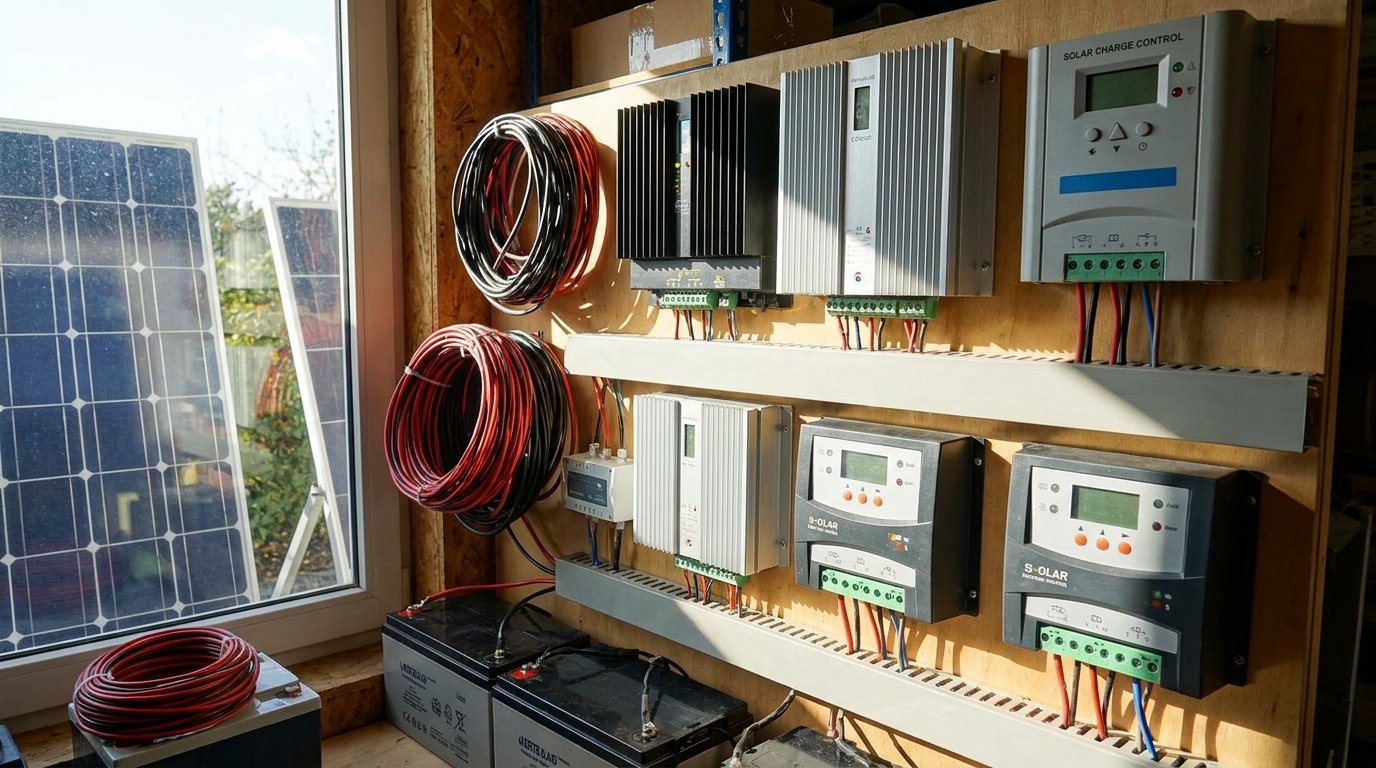
MPPT stands for Maximum Power Point Tracking. This is where the magic happens (or rather, the clever electronics). An MPPT controller analyzes the output of your solar panels and constantly adjusts its internal operation to ensure that the panels are always working at their “maximum power point.”
What is the “Maximum Power Point”?
Every solar panel has a “sweet spot” where it produces the most power (voltage multiplied by current). This point changes throughout the day and is affected by sunlight intensity, temperature, and the load it’s connected to.
Think of it like this: A solar panel has a graph of its voltage and current capabilities. The maximum power point is the specific combination of voltage and current on that graph that yields the highest Wattage output.
How MPPT Controllers Work
An MPPT controller acts as an intelligent converter. It takes the output from your solar panels and “transforms” it to deliver the optimal voltage and current to your battery.
- Identifies the Maximum Power Point (MPP): The controller constantly monitors the voltage and current produced by your solar panels. It uses algorithms to find the MPP, the point where the panel is producing the most watts.
- Converts Voltage and Current: Crucially, an MPPT controller does not force the solar panel voltage to match the battery voltage. Instead, it steps down the higher voltage from the panel and increases the current to deliver power to the battery. This is where the efficiency gains come from.
Let’s use an example:
- Solar Panel Output: At its MPP, your panel might be producing 30V and 5A (giving you 150W).
- Battery Voltage: Your 12V battery might be at 13V.
A PWM controller, trying to charge the 13V battery, would essentially force the panel to operate at around 13V, which might reduce its current output significantly, resulting in much less than 150W being delivered.
An MPPT controller would see the 30V at the panel’s MPP. It would then convert this down to a voltage suitable for charging the 13V battery, but crucially, it would increase the current. If the MPPT is 95% efficient, it might take that 30V and 5A (150W) and convert it to something like 14V at 10A (140W) delivered to the battery. You’ve effectively converted higher voltage, lower current from the panel into lower voltage, higher current for the battery, capturing much more of the panel’s potential.
Pros of MPPT Controllers
- Higher Efficiency: This is their primary advantage, often leading to 10-30% more energy harvest compared to PWM, especially in cooler temperatures and low-light conditions.
- Optimal Performance in Varied Conditions: They excel when the solar panel’s output is not perfectly matched to the battery’s needs, such as on cloudy days, in the morning/evening, or when panels are partially shaded.
- Flexibility in Panel Configuration: You can use higher-voltage solar panels (which are often more efficient and cost-effective per watt) and connect them to lower-voltage battery banks. This allows for longer wire runs with less voltage drop.
- Better Cold Weather Performance: Solar panels produce more voltage in colder temperatures. MPPT controllers are designed to take advantage of this extra voltage, whereas PWM controllers would essentially waste it.
- Suitable for Larger Systems: For any system beyond a very basic setup, MPPT is usually the preferred choice for maximizing energy.
Cons of MPPT Controllers
- Higher Cost: They contain more complex electronics, making them a more significant investment upfront.
- Larger Size and Weight: Generally bigger and heavier than PWM controllers for comparable amperage ratings.
- More Sophistication: While reliable, there are more components that could potentially fail compared to a simple PWM unit.
Comparing Key Features Side-by-Side
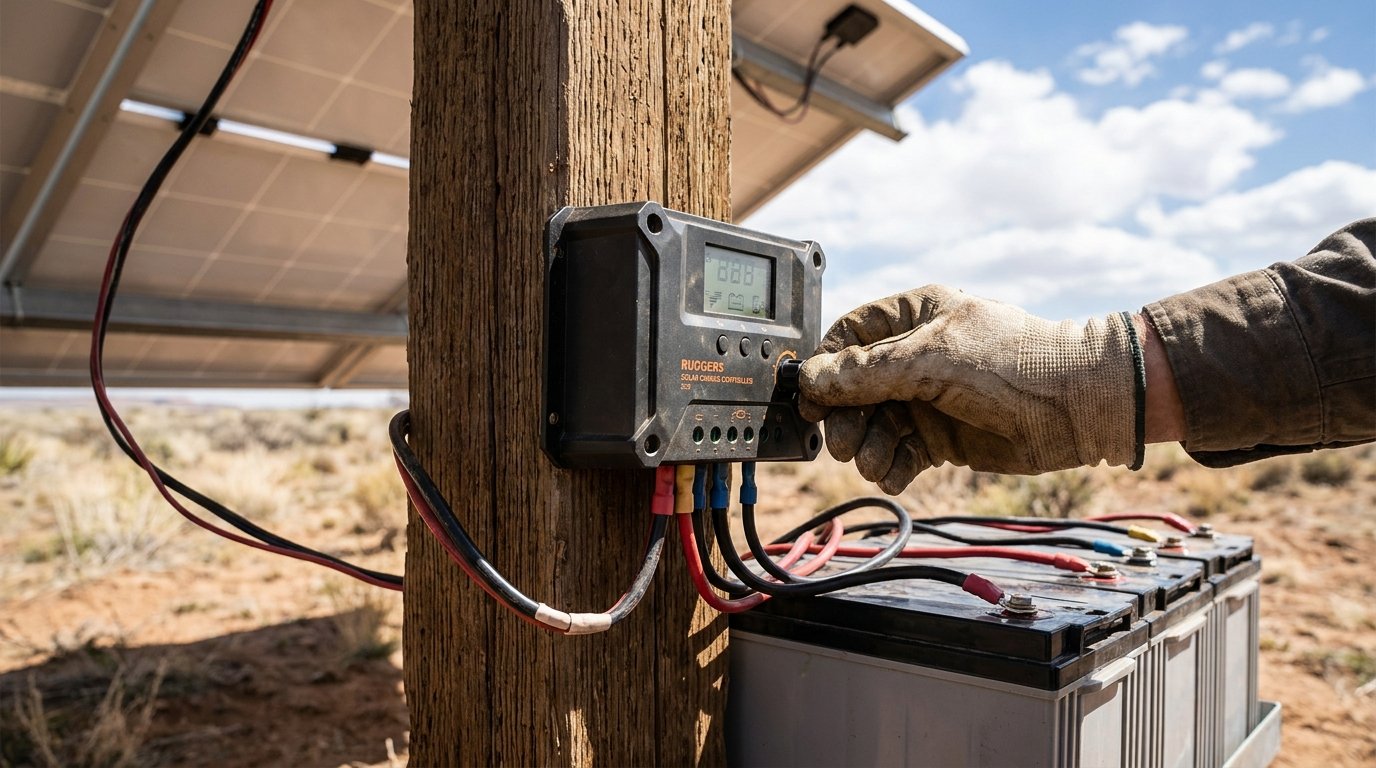
Let’s zoom in on the practical differences you’ll encounter when choosing between the two. It’s less about understanding complex theory and more about what these differences mean for your solar setup.
Efficiency: The Big Difference
- MPPT: Think of MPPT as a highly skilled negotiator. It constantly talks to your solar panels, understands their maximum potential output (their “maximum power point”), and then skillfully converts that power to feed your battery efficiently. This means you’ll capture more energy from your panels, especially when conditions aren’t perfect. This difference can translate into needing fewer panels to achieve your energy goals, or simply enjoying more power on any given day.
- PWM: PWM is more like a direct conduit. It connects the panel to the battery, but it makes the panel “talk” at the battery’s “language” (voltage). If the panel could produce more power by operating at a different voltage, the PWM controller doesn’t have the ability to facilitate that. It’s a much simpler, less efficient translation.
Voltage and Current Handling
- MPPT: This is where the “tracking” comes into play. MPPT controllers can take a higher voltage input from your solar array (even if it’s much higher than your battery voltage) and convert it down to the appropriate voltage for your battery, while increasing the current. This is a fundamental advantage for harvesting power. For instance, you can use three 72-cell solar panels wired in series (producing perhaps 60-70V open circuit) to charge a 12V battery bank, and an MPPT controller will efficiently convert that high voltage into usable current for your 12V battery.
- PWM: PWM controllers generally require that your solar panel’s operating voltage is closer to your battery’s voltage. If you have a 12V nominal solar panel (which actually peaks around 18V to charge a 12V battery), a PWM controller will essentially force that panel to operate at the battery’s current voltage, often losing the potential power available at the panel’s higher voltage. Attempting to charge a 24V battery with a single 18V panel using a PWM controller is generally not feasible or highly inefficient.
Cost: The Practical Decision Point
- MPPT: Generally, you’re looking at a higher upfront cost for MPPT controllers. They are technologically more sophisticated, and this reflects in their price tag.
- PWM: These are the budget-friendly champions. Their simpler design makes them significantly cheaper. If you’re building a very small system or on a tight budget, this is a material consideration.
System Size and Complexity
- MPPT: Recommended for most systems beyond the very basic. If you have multiple panels, a larger battery bank, or you want to maximize power harvest (e.g., for off-grid living, full RV conversion, or professional installations), MPPT is usually the way to go. They offer greater flexibility in how you can string your panels together.
- PWM: Best suited for smaller, simpler systems. Think a single panel on a small RV, a shed, or a trickle charger for a boat. For these applications, the extra cost and complexity of MPPT might not provide a significant enough benefit to justify the price.
Environmental Conditions: Where Differences Shine
- MPPT: Excels in situations where solar panel output isn’t ideal. Partial shade on one panel of an array? Sunny morning with cool air? A cloudy day? MPPT controllers are designed to adapt and squeeze out whatever power is available. They can also better exploit the higher voltage produced by panels in cold weather.
- PWM: Performance degrades more noticeably in less than optimal conditions. If your panels are warm, or there’s less sun, the voltage drops, and the PWM controller can’t compensate effectively.
When to Choose Which: Practical Application Scenarios
| Feature | MPPT Solar Charge Controller | PWM Solar Charge Controller |
|---|---|---|
| Efficiency | High efficiency, up to 99% | Lower efficiency compared to MPPT |
| Cost | More expensive | Less expensive |
| Performance in low light conditions | Works well in low light conditions | Less effective in low light conditions |
| Flexibility | Can handle higher voltage and current | Limited in handling higher voltage and current |
| Overall Performance | Better overall performance | Good for smaller systems or where cost is a major concern |
This is where we move from theory to your actual solar project. The “best” controller isn’t a universal answer; it depends entirely on your specific needs and constraints.
Scenario 1: The Small Scale Hobbyist/Off-Grid Shed
- Typical Setup: One or two small solar panels (e.g., 50-100W each), a small deep-cycle battery (e.g., car battery or small AGM), powering a few lights, a phone charger, or a small fan.
- Recommendation: PWM. For this kind of application, a PWM controller is often perfectly adequate. You’re not trying to maximize every last watt, and the cost savings can be significant. The simplicity of PWM also means less potential for troubleshooting. You’ll want to match your panel voltage to your battery voltage reasonably well – a “12V nominal” panel is ideal for a 12V battery.
Scenario 2: The Weekend Warrior RV or Van Conversion
- Typical Setup: A few medium-sized panels (e.g., 100-200W each), a decent-sized battery bank (e.g., 200-400Ah house batteries), powering a fridge, lights, water pump, and electronics.
- Recommendation: MPPT. While a PWM might technically work, you’ll likely find yourself wishing for more power, especially on cloudy days or when you’re parked under a partially shaded tree. An MPPT controller will allow you to get more out of your panels, potentially allowing you to live more comfortably off-grid for longer periods. It also offers more flexibility in panel configuration if you decide to expand later. You can use higher voltage panels which can be more cost-effective per watt.
Scenario 3: Full-Time Off-Grid Living or Larger Systems
- Typical Setup: A substantial solar array (e.g., 1000W+), larger battery bank (e.g., lithium or multiple lead-acid), powering a full range of appliances, including AC loads, microwaves, etc.
- Recommendation: MPPT. Without question, MPPT is essential here. Maximizing energy harvest is no longer a nice-to-have; it’s a necessity. The efficiency gains from MPPT will translate directly into usable power, potentially reducing the number of panels or batteries you need, saving significant money and space in the long run. The ability to use higher voltage panel arrays also reduces wire costs and voltage drop over longer distances.
Scenario 4: Systems with Varying Light and Temperature
- Typical Setup: Any system where panels might experience partial shading, or where temperatures vary significantly throughout the day or year (e.g., systems in desert climates, or those experiencing morning fog followed by bright sun).
- Recommendation: MPPT. The inherent ability of MPPT controllers to find the maximum power point under fluctuating conditions makes them far superior in these scenarios. A PWM controller’s efficiency will plummet when the panel voltage drops due to shade or heat, whereas an MPPT will intelligently adapt.
Advanced Considerations and Nuances
Beyond the basic MPPT vs. PWM decision, there are a few more technical points worth touching on, especially if you’re looking to really optimize your system.
Panel Voltage vs. Battery Voltage “Mismatch”
This is the core reason MPPT excels. Solar panels have an ideal operating voltage (Vmp) and an open-circuit voltage (Voc). Batteries have a charging voltage that changes as they fill.
- PWM: Forces the panel to operate at or near the battery voltage. If the panel’s Vmp is 18V and the battery is at 12.5V, the PWM controller will effectively pull the panel down to around 12.5V, losing the potential power that would be generated at 18V.
- MPPT: Operates the panel at its Vmp and then converts that power down to a suitable voltage for the battery. So, if the panel is at 18V and producing its maximum power (e.g., at 4A), the MPPT controller can take that 18V and 4A (72W) and convert it into, say, 13.5V at 5A (67.5W), capturing significantly more of the panel’s potential. The exact conversion ratio depends on the voltage differential and the specific MPPT algorithm.
Series vs. Parallel Panel Configurations
Understanding how you wire your solar panels is crucial and directly relates to your controller choice.
- PWM: Generally prefers panels wired in parallel to keep voltage relatively low and matched to the battery (e.g., several “12V nominal” panels in parallel to charge a 12V battery). Trying to wire panels in series for higher voltage charging with a PWM is inefficient because the PWM still tries to match the battery’s low voltage.
- MPPT: Offers much more flexibility. You can wire panels in series to create higher voltages, which is often beneficial for reducing wire thickness and voltage drop over long distances, especially when charging a battery bank. An MPPT controller can then efficiently step down that higher voltage to charge your battery. For example, you can wire multiple 12V panels in series to create a 24V, 36V, or even 48V array, and an MPPT controller will happily charge a 12V or 24V battery bank from it.
Charge Stages: More Than Just “On” and “Off”
Both MPPT and PWM controllers employ multi-stage charging to properly condition the battery and maximize its lifespan. The difference is how they achieve these stages.
- Bulk Charge: This is the initial stage where the controller provides maximum current to the battery until it reaches a certain voltage. Both MPPT and PWM do this, but MPPT will be delivering more current due to its efficiency.
- Absorption Charge: Once the bulk voltage is reached, the controller holds the voltage steady and allows the current to taper off as the battery fills. MPPT controllers are better at maintaining the optimal voltage for the solar panel during this phase, ensuring they are still generating as much power as possible.
- Float Charge: A maintenance stage where the controller applies a lower voltage to keep the battery topped up without overcharging. Both types do this.
- Equalization (Primarily for Lead-Acid): Some controllers offer an aggressive charging cycle for lead-acid batteries to help balance cell voltages and prevent sulfation. This is more common in higher-end PWM and most MPPT controllers.
Efficiency Ratings and Real-World Performance
- MPPT Efficiency: Manufacturers will quote an MPPT efficiency (e.g., 95-99%). This refers to how effectively the controller converts the solar array’s available power to the battery. This is a critical number.
- PWM “Efficiency”: PWM controllers don’t have a true “MPPT efficiency” rating because they don’t track the maximum power point. Their efficiency is more about the losses in the switching mechanism itself, which are typically quite low (often 80-90% overall, but the opportunity cost of not tracking MPP far outweighs this).
- Real-World Performance: The percentage figures quoted are often under ideal laboratory conditions. In the real world, temperature, wiring, and partial shading all impact performance. MPPT’s advantage becomes even more pronounced when all these real-world factors are considered.
Making the Final Decision: It’s About Your System
So, we’ve covered the what, why, and how of MPPT and PWM. Now, let’s bring it all home and make a decision. The key takeaway is that for most modern solar installations, especially those where maximizing energy output or having flexibility is important, MPPT is the clear winner.
When PWM is Still a Viable Option:
- Budget is the Absolute Top Priority: You cannot afford an MPPT controller, and the cost savings are essential for getting your project started.
- System is Extremely Small: We’re talking about a single panel charging a single small battery for minimal loads. The performance gain from MPPT would be negligible and not worth the extra cost.
- Simplicity is Paramount: You want the simplest possible system with very few components and minimal troubleshooting potential.
When MPPT is Almost Always the Better Choice:
- Maximizing Energy Harvest is Important: You want to get the most power out of your solar panels, even on cloudy days or in less-than-ideal conditions.
- You Plan to Expand Later: An MPPT controller provides the flexibility to add more panels or change your array configuration without needing to replace the controller.
- You Have Higher Voltage Panels: Using higher voltage panels (e.g., “24V nominal” or those with higher Voc) wired in series to charge a lower voltage battery bank is a common and efficient strategy that requires an MPPT controller.
- You’re Building a System for Off-Grid Living, RVs, Boats, or Any Application Where Reliability and Performance are Key: The long-term benefits of increased energy production and better battery health provided by MPPT will likely outweigh the initial cost difference.
- Your Panels Are Subject to Shading or Varying Temperatures: MPPT’s ability to adapt to changing conditions is a significant advantage.
Think of it this way: If you’re buying a car, you can get a basic model that gets you from point A to point B (PWM). Or, you can get a more advanced model that offers better fuel efficiency, more features, and a smoother ride, even if it costs a bit more upfront (MPPT). For serious solar projects, investing in that “more advanced model” often pays for itself over time.
By understanding these differences, you can make a practical and informed decision about which type of solar charge controller will best serve your needs and help you harness the sun’s power effectively.
FAQs
What is a solar charge controller?
A solar charge controller is a device that regulates the voltage and current from solar panels to the battery to prevent overcharging and damage to the battery.
What is the difference between MPPT and PWM solar charge controllers?
MPPT (Maximum Power Point Tracking) controllers are more efficient than PWM (Pulse Width Modulation) controllers as they can convert excess voltage into additional current. This allows MPPT controllers to maximize the power output from solar panels.
What are the advantages of MPPT solar charge controllers?
MPPT controllers are more efficient in converting solar energy into usable power, especially in low-light or cloudy conditions. They also allow for longer wire runs between the solar panels and the controller without significant power loss.
What are the advantages of PWM solar charge controllers?
PWM controllers are simpler and more cost-effective than MPPT controllers. They are suitable for smaller solar power systems and applications where maximizing power output is not critical.
Which type of solar charge controller is best for my system?
The choice between MPPT and PWM controllers depends on the size of the solar power system, the available budget, and the specific requirements of the application. MPPT controllers are generally recommended for larger systems or those in areas with variable weather conditions, while PWM controllers are suitable for smaller, simpler systems.