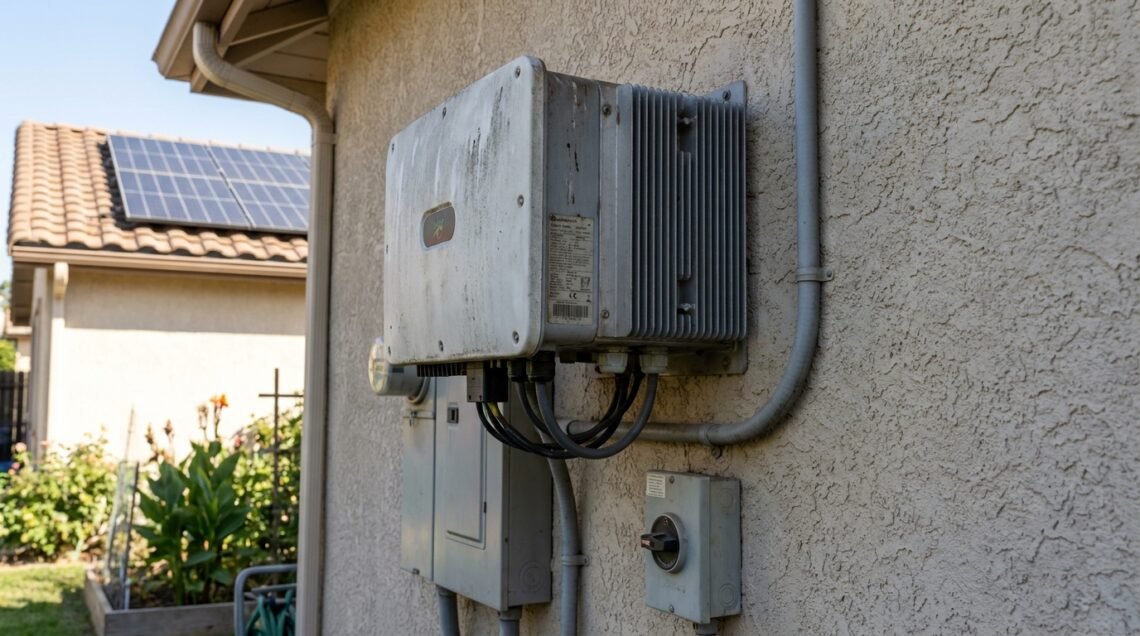
Choosing the right solar inverter is a pretty big deal when you’re going off-grid. It’s the brain of your entire solar power system, taking that raw DC power from your solar panels and turning it into the usable AC power you need for your appliances. Get it wrong, and you could find yourself with flickering lights, appliances that don’t work, or even a system that shuts down when you need it most. So, how do you pick the one that’s actually going to serve you well?
Table of Contents
Sizing Your Inverter: Not a “One Size Fits All” Situation
This is where most people get it right or wrong. The inverter needs to be able to handle the power demands of your home, especially during those peak usage times.
Understanding Your Energy Needs: The Foundation
Before you even look at an inverter, you need to know what you’re going to be powering. This isn’t about guessing; it’s about getting a handle on your actual consumption.
Creating an Appliance Inventory
Walk through your home and list everything that uses electricity. Don’t forget those little things like phone chargers, Wi-Fi routers, and even standby power draw from TVs. For each item, find its power consumption. This is usually listed in Watts (W) or Amps (A) on a label on the appliance itself or in its manual. If it’s in Amps, you can convert it to Watts by multiplying by your system’s voltage (which is usually 12V, 24V, or 48V for off-grid DC systems).
Calculating Peak Load
This is the most crucial part. Identify the times of day when you’re likely to run multiple appliances simultaneously. Think about what you’d be using during dinner prep (fridge, microwave, oven, lights), or if you have a morning routine that involves a coffee maker, toaster, and electric kettle. Add up the wattage of all the appliances that could be running at the same time. This gives you your peak load. Your inverter needs to be able to handle this without breaking a sweat.
Considering Surge Loads
Some appliances, particularly those with motors (like refrigerators, pumps, or power tools), draw a lot more power for a brief moment when they first start up than they do when they’re running. This is called surge power. You need to make sure your inverter can handle these surges. Look for the inverter’s “surge capacity” or “peak power” rating, and ensure it significantly exceeds the surge requirements of your largest motor-driven appliances. A good rule of thumb is to have a surge capacity at least two to three times the running wattage of your largest starting appliance.
When considering how to choose the right solar inverter for off-grid living, it’s essential to explore various factors such as inverter types, power requirements, and efficiency ratings. For a deeper understanding of the implications of off-grid solar systems and to ensure you’re making informed decisions, you may find it helpful to read our related article on the topic. You can access it here: Off-Grid Solar System Setup for Beginners (Complete Guide). This resource provides valuable insights that can complement your knowledge about solar inverters and their role in sustainable living.
Types of Solar Inverters: Which One is Right for Your Off-Grid Setup?
Different inverter types suit different off-grid systems. Knowing the nuances will save you headaches down the line.
The Key Player: Off-Grid Inverters (Standalone Inverters)
These are designed specifically for off-grid applications and don’t rely on a grid connection. They manage the flow of power from your solar panels, batteries, and to your loads.
Pure Sine Wave vs. Modified Sine Wave: A Crucial Distinction
This is probably the most important technical detail to understand.
- Pure Sine Wave Inverters: These produce a clean, smooth power output that’s virtually identical to what you get from the grid. This is essential for sensitive electronics like computers, modern TVs, medical equipment, and appliances with variable speed motors. They are generally more expensive but offer better compatibility and performance. If you need to run anything with a digital display, microchip, or complex electronics, you need a pure sine wave inverter.
- Modified Sine Wave Inverters: These create a stepped approximation of a sine wave. They are cheaper and can work fine for simple resistive loads like basic lights or heaters. However, they can cause problems with many modern electronics, leading to humming, overheating, reduced efficiency, or even damage. You might experience issues with appliances that have timers, digital controls, or variable speed motors. For off-grid living, where reliability is paramount, the slight extra cost of a pure sine wave inverter is almost always worth it.
Hybrid Inverters: A More Modern Approach
These are becoming increasingly popular. They can function as an off-grid inverter, but they also have the capability to connect to the grid, or even integrate with a generator.
Grid-Tied with Battery Backup: Not Purely Off-Grid, But Relevant
While this isn’t strictly for a 100% off-grid situation, many people start with a grid-tied system with battery backup for resilience during outages. If your goal is eventual independence, these inverters offer a pathway to get there. They can prioritize self-consumption, store excess solar energy, and discharge it when needed, reducing your reliance on the grid. They can also be configured with generators.
Battery System Compatibility: The Inverter’s Best Friend
Your inverter and battery bank need to speak the same language. Mismatched components will lead to a system that doesn’t work efficiently, or at all.
Voltage: Matching the System’s Pulse
Solar inverters operate at specific DC voltages – typically 12V, 24V, or 48V. Your battery bank must match this voltage. You can’t (easily or efficiently) connect a 48V solar inverter to a 12V battery bank without significant voltage conversion steps, which is inefficient and adds complexity.
Series and Parallel Connections Explained
- Series: Connecting batteries in series increases the voltage. For example, two 12V batteries connected in series will give you a 24V bank.
- Parallel: Connecting batteries in parallel increases the amp-hour (Ah) capacity while keeping the voltage the same. For example, two 12V 100Ah batteries connected in parallel will give you a 12V 200Ah bank.
You’ll often use a combination of series and parallel connections to achieve the desired voltage and capacity for your system. Your inverter’s voltage rating must match your final battery bank voltage.
Charging and Discharging Rates: Keeping Pace
The inverter plays a crucial role in managing how your batteries are charged by the solar panels and discharged to power your home.
Maximum Charge Current
The inverter’s charge controller (or its integration with the battery bank) needs to be able to deliver enough current to charge your batteries effectively from your solar array. If your solar array is producing a lot of power, but your inverter can’t push it into the batteries fast enough, you’ll waste potential energy. Check the inverter’s maximum charge current rating against the recommended charging rate for your battery bank.
Maximum Discharge Current
This relates back to your peak load calculation. The inverter must be able to draw enough current from the batteries to meet the demands of your appliances during those peak times. If it can’t, your system will shut down or behave erratically.
Efficiency and Performance: Getting the Most Bang for Your Buck
An efficient inverter means more of your solar energy actually powers your home, not wasted as heat.
Understanding Efficiency Ratings
Inverters have efficiency ratings, usually expressed as a percentage. This tells you how much of the DC power from your batteries is converted to AC power for your home.
Peak Efficiency vs. Average Efficiency
- Peak Efficiency: This is the highest efficiency the inverter achieves under optimal conditions, often at a specific load level.
- Average Efficiency: This is a more realistic measure of how efficient the inverter is over a typical range of operating loads. For off-grid use, where loads can vary significantly, average efficiency is often a more useful metric to consider. An inverter with a high peak efficiency but a low average efficiency might not perform as well in real-world scenarios.
Standby Power Consumption: The “Always On” Drain
Even when your appliances aren’t running, your inverter consumes a small amount of power just to be ready. This is its standby consumption or “vampire draw.”
Minimizing Phantom Loads
In an off-grid system, every watt counts. Look for inverters with low standby power consumption. This might seem minor, but over weeks and months, it adds up, meaning your batteries drain faster when there’s no sun, or you need to run your generator more often. Newer inverter models often have improved standby power efficiency.
When considering how to choose the right solar inverter for off-grid living, it’s essential to understand the various types available and their specific applications. A related article that provides valuable insights into optimizing your solar energy system can be found here. This resource delves into the nuances of solar technology and offers practical tips that can enhance your off-grid experience, ensuring you make informed decisions tailored to your energy needs.
Key Features to Look For: Beyond the Basics
Once you’ve got the core requirements sorted, these extra features can make a big difference to your off-grid experience.
What to Prioritize Based on Your Needs.
- Built-in Charge Controller: Many off-grid inverters have an integrated charge controller. This simplifies your system by combining two components into one. Ensure the charge controller type (PWM or MPPT) is suitable. For most modern systems, MPPT (Maximum Power Point Tracking) is significantly more efficient, especially in varying light conditions and with different panel array configurations.
- Ground Fault Detection and Protection (GFCI): Safety is paramount. A GFCI feature helps prevent electrical shocks by quickly interrupting the circuit if it detects a ground fault.
- Overload and Short Circuit Protection: Essential features that protect both the inverter and your appliances from damage.
- Low Voltage Disconnect (LVD): This feature automatically shuts down the inverter when the battery voltage drops to a predefined level, protecting your batteries from over-discharge, which can significantly shorten their lifespan.
- Generator Input/Compatibility: If you plan to use a generator as a backup for charging batteries or powering loads when solar isn’t enough, ensure your inverter has a generator input or is compatible with a generator transfer switch. Some inverters can even automatically start and stop your generator.
- Remote Monitoring: Many higher-end inverters offer remote monitoring capabilities via an app or web interface. This allows you to check your system’s performance, battery status, and energy production from anywhere, which can be incredibly useful for troubleshooting and optimizing your energy usage.
- Input for Grid or Multiple Sources: While you’re going off-grid, some inverters are designed to accept input from multiple sources. This might include solar, a generator, and even a grid connection (if you want to keep that as a backup option in the future). Consider if you want the flexibility to add more power sources later.
- Ease of Installation and Maintenance: While you might hire an electrician, consider how straightforward the connections are. Some inverters come with clearer labeling and user-friendly interfaces. Also, think about the availability of spare parts and technical support in your region.
By carefully considering these factors, you can move beyond generic advice and select an off-grid solar inverter that genuinely meets the demands of your unique power needs and sets you up for successful, reliable off-grid living.
FAQs
What is a solar inverter?
A solar inverter is a device that converts the direct current (DC) electricity generated by solar panels into alternating current (AC) electricity that can be used to power household appliances and electronics.
What is off-grid living?
Off-grid living refers to living in a location that is not connected to the main electrical grid. Off-grid homes typically rely on alternative energy sources such as solar power to meet their electricity needs.
Why is it important to choose the right solar inverter for off-grid living?
Choosing the right solar inverter is crucial for off-grid living because it directly impacts the efficiency and reliability of the solar power system. The right inverter can maximize the energy harvested from the solar panels and ensure a stable power supply for off-grid homes.
What factors should be considered when choosing a solar inverter for off-grid living?
When choosing a solar inverter for off-grid living, factors such as the power output of the solar panels, the type of appliances being used, the battery storage system, and the overall energy consumption of the household should be taken into consideration.
What are the different types of solar inverters available for off-grid living?
There are several types of solar inverters available for off-grid living, including string inverters, microinverters, and hybrid inverters. Each type has its own advantages and considerations, so it’s important to choose the one that best suits the specific needs of the off-grid home.