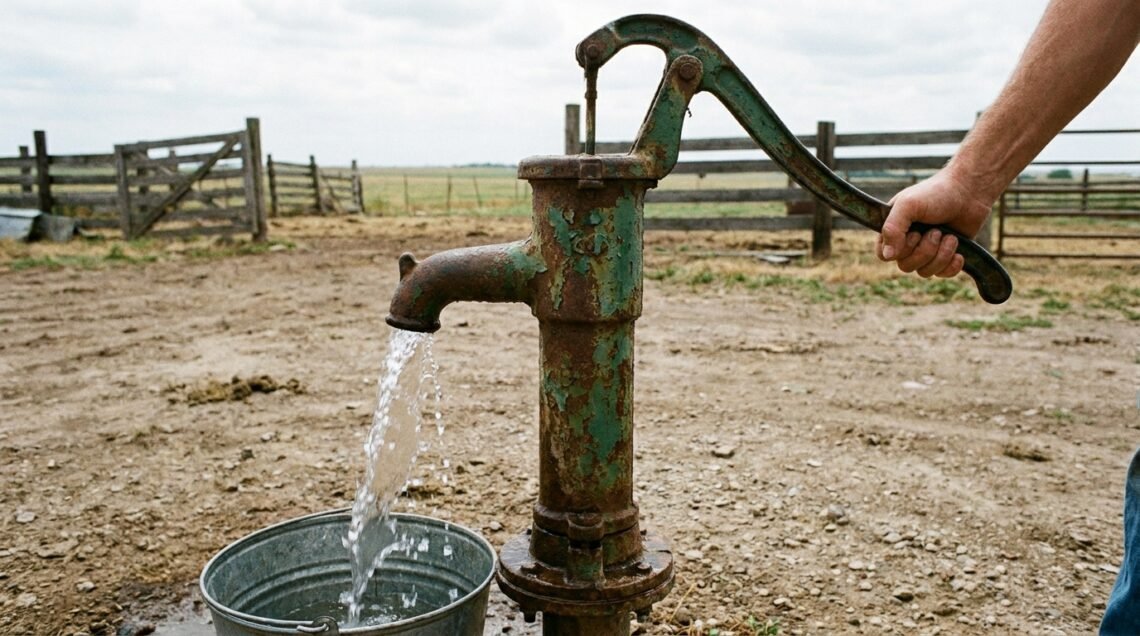
So, you’re thinking about a hand pump for your well. Good question! Let’s get straight to it: Hand pumps for wells can absolutely be worth it, especially if you’re looking for a reliable, low-maintenance, and independent water source. They’re not the flashiest solution, but for many, they’re a smart and practical choice.
Table of Contents
The Basic Idea: How Hand Pumps Work
At their core, hand pumps are pretty simple machines that use the power of your own muscle to lift water from your well. You’re essentially creating a vacuum or pressure difference that forces the water up the pipe.
Mechanical Simplicity is Key
Forget electricity, complex wiring, or intricate moving parts. The beauty of a hand pump lies in its straightforward mechanical design. Most rely on a piston moving up and down within a cylinder.
The Piston and Cylinder Duo
Think of a bicycle pump. You push down, air goes out. A hand pump works on a similar principle, but instead of air, it’s water. The piston creates a seal, and as it moves, it either draws water up or pushes it out.
Valves: The Unsung Heroes
Crucial to the whole operation are the valves. These are one-way gates that allow water to move in the desired direction and prevent it from flowing back down. There’s usually a valve at the bottom of the cylinder (the foot valve) that lets water in but not out, and another valve on the piston itself.
Different Pumping Mechanisms
While the piston and cylinder are common, there are variations in how the pumping action is achieved.
Direct Action Pumps
These are your most basic models. You push down on the handle, and that directly drives the piston. Simple, effective, and requires a bit of effort.
Handle-Leverage Pumps
Many pumps use a lever system. This makes it easier to pump because the handle is longer than the stroke of the piston, giving you more leverage. It still uses muscle power, but it feels less strenuous.
Submersible Hand Pumps
These are a bit less common for standard wells but exist. The entire pumping mechanism is submerged in the water, which can be more efficient for deeper wells, but they’re generally more complex to install and maintain.
If you’re considering the practicality and efficiency of hand pumps for wells, you might find it beneficial to explore a related article that delves deeper into the advantages and disadvantages of various water sourcing methods. This article provides insights into alternative solutions for off-grid living and can help you make an informed decision. For more information, you can visit this link.
When a Hand Pump Really Shines
So, why would you choose a hand pump over, say, an electric submersible pump? It often comes down to specific needs and situations where reliability and independence are paramount.
Power Outage Proof Water
This is probably the biggest selling point. When the grid goes down, your hand pump keeps working. No batteries to recharge, no fuel to buy. If you live in an area prone to power outages, or you simply want that assurance, a hand pump is a significant advantage.
Preparedness and Self-Sufficiency
In uncertain times, having a reliable, independent water source is a cornerstone of preparedness. You’re not relying on external infrastructure that could be disrupted. It’s a tangible step towards self-sufficiency.
Rural and Off-Grid Living
For those living in remote areas without easy access to electricity or municipal water, a hand pump is often the most practical and cost-effective solution for everyday water needs.
Low Operating Costs
Once you’ve bought and installed it, the running costs of a hand pump are virtually zero. No electricity bills, no fuel costs. It’s purely powered by you.
Minimal Maintenance Hassle
Compared to electric pumps, which have motors, electronics, and seals that can fail, hand pumps are far simpler. Maintenance usually involves occasional lubrication and checking for wear and tear on seals or the piston.
Simple Fixes, Big Savings
Many repairs are things you can tackle yourself with basic tools, saving you on expensive service calls. Leaky seals or a worn piston can often be replaced without needing a professional.
Environmental Friendliness
It’s a small thing, but hand pumps are inherently eco-friendly. They use zero energy from fossil fuels or even electricity generated from potentially non-renewable sources.
Potential Downsides to Consider
Now, let’s be realistic. Hand pumps aren’t a perfect solution for everyone, and there are definite drawbacks to be aware of.
The Physical Effort Factor
This is the most obvious one. You have to physically pump the water. This means your water supply is directly tied to your energy levels.
Pumping Depth Limitations
While some heavy-duty models can handle significant depths, most common hand pumps are best suited for wells that aren’t excessively deep. Pumping water from hundreds of feet down by hand is a considerable challenge.
Static Water Level Matters
The “static water level” is the level of water in your well when no pump is running. The further down this level is, the more difficult and less efficient hand pumping becomes.
Pumping Rate Can Be Slow
You won’t be filling up a swimming pool with a hand pump in minutes. The rate at which you can draw water is much slower than with an electric pump. This might be fine for individual use but could be a bottleneck if you have high water demands.
Installation and Well Compatibility
Getting the pump installed correctly and ensuring it’s compatible with your well is crucial.
Well Casing and Diameter
The diameter of your well casing is a key factor. Hand pumps are designed to fit within specific casing sizes. If your well casing is too narrow or too wide for the pump you have in mind, you might run into problems.
Professional Installation Recommended
While some basic models are DIY friendly, for deeper wells or more complex pump types, professional installation is often a good idea to ensure it’s set up correctly and efficiently.
Water Quality and Volume Considerations
The type of pump and your well can influence the quality and amount of water you get.
Sediment and Debris
If your well has a tendency to get sediment or debris in it, this can wear down the seals and moving parts of a hand pump more quickly, requiring more frequent maintenance.
Filtration Might Be Necessary
Depending on your water source, you might need to consider inline filtration if the hand pump is your primary or only water source, to ensure it’s safe for drinking and household use.
Types of Hand Pumps to Choose From
Not all hand pumps are created equal. The type you choose will depend on your well’s depth, your water needs, and your budget.
The Classic “Stroke” Pump
This is what most people picture when they think of a hand pump. It’s usually mounted on top of the wellhead.
Common Brands and Models
You’ll find many well-known brands offering variations of these, often with different handle lengths for leverage and piston diameters for flow rate. Researching specific models based on reviews and specifications is key here.
Pitcher Pumps vs. Force Pumps
- Pitcher Pumps: These are usually for shallower wells and are designed to draw water up from a relatively small depth. They’re great for garden hoses or small water transfer.
- Force Pumps: These can push water higher, making them suitable for wells with a greater lift. They often have a more robust design.
Deep Well Hand Pumps
For wells where the water level is significantly below the surface, you’ll need a different approach.
Rod-Driven Pumps
These pumps have a long rod that extends down into the well, connecting to a pumping cylinder. The rod is what you operate from the handle above.
Installation Complexity
These are generally more involved to install than surface-mounted pumps, often requiring a wellhead assembly to support the rod and seal the well.
Submersible Aspects (Less Common for Pure Hand Pumps)
While most “hand pumps” are above ground, there are systems that incorporate a submersible cylinder with a rod connecting to a surface handle. These are often more expensive and complex.
Rotary Hand Pumps (for Water Transfer)
While not typically for well extraction, it’s worth mentioning rotary hand pumps. These are often used for transferring liquids from barrels or tanks. They work by turning a crank that rotates impellers, moving the fluid.
When considering the practicality of hand pumps for wells, it’s also important to explore other aspects of off-grid living that can enhance your self-sufficiency. For instance, understanding common solar mistakes can significantly impact your energy efficiency and overall sustainability. You can read more about this in the article on common off-grid solar mistakes that beginners make, which offers valuable insights for anyone looking to optimize their off-grid setup. This knowledge can complement your decision-making process regarding hand pumps and other essential systems for your homestead.
Making the Decision: Is it Right for You?
So, after all that, how do you decide if a hand pump is your best bet? It’s about weighing the pros and cons against your specific situation.
Assess Your Well Depth and Water Level
This is your primary filter. If your well is very deep with a low static water level, a basic hand pump might be impractical or just too much work. Measure your well depth and try to determine your static water level.
Use a Well Dipper or Measure Carefully
A simple well dipper (a weighted tape measure with a plunger) can help you determine the static water level. If you’re unsure, consult with a well driller or pump professional.
Consider Your Daily Water Needs
How much water do you actually use in a day? If it’s just for occasional watering or a small household, a hand pump might be perfectly adequate. If you have a large family, livestock, or significant irrigation needs, you might find it challenging to keep up.
Realistic Flow Rate Expectations
Remember, hand pumps provide a much lower flow rate than electric pumps. Factor this into your daily usage.
Water Storage as a Buffer
Some people mitigate the slower pumping rate by using a storage tank. You pump water into the tank throughout the day, and then draw from the tank for your immediate needs, which provides a buffer and ensures you have water readily available even if you’re not actively pumping.
Your Tolerance for Physical Exertion
Be honest with yourself. Are you prepared to do the physical work of pumping, especially on days when you might not feel your best? If you have physical limitations, a hand pump might not be the most sustainable solution.
Backup Options for Reduced Effort
Some hand pumps can be configured to work with a small electric motor or a generator backup for times when physical effort is difficult or impossible. This adds complexity and cost but offers flexibility.
Budget and Long-Term Costs
Hand pumps have a lower upfront cost than most electric pump systems. However, consider the long-term implications.
Upfront Investment vs. Ongoing Savings
While the initial purchase price is often lower, the true “worth” comes from the lack of ongoing electricity or fuel costs, and the potential for lower maintenance expenses over the pump’s lifespan.
Lifespan and Durability
Higher quality hand pumps, especially those made from durable materials like cast iron or stainless steel, can last for decades with proper care. This long lifespan can be a significant part of their value proposition.
What About Backup Power for Electric Pumps?
If you’re considering a hand pump primarily for power outage reliability, it’s worth comparing it to other backup options for electric pumps.
Generators
A generator can power an electric pump during an outage. However, this requires fuel, maintenance, and can be noisy and expensive to run continuously.
Battery Backup Systems
Some electric pumps can be paired with battery backup systems. These are often more expensive upfront and have a limited capacity, meaning you might only have water for a short period.
Ultimately, it’s a Personal Choice
There’s no single “right” answer. A hand pump is a fantastic solution for many, offering a reliable, cost-effective, and independent water source. But it requires an honest assessment of your needs, your well, and your willingness to put in the effort. If those factors align, a hand pump for your well can absolutely be worth it.
FAQs
What are hand pumps for wells?
Hand pumps for wells are manual devices used to extract water from underground wells. They are operated by hand and are commonly used in areas where access to electricity or motorized pumps is limited.
How do hand pumps for wells work?
Hand pumps for wells work by creating suction to draw water up from the underground well. The user operates a lever or handle, which in turn activates a piston or diaphragm to create the necessary suction to bring the water to the surface.
Are hand pumps for wells worth it?
Hand pumps for wells can be worth it in areas where access to electricity or motorized pumps is limited. They are relatively low-cost, low-maintenance, and can provide a reliable source of water for drinking, irrigation, and other purposes.
What are the advantages of using hand pumps for wells?
Some advantages of using hand pumps for wells include their simplicity, reliability, and independence from electricity or fuel. They can also be easily repaired and maintained, making them a practical option in remote or rural areas.
What are the limitations of hand pumps for wells?
Limitations of hand pumps for wells include the physical effort required to operate them, limited water flow compared to motorized pumps, and the potential for wear and tear over time. Additionally, in areas with high water tables, hand pumps may not be as effective.