So, you’re dreaming of that cozy off-grid cabin life, right? Maybe a weekend escape from the hustle, or a full-blown digital detox. One of the biggest questions that pops up is: “How am I going to power this place?” And that’s where portable power stations come in. Think of them as your cabin’s personal generator, but quieter, cleaner, and way more convenient.
The “best” portable power station for your off-grid cabin isn’t a one-size-fits-all answer. It really boils down to what you need to power and for how long. We’re talking about figuring out your power demands, then matching them with a unit that can handle the load without breaking a sweat. Let’s dive into what you need to consider to find the right fit for your little slice of wilderness.
Before you even start looking at brands or fancy features, you’ve got to get real about what you’ll be plugging in. This is probably the most important part of the whole process, and it’s not as complicated as it sounds.
Table of Contents
What Appliances Will You Actually Use?
Be honest with yourself. Are you bringing your entire kitchen setup, or just a coffee maker and some lights? List out every single thing you envision using electricity for.
- Lighting: This is usually a low-power draw. LEDs are your best friend here – super efficient.
- Electronics: Laptops, phones, tablets, e-readers. These are generally low to moderate power consumers.
- Kitchen Gadgets: Think about your morning routine. Coffee maker? Electric kettle? Toaster? These can be power hogs, especially electric kettles and toasters.
- Appliances: This is where things get serious. A small fridge? A fan? A pump for water? These will significantly increase your power requirements.
- Tools: If you plan on doing any DIY or repairs, a cordless drill or other power tools will need a good chunk of juice.
Wattage: The Language of Power
Every electrical device has a wattage rating. This tells you how much power it uses when it’s running. You’ll find this on a sticker on the appliance itself, or in its manual.
- Running Wattage: This is the continuous power an appliance uses while it’s on.
- Peak/Surge Wattage: Some appliances, like refrigerators or power tools, need a big burst of extra power to start up. This is their surge wattage, and it can be significantly higher than their running wattage. Your power station needs to be able to handle this surge, or it won’t be able to power those devices.
Calculating Your Total Daily Energy Consumption
Once you have your list of appliances and their wattages, you can start to estimate your daily energy needs in watt-hours (Wh).
- Example: Let’s say you have an LED light that uses 10 watts and you plan to run it for 4 hours a day. That’s 10 watts * 4 hours = 40 Wh.
- Example 2: A small portable fridge might use 50 watts running, but have a surge of 150 watts. If it runs 8 hours a day (intermittently), you’d calculate its daily consumption based on its running wattage over that time, and crucially, ensure the power station’s surge capacity can handle that 150-watt startup jolt.
Add up the watt-hours for all your devices. This gives you your total daily energy requirement. This is your baseline for choosing a power station.
If you’re considering the best portable power stations for off-grid cabins, you might also find it helpful to explore the costs associated with setting up an off-grid solar system. Understanding the financial aspects can greatly influence your decision on which power station to choose. For more insights on this topic, check out the article on off-grid solar system costs for small homes. This resource provides valuable information that can complement your research on portable power solutions.
Key Features to Look For in a Portable Power Station
Now that you know what you need, let’s talk about what makes a power station suitable for off-grid cabin life. It’s not just about raw power; it’s about how that power is delivered and how you can replenish it.
Battery Capacity: How Much “Gas” Do You Have?
This is measured in watt-hours (Wh) or amp-hours (Ah). For off-grid use, Wh is usually the more straightforward metric.
- Matching Your Needs: Your total daily energy consumption is your starting point. You’ll want a power station with a capacity that comfortably exceeds this, allowing for inefficiencies and the ability to go a day or two without recharging.
- Buffer is Key: Don’t aim for a power station that just meets your daily needs. You’ll want a buffer. Aim for at least 1.5 to 2 times your estimated daily usage. This gives you peace of mind and flexibility.
- Lithium-Ion vs. Other Chemistries: Most modern power stations use Lithium Iron Phosphate (LiFePO4) or Lithium-ion (NMC). LiFePO4 batteries generally offer a longer lifespan and are considered safer, but can be a bit heavier and more expensive.
Power Output (Wattage): Can it Handle the Load?
This refers to how much power the station can deliver at any given moment. It’s broken down into two crucial figures:
- Continuous Output: This is the sustained wattage the station can provide. Make sure this meets the running wattage of your most demanding appliance.
- Surge/Peak Output: As mentioned earlier, this is critical for devices with motors or heating elements that need a startup boost. If a device’s surge wattage is higher than the power station’s surge capacity, it simply won’t start. Always check this spec carefully.
Recharging Options: Staying Powered Up Off-Grid
This is where the “off-grid” aspect really comes into play. How will you recharge your power station when you’re away from a wall outlet?
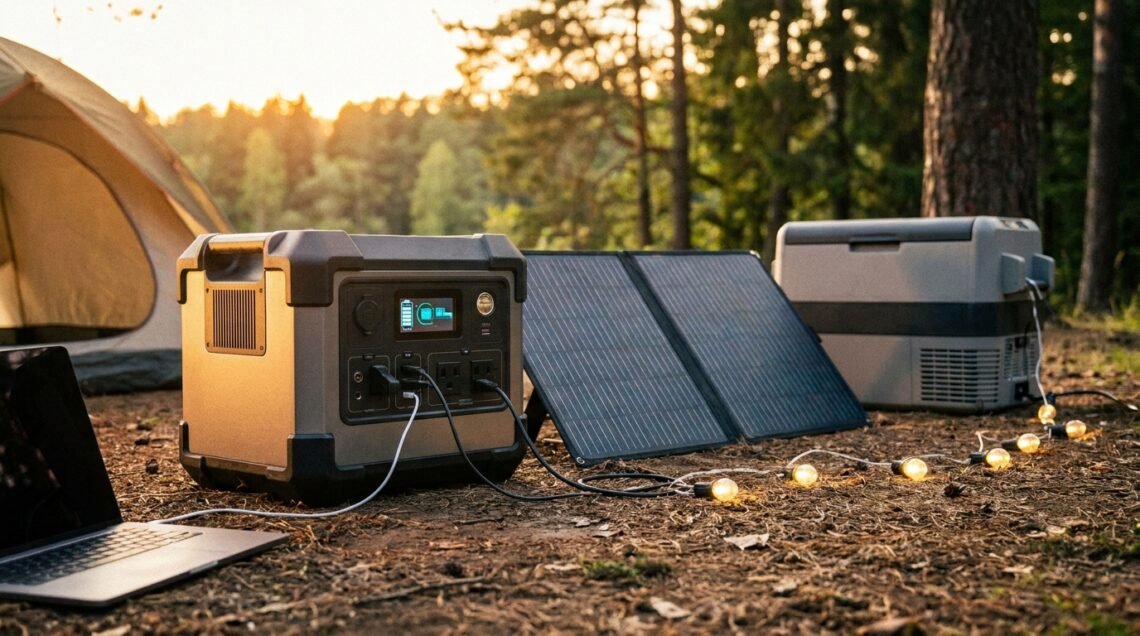
- Solar Charging: This is the holy grail for off-grid power. Look for stations that have dedicated solar input ports and can handle a decent solar array.
- MPPT (Maximum Power Point Tracking) Controllers: These are built into the power station and are crucial for getting the most out of your solar panels. They optimize the power harvested from your panels, especially in variable sunlight conditions.
- Solar Panel Sizing: You’ll need to match your solar panel wattage to the input capacity of your power station. Too little, and it will take forever to charge. Too much, and the power station might not be able to accept it, or it could be wasted.
- AC Wall Charging: Convenient for topping up before you head out, but not useful when you’re actually off-grid.
- Car Charger (DC Input): Handy for topping up while driving, but typically a slower charging method. Some power stations offer this as a standard feature.
Portability and Durability: Built for the Outdoors
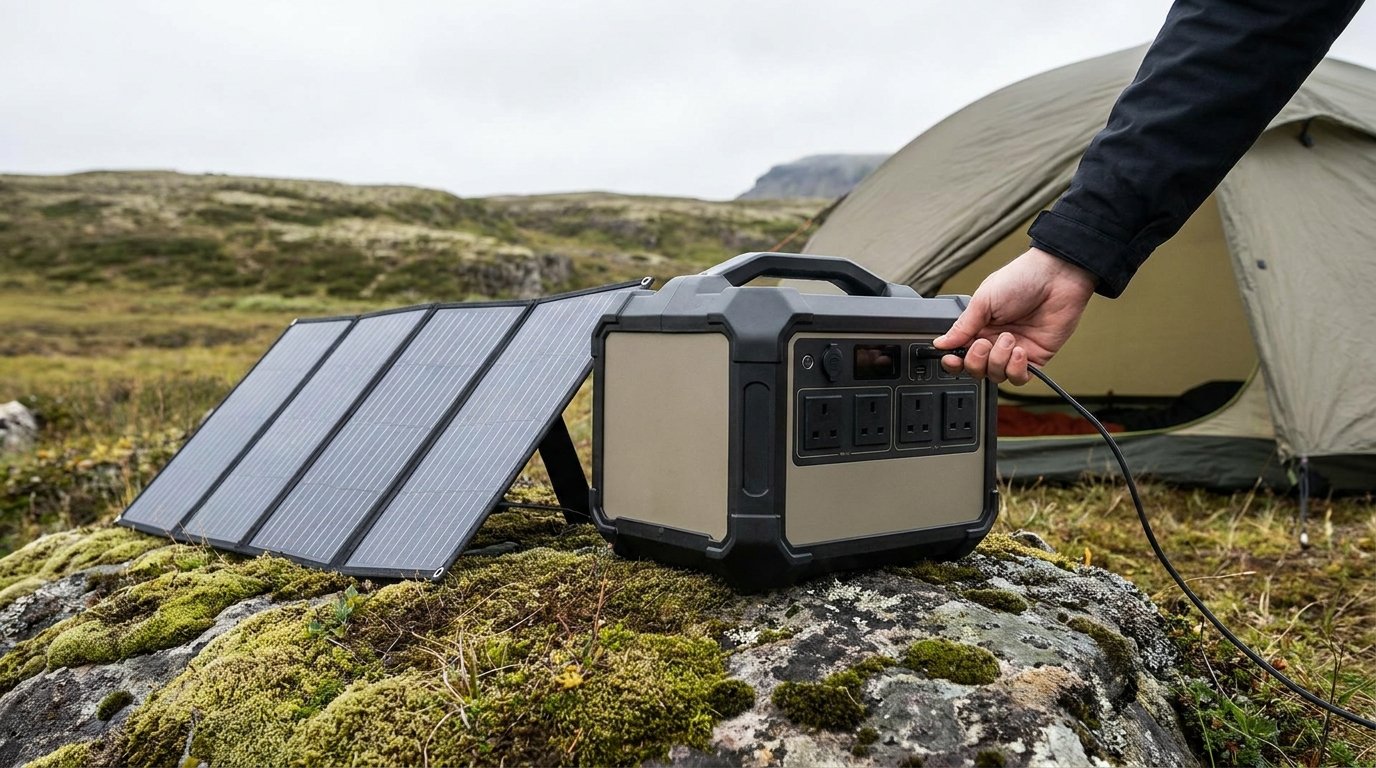
Your cabin might be remote, meaning you might need to carry your power station from your vehicle to your cabin, or even move it around within the cabin.
Size and Weight Considerations
- Carrying Handles: A well-designed carrying handle is essential. Some larger units have wheels, which can be a lifesaver.
- Weight Distribution: Even if a unit is heavy, good design can make it more manageable.
- Footprint: Consider where you’ll be storing it when it’s not in use.
Build Quality and Ruggedness
- Materials: Look for a robust casing that can withstand minor bumps and jolts. Outdoor environments can be unforgiving.
- Environmental Sealing: While not always explicitly advertised, some units are better designed to handle dust and moisture than others. Consider a weather-resistant bag if you’re in a particularly damp environment.
- Temperature Range: Be aware of the operating temperature range of the battery. Extreme heat or cold can impact performance and longevity.
Power Station Technology and Features to Consider
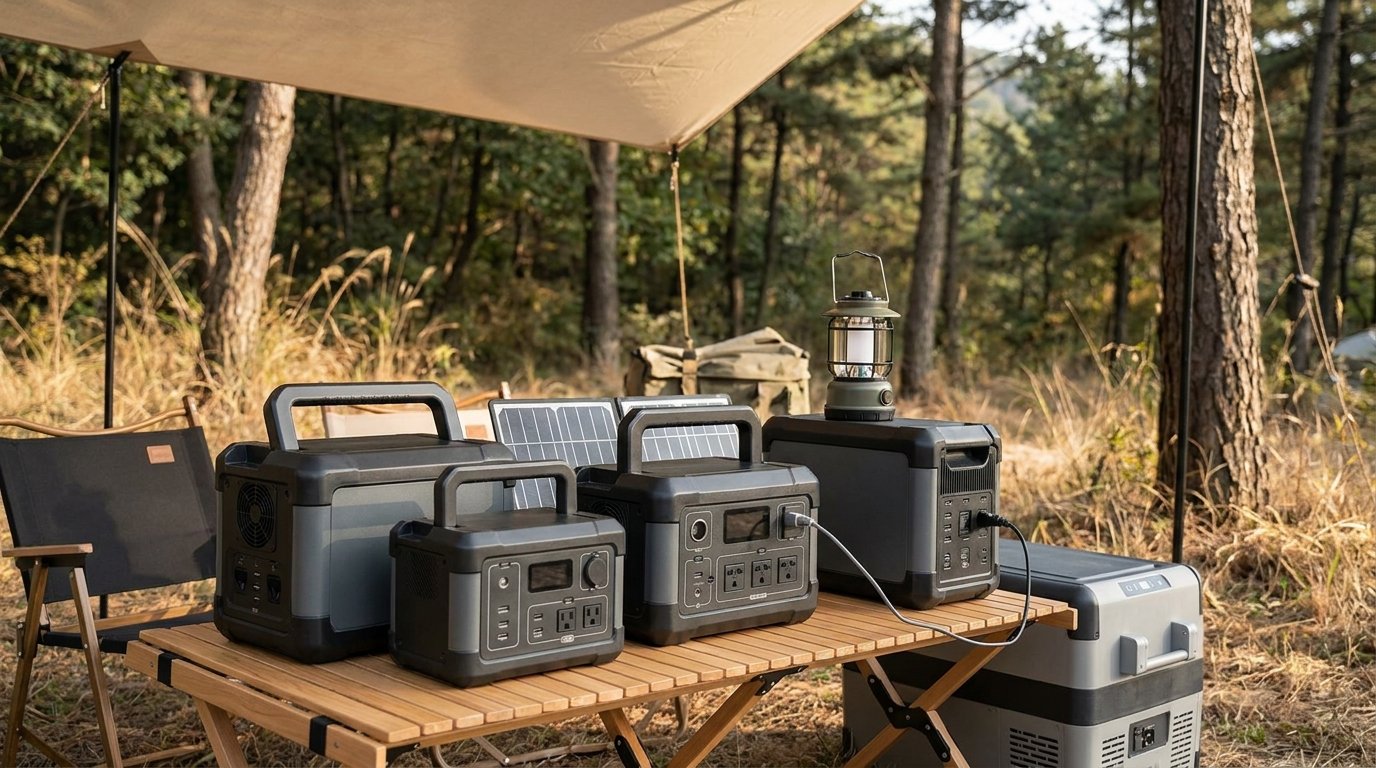
Beyond the core specs, there are a few tech-related features that can make a big difference in your off-grid experience.
Battery Chemistry: The Heart of the Power Station
We touched on this briefly, but it’s worth reinforcing.
- LiFePO4 (Lithium Iron Phosphate): This is increasingly becoming the go-to for serious off-grid use.
- Pros: Extremely long lifespan (thousands of charge cycles), much safer (less prone to thermal runaway), wider operating temperature range.
- Cons: Can be slightly heavier and more expensive upfront.
- NMC (Nickel Manganese Cobalt): Common in many consumer electronics.
- Pros: Lighter, generally less expensive.
- Cons: Shorter lifespan compared to LiFePO4, slightly less robust safety profile.
For a cabin where you expect regular use and want longevity, LiFePO4 is usually the better investment.
Inverter Type: Pure Sine Wave is Your Friend
The inverter converts the DC power stored in the battery to AC power that your appliances use.
- Pure Sine Wave: This is the highest quality AC power, identical to what you get from your wall outlet. It’s essential for sensitive electronics like laptops, medical equipment, and anything with a motor or audio components. Without it, you risk damaging your devices.
- Modified Sine Wave: Cheaper and less efficient. It can work for simple resistive loads like basic lights or heaters, but it’s not recommended for most modern appliances.
Always aim for a pure sine wave inverter.
Built-in BMS (Battery Management System)
This is the “brain” of the power station. It monitors and manages the battery’s health, protecting it from overcharging, over-discharging, short circuits, and overheating. A good BMS is crucial for safety and extending the battery’s lifespan. Most reputable power stations will have this.
Display and Smart Features
- Clear Display: You want an easy-to-read display that shows battery percentage, input/output wattage, and estimated remaining runtime.
- App Connectivity: Some high-end models offer Bluetooth or Wi-Fi connectivity to a smartphone app. This allows you to monitor performance, adjust settings, and receive notifications remotely. While not strictly essential, it can be convenient.
When considering the best portable power stations for off-grid cabins, it’s also important to understand the legal aspects of off-grid living. For those looking to navigate the complexities of regulations and ensure a smooth transition to a self-sufficient lifestyle, you can find valuable insights in this article about off-grid living laws. By combining knowledge of reliable power sources with an understanding of legal requirements, you can create a more sustainable and compliant off-grid experience.
Top Picks and Considerations for Off-Grid Cabin Scenarios
| Portable Power Station | Battery Capacity | AC Outlets | DC Outlets | USB Ports | Weight |
|---|---|---|---|---|---|
| Goal Zero Yeti 400 | 400Wh | 2 | 2 | 2 | 29 lbs |
| Anker SOLIX F3000 | 3072Wh | 6 | 2 | 4 | 55.12 lbs |
| Jackery Homepower 3600 Plus | 3584Wh | 5 | 2 | 4 | 77.16 lbs |
While I can’t give specific model recommendations that might become outdated, I can outline common scenarios and what you should look for in each.
Scenario 1: The Weekend Warrior’s Retreat
- Power Needs: Basic lighting, phone charging, maybe a small fan, and a coffee maker.
- What to Look For: A capacity of 500-1000 Wh should be sufficient. Continuous output of 500-1000W is generally fine. Look for good solar input capabilities for easy recharging if you stay for a few days. Prioritize ease of use and portability.
- Example Units: Many brands offer compact units in this range that are excellent for light use.
Scenario 2: The Extended Stay Cabin
- Power Needs: All of the above, plus potentially a small, energy-efficient refrigerator, a laptop for work, and perhaps an electric kettle.
- What to Look For: You’ll need more capacity, likely in the 1000-2000 Wh range or even higher. A continuous output of 1000-1500W is recommended, with a surge capacity that can handle the fridge startup. Robust solar charging is essential. LiFePO4 batteries are a strong recommendation here for longevity.
- Example Units: Brands known for larger capacity, LiFePO4 models will be your target.
Scenario 3: The Tech-Heavy Remote Office
- Power Needs: Laptops, monitors, good lighting, consistent internet (via hotspot/satellite), and potentially some power tools.
- What to Look For: Higher capacity (2000 Wh+) and higher continuous output (1500W+) are key. Pure sine wave is non-negotiable. You’ll want a power station that can charge multiple devices simultaneously and has excellent solar recharge rates to keep up with continuous use.
- Example Units: Look for units with a high number of AC outlets and a substantial solar input wattage.
What About Other Appliances?
- Heaters: Electric heaters are massive power draws. Most portable power stations won’t be able to run them for any significant amount of time. Consider propane or wood for primary cabin heating.
- Air Conditioners: Similar to heaters, AC units are power-hungry. Unless you have a very specialized, low-wattage portable AC and a massive power station with significant solar, this is usually not feasible with portable units.
- Washing Machines: Small portable washing machines might be manageable on a larger unit, but check the power draw carefully.
Making the Purchase: Where to Buy and What to Expect
Once you’ve narrowed down your options, it’s time to pull the trigger.
Reputable Brands and Retailers
- Direct from Manufacturer: Often a good way to get the latest models and direct support.
- Online Retailers: Amazon, Best Buy, REI, and specialized solar/outdoor gear stores are common places to find power stations. Read reviews carefully.
- Local Outdoor/Electronics Stores: Can offer hands-on experience and knowledgeable staff.
Warranty and Customer Support
- Check the Warranty: A good warranty (2-5 years is common for reputable brands) is a sign of manufacturer confidence. Understand what the warranty covers.
- Customer Service: Read reviews about customer service. For off-grid use, knowing you can get help if something goes wrong is important.
Bundles and Accessories
- Solar Panel Bundles: Some manufacturers offer power station and solar panel bundles, which can simplify the purchasing process.
- Essential Accessories: Don’t forget about high-quality solar panels (if not included), appropriate cables, and potentially a weather-resistant carrying case.
Finding the right portable power station for your off-grid cabin is an investment in your comfort and independence. By carefully assessing your power needs and understanding the key features, you can choose a unit that will reliably power your retreat for years to come. It’s about matching the technology to your lifestyle, so you can truly enjoy that unplugged life.
FAQs
What is a portable power station?
A portable power station is a compact device that stores electrical energy and can be used to power various electronic devices and appliances. It typically includes a battery, inverter, and multiple outlets for charging and powering devices.
What are the benefits of using a portable power station for off-grid cabins?
Portable power stations provide a reliable source of electricity for off-grid cabins, allowing occupants to power lights, appliances, and electronic devices without relying on traditional grid power. They are also portable and can be easily moved to different locations as needed.
What features should I look for in a portable power station for off-grid cabins?
When choosing a portable power station for off-grid cabins, it’s important to consider factors such as battery capacity, number and type of outlets, charging options (solar, AC, car), inverter power rating, and overall portability and durability.
How do I maintain a portable power station for optimal performance?
To maintain a portable power station for optimal performance, it’s important to regularly charge the battery, avoid overloading the unit with too many devices, and store it in a cool, dry place when not in use. It’s also recommended to follow the manufacturer’s guidelines for maintenance and care.
What are some popular portable power stations for off-grid cabins?
Some popular portable power stations for off-grid cabins include the Goal Zero Yeti series, Jackery Explorer series, EcoFlow River series, and Bluetti AC200P. These models offer a range of features and capacities to suit different off-grid power needs.