
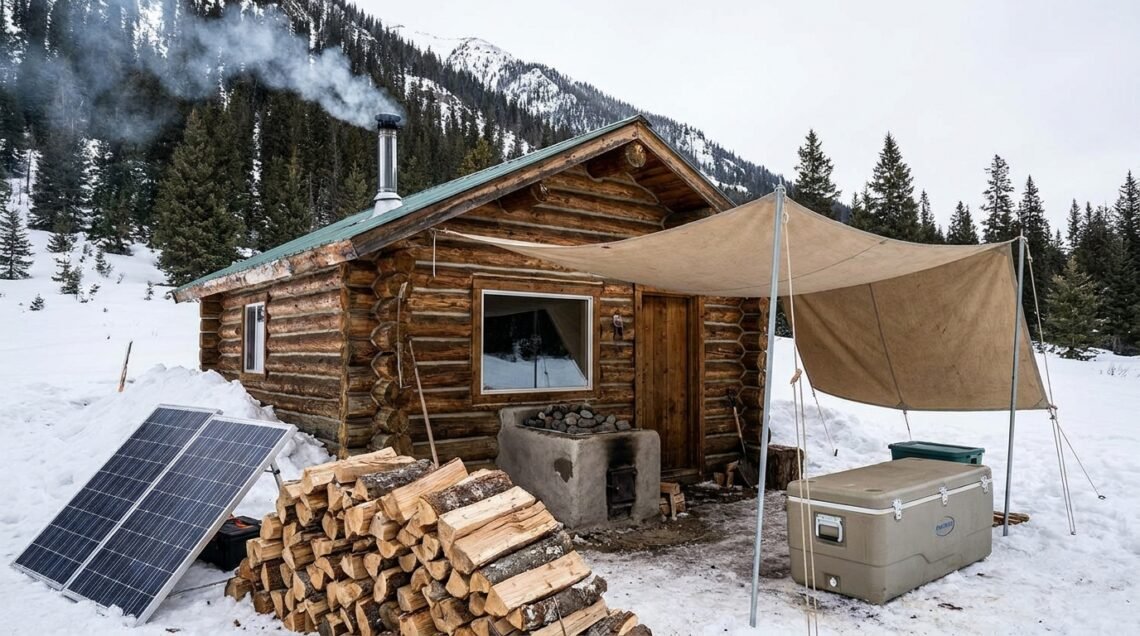
If you’re considering Off-Grid Heating and Cooling Options for your home, you’re taking a significant step toward self-sufficiency. While it may seem daunting, maintaining a comfortable temperature year-round is highly achievable through a combination of smart design and modern technology.
The short answer? For most folks aiming for off-grid comfort, it’s usually a combination of mini-split heat pumps powered by solar energy, bolstered by passive design strategies, and possibly a wood-burning stove for backup. Geothermal also plays a role, especially in certain climates. Let’s break down what that actually looks like in practice.
When we talk about off-grid heating and cooling that’s actually effective and doesn’t require a massive generator running 24/7, mini-split heat pumps usually come out on top. Think of them as really efficient air conditioners that can also run in reverse to provide heat.
Table of Contents
How Mini-Splits Work for Off-Grid Living
These systems are quite effective. They function by transferring heat rather than generating it. During the summer, they extract heat from inside your home and release it outside, helping to cool your space. In the winter, they operate in the opposite way, drawing heat from the outside air, even when it’s chilly, and moving it indoors.
The real game-changer for off-grid use is their efficiency. Modern mini-splits can produce more heat energy than the electrical energy they consume. This means they aren’t power-hungry beasts.
Powering Your Mini-Splits with Solar
This is where the solar part comes in. Because mini-splits are so efficient, their energy needs are relatively low. This makes them a perfect match for a solar power system. You can size a solar array and battery bank to comfortably run one or more mini-splits, providing both your heating and cooling needs.
We’re not discussing the need for a large solar farm to power a small house anymore. Solar technology has become much more affordable and efficient, making it practical to power these systems in most regions, except in situations where weather conditions are exceptionally severe. The primary step involves getting a comprehensive evaluation of your home and the mini-split system you plan to install.
The Hybrid Approach: Mini-Splits PLUS Backup
While mini-splits are excellent, especially for cooling and moderate heating, relying on them solely in very cold climates might mean you need a larger solar/battery setup than is ideal. This is why a hybrid approach is often the most practical. We’ll delve into those backups later, but for now, understand that mini-splits are your primary workhorse.
For those interested in exploring off-grid heating and cooling options, it’s also beneficial to understand the fundamental aspects of off-grid living. A related article that provides valuable insights for beginners is titled “10 Essential Off-Grid Living FAQs for Beginners.” This resource addresses common questions and concerns that newcomers may have, helping them navigate the complexities of living off the grid. You can read the article here: 10 Essential Off-Grid Living FAQs for Beginners.
Smart Buildings: Passive Design for Year-Round Comfort
Before you even think about installing equipment, the most cost-effective and reliable way to manage your home’s temperature off-grid is to design it smartly from the start. Passive design leverages natural elements and building techniques to reduce your reliance on active heating and cooling systems. It’s essentially working with nature, not against it.
Insulation: Your First Line of Defense
This might sound basic, but you’d be surprised how many homes are under-insulated. High levels of insulation in walls, ceilings, and floors are crucial. This helps keep the warmth inside during cold winter months and keeps the heat outside during hot summer days. It’s like a barrier that maintains a comfortable temperature year-round. It’s like wearing a good coat on a cold day – it keeps your body heat contained. For off-grid, this means your heating system has to work a lot less.
Windows and Orientation: Let the Sun Work for You
Passive solar design is a big component here. This means strategically placing windows, especially large south-facing ones (in the Northern Hemisphere), to capture the sun’s warmth during the winter. When the sun is lower in the sky, it can penetrate deeper into your home.
Thermal mass is also key. Materials like concrete, stone, or tile absorb this solar heat during the day and then slowly release it at night. This helps regulate indoor temperature naturally.
Keeping Cool with Natural Ventilation and Shade
In the summer, passive design shifts to keeping heat out.
- White Roofs: Reflect solar radiation, keeping the attic and the rest of the house cooler.
- Transom Windows and Clerestory Windows: These allow hot air to rise and escape, especially when used in conjunction with lower opening windows (like double-hung windows that can be opened at both the top and bottom). This promotes natural airflow.
- Ceiling Fans: While they use a little electricity, they are far more efficient than running an air conditioner. They create a wind-chill effect, making you feel cooler without actually lowering the air temperature significantly.
- Shade: This is massive. Planting deciduous trees on the south and west sides of your house offers shade during the summer when the trees have their leaves, while allowing sunlight to pass through in the winter when leaves have fallen. Overhangs and awnings on windows also do a similar job.
Harnessing the Earth’s Stable Temperature: Geothermal Systems
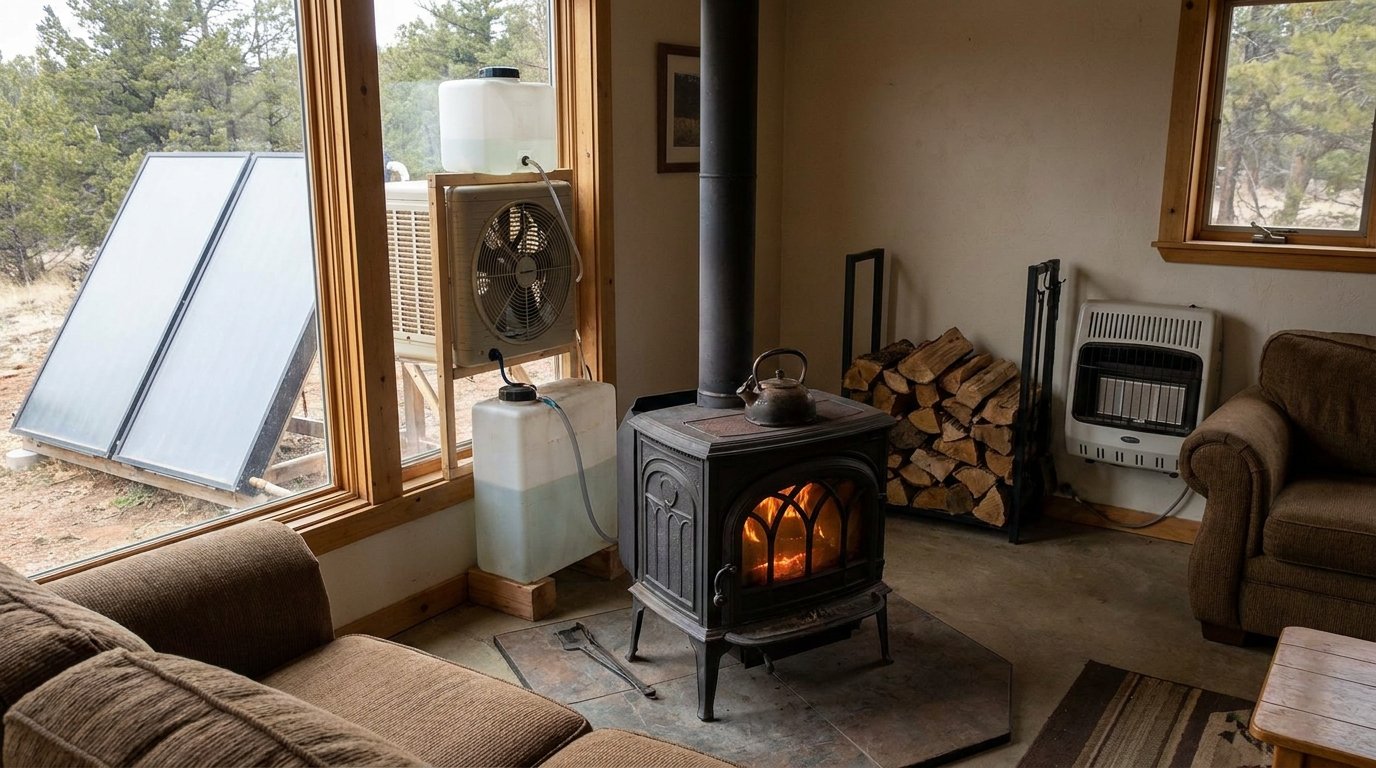
When you go deep enough into the earth, the temperature remains remarkably stable year-round, regardless of what’s happening on the surface. Geothermal systems tap into this stable temperature to provide both heating and cooling.
How Geothermal Works
These systems typically involve a network of pipes buried underground (or sometimes in a body of water). In the winter, a fluid circulating through these pipes absorbs heat from the ground and transfers it into your home via a heat pump. In the summer, the process is reversed: heat from your home is transferred to the fluid, which then dissipates it into the cooler earth.
The Advantages and Considerations
Geothermal systems are incredibly efficient and can significantly reduce energy bills, even for grid-tied homes. For off-grid living, they offer a very consistent and reliable temperature source.
However, the significant initial cost is a major factor. Installing the underground pipe network can be expensive, often comparable to sizing a large solar system just for air conditioning. The upfront investment is substantial, so it’s often a choice made for new builds or major renovations where the long-term savings and environmental benefits are a priority. The ground conditions and space available for installation also play a big role.
The Reliable Workhorse: Wood-Burning Stoves
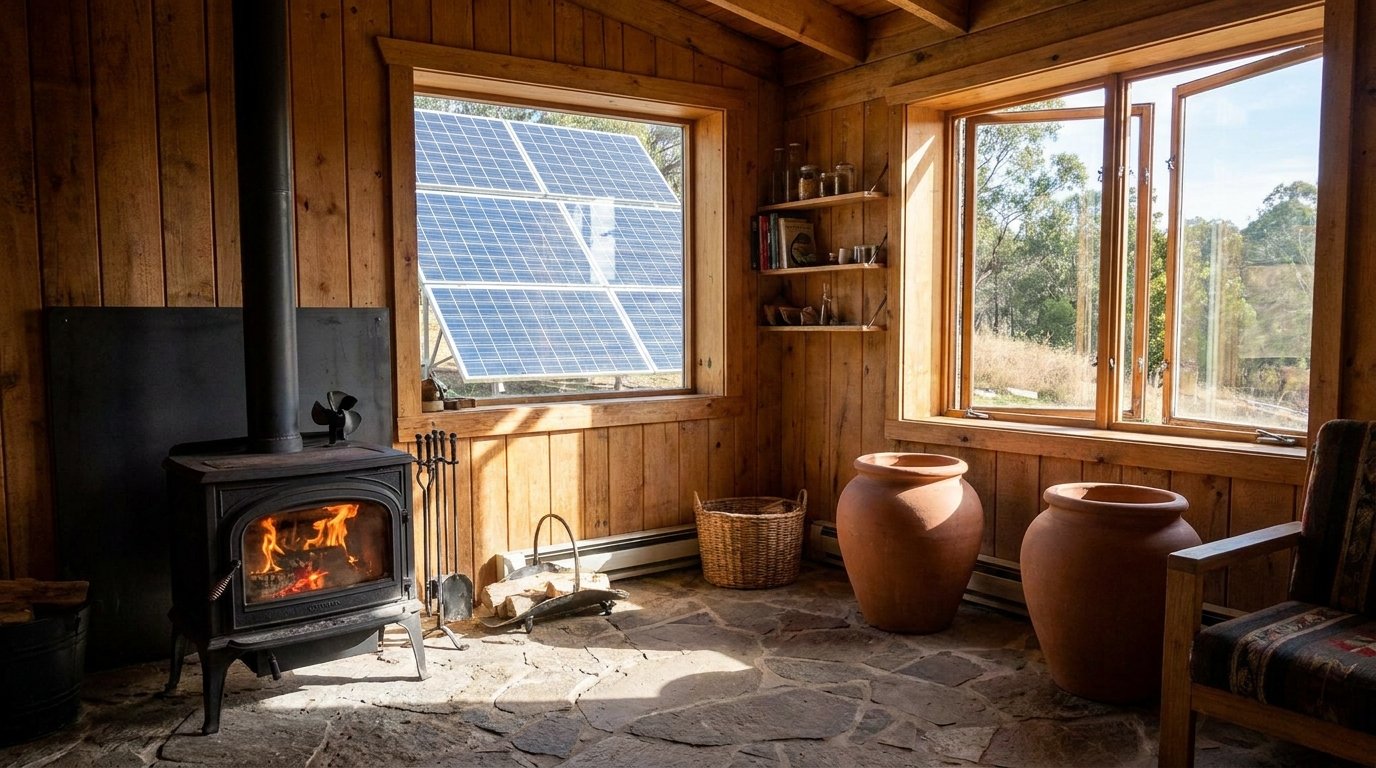
For many off-grid dwellers, especially those in colder climates, a wood-burning stove remains a cornerstone of their heating strategy. Despite advancements in technology, wood stoves offer a tangible, direct, and often very cost-effective way to generate heat.
Why Wood Stoves Endure
- Reliability: They don’t depend on electricity to produce heat. As long as you have fuel (firewood) and can start a fire, you have heat. This is incredibly reassuring during power outages or when your solar system is struggling.
- Cost-Effectiveness: If you have access to free or inexpensive firewood, the “fuel” cost can be negligible. This is a huge advantage for long-term off-grid living where minimizing ongoing expenses is key.
- Ambiance: Let’s be honest, there’s something comforting about a wood fire. It provides a radiant heat that many people find more pleasant than forced air.
Practical Considerations for Off-Grid Wood Stoves
- Fuel Sourcing and Storage: You need a sustainable source of firewood and space to store it. This means cutting, splitting, and seasoning wood takes time and effort.
- Installation and Safety: Modern wood stoves are much more efficient and cleaner burning than older models. Proper installation with adequate clearances and a good chimney system is paramount for safety to prevent fires and carbon monoxide poisoning.
- Maintenance: Regular cleaning of the stove, chimney, and hearth is essential for efficient and safe operation.
- Emissions: While modern stoves are cleaner, they still produce emissions. Local regulations might apply, and it’s worth considering newer models that meet stricter environmental standards. Some of these burn much more completely, reducing smoke and creosote buildup.
If you’re exploring sustainable living solutions, you might find the article on off-grid heating and cooling options particularly insightful. It delves into various methods that can help you maintain a comfortable home without relying on traditional energy sources. For a broader understanding of off-grid living, you can also check out this helpful guide for beginners, which covers essential tips and strategies for those looking to embrace a self-sufficient lifestyle. You can read more about it here.
Expanding Your Options: Other Heating and Cooling Methods
| Heating and Cooling Option | Advantages | Disadvantages |
|---|---|---|
| Solar Heating | Renewable energy source, low operating costs | Dependent on sunlight availability, initial installation cost |
| Geothermal Heating | High energy efficiency, low operating costs | High initial installation cost, requires space for ground loops |
| Biomass Heating | Renewable energy source, cost-effective fuel | Emissions and air quality concerns, storage space for fuel |
| Wind Cooling | Renewable energy source, low operating costs | Dependent on wind availability, noise from turbines |
Beyond the core technologies, there are other methods that can contribute to your off-grid climate control, either as primary solutions or valuable supplements.
Evaporative Coolers (Swamp Coolers)
These are an option for cooling only, and they are highly dependent on your climate. Evaporative coolers work by passing hot, dry air over water-soaked pads. As the water evaporates, it cools the air.
The Climate Dependency
They are incredibly effective and energy-efficient in dry climates where humidity is consistently below 30%. If your climate is humid, they don’t work well, and can even make things feel more uncomfortable by adding moisture to the air. They are not an option for humid regions.
Solar Heating: Beyond Electricity
When we talk about solar, we often jump straight to solar panels for electricity. But solar heating uses solar collectors to directly heat water or air.
- Solar Air Heaters: These systems typically consist of a solar collector mounted on your roof. Air from your home is passed through the collector, heated by the sun, and then returned to your home. They are often used to supplement primary heating systems.
- Solar Water Heaters: These systems heat water directly, which can then be used for domestic hot water or, in some more complex setups, circulated through radiant floor heating systems. For off-grid, this often ties into a solar thermal system, which is different from photovoltaic solar panels.
These systems can be very cost-effective in sunny locations but might require a significant upfront investment for panels and storage tanks.
Biomass Boilers and Pellets
For off-grid heating, biomass boilers that burn organic pellets (made from wood, agricultural waste, etc.) are an environmentally friendly and often cost-effective choice.
- How They Work: These boilers are integrated into a hydronic (water-based) heating system, similar to traditional boilers. They automatically feed pellets from a hopper into a combustion chamber, where they burn and heat water that circulates through radiators or underfloor heating.
- Pros: They can be highly automated, efficient, and considered carbon-neutral as the plants absorb CO2 as they grow, which is released when the biomass is burned.
- Cons: You need a reliable source of pellets, and the boilers themselves can have a substantial upfront cost. Storage for the pellets is also necessary.
LPG/Oil Boilers: A Traditional Choice (with caveats)
While not as renewable as other options, LPG (liquefied petroleum gas) and oil boilers have been traditional choices for heating, even in off-grid settings.
- LPG vs. Oil: LPG is generally considered cleaner and cheaper to run than heating oil. Both require a storage tank on your property.
- Off-Grid Practicality: The main drawback for off-grid philosophy is their reliance on fossil fuels. However, for someone transitioning or in a location where other options are significantly less feasible, they can be a reliable heating source. The energy needed to run the pump and controls is usually modest and can be handled by a small solar/battery system.
The Interplay of Systems: Making it All Work Together
The most successful off-grid heating and cooling setups aren’t usually about one single magical solution. They are about understanding your needs, your climate, and your resources, and then combining the most appropriate technologies and strategies.
Why Solar is Now So Crucial
FAQs
What are off-grid heating and cooling options?
Off-grid heating and cooling options are systems that do not rely on traditional utility services such as electricity or natural gas. These systems are designed to operate independently, using alternative energy sources such as solar power, wind power, or biomass.
What are some examples of off-grid heating options?
Some examples of off-grid heating options include wood stoves, pellet stoves, and solar thermal systems. These systems can provide heat for residential or commercial buildings without relying on traditional utility services.
What are some examples of off-grid cooling options?
Off-grid cooling options include evaporative coolers, also known as swamp coolers, and solar-powered air conditioning systems. These systems can provide cooling for buildings in areas where traditional air conditioning may not be available.
What are the benefits of off-grid heating and cooling options?
Off-grid heating and cooling options can provide greater energy independence, reduce reliance on traditional utility services, and lower energy costs in the long run. Additionally, these systems can be more environmentally friendly, using renewable energy sources.
What are the considerations when choosing off-grid heating and cooling options?
When choosing off-grid heating and cooling options, it is important to consider factors such as the climate of the location, the size and energy efficiency of the building, the availability of alternative energy sources, and the initial investment and long-term maintenance costs. Consulting with a professional in off-grid systems can help determine the best options for specific needs.


One comment on “Off-Grid Heating and Cooling Options Explained”