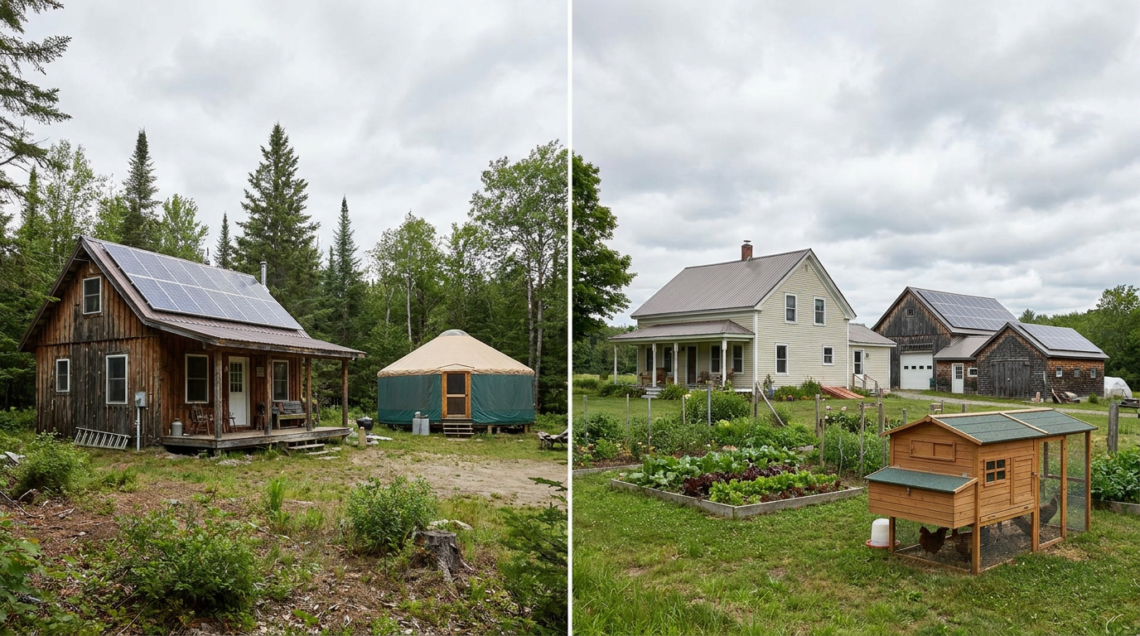
So, you’re curious about ditching the power lines and embracing a more self-sufficient lifestyle, right? The terms “off-grid living” vs “homesteading” get thrown around a lot, and honestly, they can sound pretty similar. But while they often overlap and can even be practiced together, they’re not exactly the same thing. Think of it this way: off-grid living is about how you get your resources, primarily energy, while homesteading is more about the philosophy and practice of self-reliance on your land. Let’s break down what really separates them.
At its core, off-grid living means disconnecting from public utilities. The most common one people think of is electricity, but it can also extend to water and sewer systems.
Table of Contents
The Electricity Focus
When most people say “off-grid,” they’re primarily talking about generating their own electricity. This usually involves a combination of:
- Solar Power: Installing solar panels on your roof or on the ground to capture sunlight and convert it into usable electricity. This is probably the most popular off-grid energy source these days.
- Wind Turbines: Utilizing wind power, especially in areas with consistent wind. This can be a great complement to solar, as wind often blows when the sun isn’t shining.
- Micro-hydro Systems: If you have access to moving water, like a stream or river on your property, a micro-hydro system can provide consistent power. This is less common but a very reliable option when available.
- Generators (Backup): While the goal is renewable, most off-grid homes keep a generator (often propane or diesel) for times when renewable sources aren’t producing enough power, like during extended cloudy periods or calm days.
- Battery Storage: This is crucial. All the energy generated needs to be stored so you can use it when you need it, especially at night or on less productive days. Lithium-ion and deep-cycle lead-acid batteries are common choices.
- Inverters and Charge Controllers: These are the brains of the operation, managing the flow of power from your generation sources to your batteries and then to your home’s appliances.
The infrastructure involved can be significant. You’re not just buying a few panels; you’re investing in a whole system that needs to be sized correctly for your energy needs, installed safely, and maintained.
Beyond Electricity: Water and Waste
While electricity is the most talked-about aspect, true off-grid living often encompasses other utilities:
- Water Sources:
- Well Water: Digging your own well is a common way to access groundwater. This requires drilling and a pump system, often powered by your off-grid electricity.
- Rainwater Harvesting: Collecting rainwater from your roof into cisterns. This is a great supplementary source, especially in areas with decent rainfall. It often requires filtration for potable use.
- Surface Water (with treatment): In some cases, people might draw from nearby lakes or streams, but this necessitates extensive filtration and purification to make the water safe for drinking.
- Wastewater Management:
- Septic Systems: Installing your own septic tank and drain field is the standard for homes not connected to a municipal sewer. This is a regulated process with specific design and installation requirements.
- Composting Toilets: For a more extreme approach, composting toilets eliminate the need for a traditional septic system for human waste by turning it into compost. This is a more hands-on and involved method.
The goal here is complete independence from public utility providers. This means no monthly electricity bills, no water bills from the city, and no sewer bills.
For those interested in exploring the financial aspects of transitioning to an off-grid lifestyle, a related article titled “How Much Does It Cost to Go Off-Grid?” provides valuable insights. This resource breaks down the various expenses associated with off-grid living, including initial setup costs, ongoing maintenance, and potential savings over time. To learn more about the financial considerations of off-grid living, you can read the article here: How Much Does It Cost to Go Off-Grid?.
What is Homesteading?
Homesteading, on the other hand, is less about disconnecting utilities and more about a lifestyle focused on self-sufficiency, often centered around land and food production. It’s a philosophy, a way of life.
The Land as a Foundation
The defining characteristic of homesteading is the utilization of land to produce what you need. This can take many forms:
- Gardening and Farming: Growing your own fruits, vegetables, herbs, and grains. This can range from a small backyard garden to larger-scale farming operations.
- Raising Livestock: Keeping animals for food, fiber, or other resources. This might include chickens for eggs and meat, cows for milk and beef, goats for milk and cheese, or sheep for wool and meat.
- Preservation and Food Storage: Learning techniques like canning, drying, fermenting, and root cellaring to store food harvested from your land for year-round consumption.
- Making and Mending: Embracing skills like sewing, carpentry, blacksmithing, and repair work to reduce reliance on purchased goods.
- Natural Building and Resourcefulness: Utilizing natural materials for construction, understanding local ecosystems, and learning to use resources sustainably.
The emphasis is on skills, knowledge, and a direct connection to the source of your sustenance. It’s about living in tune with nature and the seasons.
The Philosophy of Self-Reliance
More than just the practical tasks, homesteading embodies a mindset:
- Reduced Consumerism: A conscious effort to buy less and make or grow more. This often translates to a simpler lifestyle and less waste.
- Skill Development: A continuous learning process. Homesteaders are often lifelong learners, acquiring new skills out of necessity or interest.
- Connection to Nature: A deeper appreciation and understanding of the natural world, its cycles, and its offerings.
- Resilience: Building a life less dependent on external systems that can be vulnerable to disruption.
Homesteading can absolutely be done while connected to public utilities. Someone can have a thriving garden, raise chickens, and make their own cheese, all while still paying a monthly electricity bill. The focus is on internal resourcefulness, not necessarily external disconnection.
The Overlap: Where They Meet
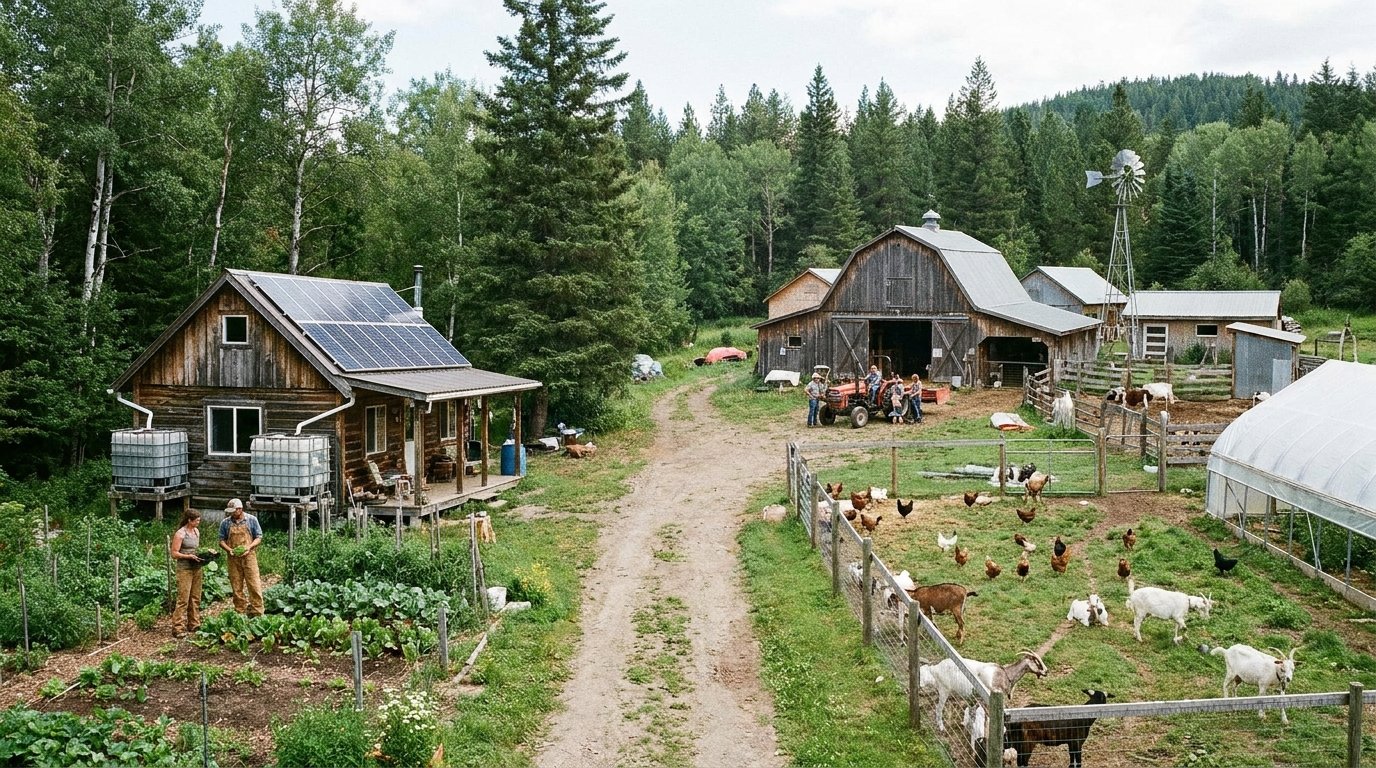
This is where it gets interesting. Off-grid living and homesteading are often practiced in tandem because they complement each other beautifully.
Synergy in Action
- Self-Sufficient Energy for Food Production: If you’re growing a lot of food, you might need electricity for things like irrigation pumps, freezers for storing meat, or even powered tools for land management. Being off-grid means that energy is yours, generated by you.
- Resourceful Living: Someone who homesteads might also be drawn to off-grid living because they already value resourcefulness and minimizing waste. Disconnecting from utilities aligns with this ethos.
- Reduced Impact: Both lifestyles often aim for a lower environmental footprint. Off-grid systems, particularly renewables, reduce reliance on fossil fuels. Homesteading often emphasizes sustainable land use and reduced consumption.
- Independence from External Forces: For many, the appeal of both is a greater sense of control and independence. Off-grid living makes you independent of utility companies, and homesteading makes you independent of the grocery store and other supply chains.
Imagine a homesteader who has a large garden and a small flock of chickens. They might also decide to go off-grid to power their well pump for irrigation and their freezers, making their food production even more self-sufficient.
The “Modern Homesteading” Trend
The rise of “modern homesteading” specifically highlights this overlap. This often involves people who are interested in skills like sourdough baking, canning, and raising backyard chickens, but they might also be looking into solar panels for partial or full off-grid power. They appreciate the aesthetics and the skills of traditional homesteading but integrate them into a contemporary life.
The Key Differences: A Clearer Picture
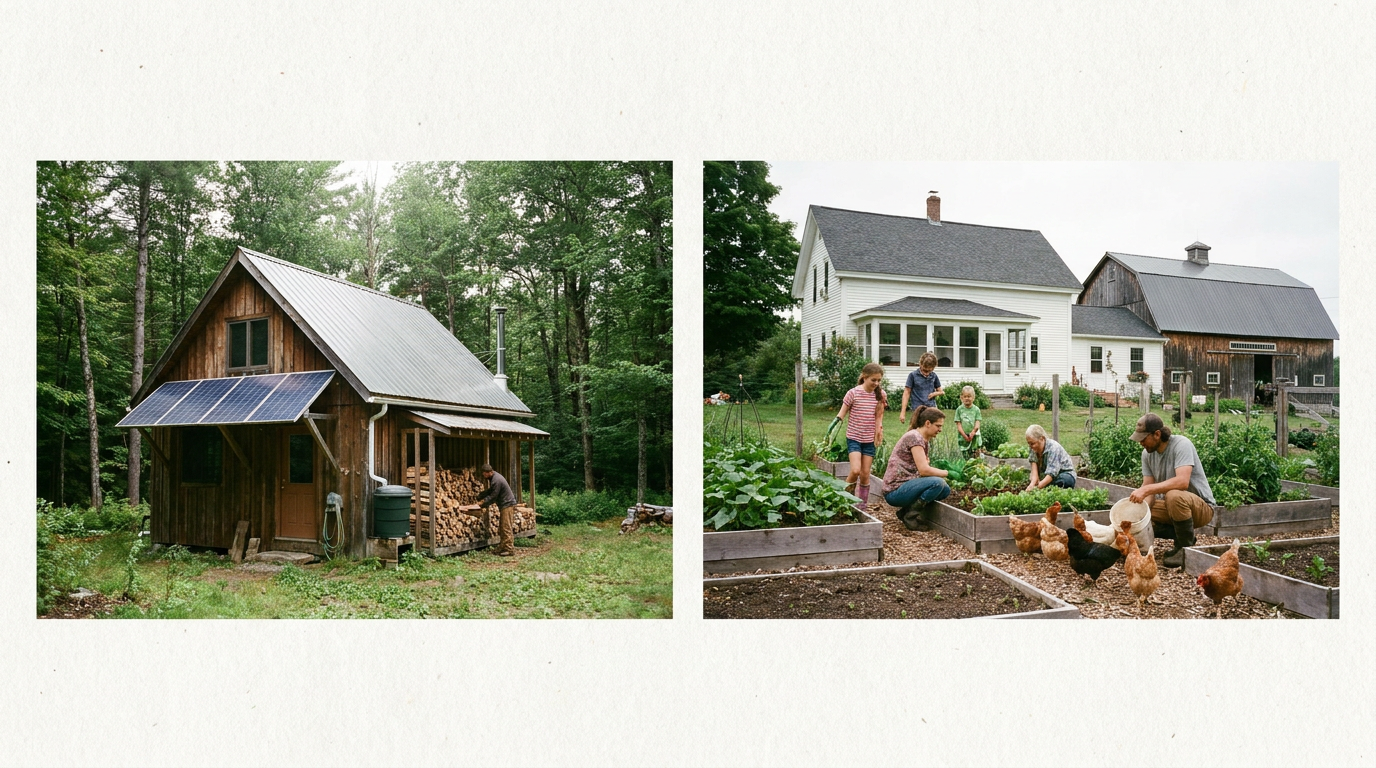
So, let’s try to draw some clearer lines between the two, even with the overlap.
Utility Independence vs. Lifestyle Philosophy
- Off-Grid Living: Primarily defined by technical disconnection from public utilities (electricity, water, sewer). It’s about the infrastructure and systems that provide these necessities independently.
- Homesteading: Primarily defined by a lifestyle philosophy focused on self-reliance, particularly through land-based activities like food production, crafting, and resourcefulness. It’s about the skills, knowledge, and mindset.
You can be off-grid without being a traditional homesteader (e.g., living in an off-grid cabin with minimal land, relying on store-bought food). You can also be a homesteader without being off-grid (e.g., living on a farm connected to the grid, growing all your own food).
Scope of Operation
- Off-Grid Living: The scope is often focused on the systems that provide your basic utilities. It’s about managing your power generation, water sources, and waste disposal.
- Homesteading: The scope is much broader and encompasses all aspects of living. It includes food, shelter, energy (whether grid-tied or not), clothing, crafts, and community.
A person who goes off-grid might still do all their shopping at the grocery store and rely on delivered goods. Their primary focus is their independent utility system. A homesteader, however, would likely aim to produce much of their own food, make their own goods, and repair their own items.
Motivation and Goals
- Off-Grid Living: Motivations can include:
- Cost Savings: Eliminating utility bills.
- Environmental Concerns: Reducing reliance on fossil fuels and municipal infrastructure.
- Resilience: Independence from grid failures or utility disruptions.
- Privacy and Autonomy: Not being dependent on external providers.
- Homesteading: Motivations can include:
- Sovereignty and Self-Sufficiency: Controlling your own food and resource supply.
- Health and Wellness: Access to fresh, organically grown food.
- Connection to Nature and Legacy: Living a more grounded, traditional life and passing down skills.
- Debt Reduction and Frugality: Making more with less.
While there’s overlap, someone might go off-grid purely for cost savings on their electricity bill, not necessarily wanting to grow all their food. Conversely, someone might adopt homesteading practices primarily for the satisfaction of growing their own food and living a more artisanal life, even if they’re happy to pay their utility bills.
For those interested in understanding the nuances of sustainable lifestyles, exploring the differences between off-grid living and homesteading can be quite enlightening. A related article that delves deeper into the challenges and realities of off-grid living is available at The Brutal Truth of Off-Grid Living. This resource provides valuable insights that can help individuals make informed decisions about their own journeys toward self-sufficiency and sustainability.
Are You Off-Grid Living vs Homesteading, or Both?
| Aspect | Off-Grid Living | Homesteading |
|---|---|---|
| Definition | Living without reliance on public utilities such as electricity, water, or gas | Creating a self-sufficient lifestyle through farming, gardening, and raising livestock |
| Focus | Independence from modern infrastructure | Self-sustainability and self-sufficiency |
| Location | Can be in remote areas or even in urban settings | Usually in rural areas with land for farming and livestock |
| Energy | Relies on alternative energy sources such as solar, wind, or hydro power | May use alternative energy sources but also focuses on traditional methods like wood stoves |
| Food Production | May grow some food but not the primary focus | Primary focus is on growing food through gardening and farming |
Figuring out which term best fits your aspirations, or how they might apply to you, is the next step.
Evaluating Your Goals
Ask yourself what’s driving your interest:
- Are you primarily concerned with your electricity bill and want to generate your own power? This leans towards off-grid living’s electrical component.
- Are you fascinated by growing your own food, raising animals, and making things from scratch? This points strongly towards homesteading.
- Do you want to be completely independent of external services for your basic needs, including power, water, and waste? This is the definition of off-grid living in its purest sense.
- Are you looking for a lifestyle change that emphasizes resourcefulness, a deeper connection to the land, and reduced consumption in all areas of life? This is the essence of homesteading.
- Do you want to combine independence from utilities with a robust system for producing your own food and resources? This is where you’re likely doing both.
It’s also worth remembering that these terms aren’t mutually exclusive categories. You can be leaning towards one more than the other, or actively pursuing aspects of both.
A Spectrum of Self-Sufficiency
Think of it less as a strict dichotomy and more as a spectrum.
- Baseline: Someone with a small vegetable garden and a few chickens, but still very reliant on store-bought food and utilities, is on one end.
- Homesteader: Someone who grows a significant portion of their own food, preserves extensively, and engages in various crafts, but might still be grid-tied.
- Off-Grid (Utility Focus): Someone who has successfully disconnected from the grid for electricity, water, and sewer, but might not be actively involved in food production beyond a small kitchen garden.
- Integrated Off-Grid Homesteader: Someone who has built a self-sufficient system for all their utilities AND actively produces a substantial amount of their own food and resources, aiming for maximum independence.
Most people finding themselves drawn to these concepts fall somewhere in the middle, often embracing aspects of both.
Practical Considerations for the Journey
No matter which path you choose, or if you’re blending them, there are practical considerations to keep in mind.
Education is Key
- Research Extensively: Before jumping in, learn as much as you can. Read books, watch documentaries, follow blogs or YouTube channels by people already doing what you aspire to.
- Skill Development is Non-Negotiable: Whether it’s understanding solar systems, soil health, animal husbandry, or canning, acquiring practical skills is paramount. Workshops, classes, or apprenticeships can be invaluable.
- Understand Your Local Context: Regulations regarding well drilling, septic systems, and even raising certain livestock vary significantly by location. Researching your local zoning laws and permits is crucial.
Financial Investment
- Upfront Costs: Going off-grid, especially, can involve significant upfront investment in solar panels, battery banks, inverters, wells, or septic systems.
- Long-Term Savings: While the initial outlay can be high, the long-term savings on utility bills can be substantial. Homesteading can also reduce your reliance on purchased goods.
- Budgeting for the Unexpected: Systems can fail, crops can fail, and unexpected expenses arise. Having a financial buffer is wise.
Lifestyle Impact
- Time Commitment: Both off-grid living and homesteading are time-intensive. You’re now responsible for maintaining your own systems and producing your own resources, which takes time and effort.
- Mindset Shift: It requires a different way of thinking about your needs, your consumption, and your relationship with the environment. It’s often a move towards simplicity and intentionality.
- Community and Support: While aiming for independence, having a supportive community or learning from experienced individuals can make the transition much smoother and more enjoyable.
Ultimately, whether you identify primarily as off-grid or a homesteader, or a bit of both, the underlying theme is a desire for a more connected, resourceful, and self-determined way of life. It’s a journey that’s as much about internal growth as it is about external independence.
FAQs
What is off-grid living?
Off-grid living refers to living without reliance on public utilities such as electricity, water, and sewage. Off-grid homes generate their own power, collect and treat their own water, and manage their own waste.
What is homesteading?
Homesteading is a lifestyle of self-sufficiency, often involving living off the land and producing one’s own food. It can include gardening, raising livestock, and preserving food through canning and other methods.
How do off-grid living and homesteading differ?
Off-grid living primarily focuses on being self-sufficient in terms of utilities, while homesteading encompasses a broader range of self-sufficient practices, including food production and preservation.
Can someone be both off-grid and a homesteader?
Yes, it is possible for someone to live off-grid and also practice homesteading. Many off-grid homes are located on homesteads where residents grow their own food and live a self-sufficient lifestyle.
What are the benefits of off-grid living and homesteading?
Both off-grid living and homesteading offer the benefits of self-sufficiency, sustainability, and a closer connection to nature. They can also provide a sense of independence and reduce reliance on external resources.