So, you’re looking to get water pumping off-grid, huh? There are some solid options out there. The best off-grid water pump, really depends on your specific situation – how deep your well is, how much water you need, and what kind of power you have available. But to give you a head start, solar-powered submersible pumps, especially lines like the Grundfos SQFlex, are often considered the gold standard for more serious off-grid water setups. For simpler needs or budget considerations, brands like SEAFLO and VEVOR offer some compelling choices, with SEAFLO particularly standing out for cabin use and 12V systems.
Table of Contents
Understanding Your Off-Grid Water Needs
Before we dive into specific pump models, it’s crucial to get a clear picture of what you actually need. Trying to pick a pump without this information is like trying to buy shoes without knowing your size – you’ll likely end up with something that doesn’t fit.
How Much Water Do You Need?
This is probably the biggest factor. Are you just trying to fill a small water tank for occasional use, or do you need enough water for a household, including showers, laundry, and maybe even some gardening?
Daily Water Consumption Estimates
- Single Person: Around 20-50 gallons per day.
- Small Family (2-4 people): 50-100 gallons per day.
- Larger Families or Heavy Use: 100+ gallons per day.
Think about peak usage too. If everyone in the family showers one after another, you’ll need a pump that can keep up.
What’s Your Water Source?
Where are you getting your water from? This is critical for selecting the right type of pump.
Well Depth and Type
- Shallow Wells (under 25 feet): These can often be served by jet pumps or even some surface-mounted pumps.
- Deep Wells (over 25 feet): You’ll almost certainly need a submersible pump that sits down in the water. The deeper the well, the more powerful the pump you’ll need.
- Lakes, Rivers, or Cisterns: These might require different considerations, often focusing on filtration and pump placement to avoid drawing sediment.
Power Availability
This is the “off-grid” part, so how will you power your pump?
Solar Power
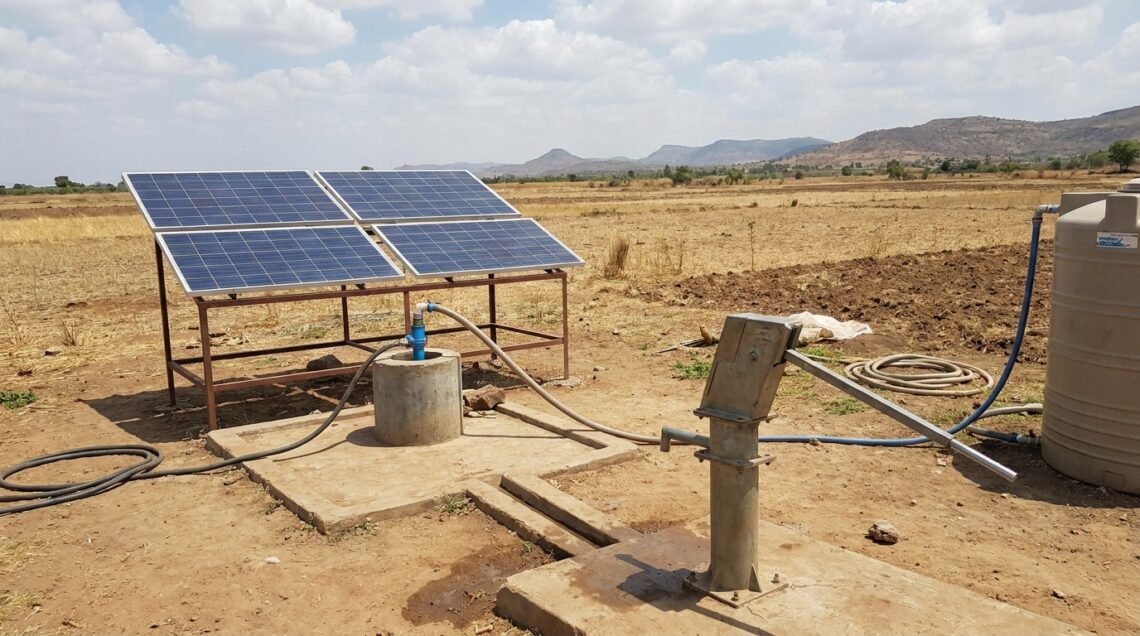
- Direct Solar: Some pumps run directly off solar panels, which is simple but means pumping is only possible when the sun is shining.
- Solar with Battery Storage: This is more common. Solar panels charge batteries, and the batteries power the pump when needed. This gives you more flexibility and consistent access to water.
Battery Banks (Non-Solar)
You might have a generator or other means to charge a battery bank that then powers a 12V or 24V pump.
Other Power Sources
- Wind Turbines: Less common for direct water pumping but can contribute to a battery bank.
- Hydraulic Ram Pumps: These are fascinating because they use the energy of flowing water to pump water itself – no electricity needed, but you need a specific kind of water source.
If you’re exploring the best off-grid water pumps for your needs, you might also find our article on, How to get water when living off the grid, particularly useful. This resource provides insights into how to ensure your water supply is not only accessible but also safe for consumption, complementing the information on selecting the right pump for your off-grid lifestyle.
Top Picks for Off-Grid Water Pumps
Now that we’ve laid the groundwork, let’s look at some specific types of pumps and what makes them good choices for off-grid living. We’ll cover a range from general workhorses to more specialized options.
Solar-Powered Submersible Pumps: The Professional Standard
When you’re serious about a reliable off-grid water supply, especially for larger needs or deeper wells, solar-powered submersible pumps are often the top recommendation. They’re designed to be efficient and durable.
The Grundfos SQFlex Line: High-End Reliability
The Grundfos SQFlex series is frequently cited as a benchmark for professional off-grid water systems. These aren’t budget pumps, but they offer exceptional performance, longevity, and intelligence.
- How they work: These are DC-powered submersible pumps that can run directly from solar panels or a battery system. They often have built-in intelligence to optimize their performance based on available power and water levels.
- Best for: Deep wells, consistent water needs, situations where reliability is paramount, and where the budget allows for a premium solution. They’re built to last and handle demanding conditions.
- Considerations: Their higher cost is a significant factor. You’ll also need to size your solar array and potentially battery bank appropriately for your specific SQFlex model and water demand.
When considering the best off-grid water pumps, it’s also important to evaluate the overall energy needs of your setup. A related article that delves into the costs associated with off-grid solar systems can provide valuable insights for those looking to power their pumps sustainably. You can read more about this in the article on off-grid solar system costs, which discusses how to effectively integrate solar energy into your off-grid lifestyle.
SEAFLO Water Pumps: Great Value, Especially for Cabins
SEAFLO has carved out a strong reputation in the off-grid and RV community for providing reliable and affordable water pumps. They offer a variety of models that cater to different needs.
SEAFLO 33-Series 12V Water Pump & Tank System: The Cabin Champion
According to a recent August 2026 update focused on off-grid cabin use, the SEAFLO 33-Series 12V Water Pump & Tank System is highlighted as a top pick.
- What it is: This is a self-priming diaphragm pump often paired with a small pressure tank. The 12V operation makes it ideal for solar or battery-powered setups common in cabins.
- Best for: Off-grid cabins, RVs, boats, or any smaller dwelling where 12V power is the primary source. It’s designed for ease of installation and provides pressurized water on demand.
- Key features: Typically features automatic pressure switching, low power draw, and robust construction for its class. The integrated tank system simplifies setup.
Other SEAFLO Options: Versatility and High Flow
SEAFLO also offers standalone 12V pumps that can be integrated into custom systems. They have models known for good flow rates, making them versatile.
- 12V DC RV Water Pumps: These are a general category that SEAFLO excels in. If you’re building a system from scratch and need a 12V pump, SEAFLO is definitely worth looking at. They offer various flow rates and pressure ratings.
- High-Flow SEAFLO options: While the 2026 guide mentions a CrestWave for very high flow, SEAFLO does have models that can provide substantial water output for their voltage class, suitable for more than just basic needs.
VEVOR Deep Well Submersible Pump: A Budget-Friendly Deep Well Solution
If you have a deep well and your budget is a primary concern, the VEVOR deep well submersible pump has been named a best overall off-grid pump in some comparisons.
- What to expect: These pumps are typically designed for submersible use in wells and aim to offer a good balance of performance and affordability. They are often AC powered, meaning you’ll need a way to generate that power, potentially through an inverter if you’re primarily using solar and batteries.
- Best for: Deep wells where cost is a major factor. If you have an existing AC power source or are comfortable with setting up an inverter system for your solar.
- Important note: Always check the specific power requirements (AC vs. DC) and ensure it aligns with your off-grid power generation capabilities. Durability and long-term performance compared to premium brands might be a trade-off for the lower cost.
Hydraulic Ram Pumps: Harnessing Flowing Water
This is a completely different beast and doesn’t rely on electricity at all. If you have a specific type of water source, a hydraulic ram pump can be an incredibly efficient and sustainable solution.
- How they work: These pumps use the kinetic energy of flowing water to lift a portion of that water to a higher elevation. You need a source of falling water (a stream or spring with a drop) to operate one.
- Best for: Properties with a flowing stream or spring that has a decent drop in elevation between the source and where you want to pump the water.
- Key advantages: No electricity needed, very low maintenance once installed, and can operate 24/7 as long as there’s water flow.
- Limitations: Requires a very specific water source and topography. The flow rate might be lower than electric pumps, and they are generally best for moving water to a nearby elevated tank rather than high-pressure distribution.
High-Flow Needs: When Water Demand is High
Sometimes, you just need a lot of water, fast. This is where pumps designed for higher flow rates come into play.
CrestWave 7 GPM 70 PSI (110V): For Demanding Situations
The August 2026 cabin guide specifically mentions a CrestWave 7 GPM 70 PSI 110V pump for situations with higher demand.
- What it offers: This pump is designed for significant water delivery, with a flow rate of 7 gallons per minute and a pressure of 70 PSI. The 110V operation means you’ll need an inverter if you’re running on a DC battery system.
- Best for: Larger off-grid homes, small farms, or any setup where you need to quickly fill large tanks or supply multiple fixtures simultaneously.
- Considerations: High flow often means higher power consumption. You’ll need to ensure your power system (solar panels, batteries, inverter) can handle the load.
Battery/12V Setups: The Ubiquitous Off-Grid Power
Many off-grid systems rely on 12V (or sometimes 24V) DC power, often sourced from solar and battery banks. This makes 12V pumps a very popular choice.
General 12V DC RV Water Pumps
As mentioned with SEAFLO, the general category of 12V DC RV water pumps is a go-to for many off-grid applications.
- Why they’re popular: They are designed for low voltage, making them compatible with common battery systems. They are also generally self-priming and can run dry for short periods.
- Variety is key: Look at the gallons per minute (GPM) and pressure (PSI) ratings. For basic needs, 2-4 GPM might suffice. For higher demands, you’ll want to look for pumps in the 4-6 GPM range or higher, depending on your requirements.
- Integration: These pumps are often designed to work with pressure switches and small accumulator tanks to provide on-demand pressurized water, mimicking a standard home plumbing system.
Factors to Consider Beyond the Pump Itself
Choosing the right pump is only part of the equation. A few other elements are crucial for a successful off-grid water system.
Power System Sizing
This is arguably as important as the pump itself. Your solar panels, charge controller, batteries, and inverter (if needed) must be sized to reliably power your pump for your expected usage, even on cloudy days. Overlooking this will lead to frustration and unreliable water.
- Calculate your daily energy needs: How many amp-hours (Ah) does your pump draw per hour of operation? Multiply that by the number of hours you expect to run it daily. Add a buffer for inefficiencies and less-than-ideal weather.
- Solar panel wattage: This needs to be enough to recharge your batteries and run the pump during daylight hours, with excess capacity to charge batteries for nighttime or cloudy use.
- Battery bank capacity: This determines how much water you can pump when the sun isn’t shining.
Filtration and Water Quality
If your water source isn’t pristine, you’ll need to consider filtration. This can range from simple pre-filters to protect your pump from debris to more complex systems for potable water.
- Protecting your pump: Debris can damage pump impellers or diaphragms, reducing their lifespan.
- Ensuring safety: If the water is for drinking or cooking, appropriate filtration and purification methods are essential.
Plumbing and Storage
The pipes you use, the connectors, and your water storage tanks all play a role.
- Pipe diameter: Using pipes that are too small can restrict flow and reduce pump efficiency.
- Water storage: How much water do you need to store for dry spells or periods of high demand? Tanks need to be appropriately sized and located.
Installation and Maintenance
Consider the complexity of installation and the ongoing maintenance required for the pump you choose. Some systems are plug-and-play, while others require more technical expertise.
- DIY vs. Professional: Can you install it yourself, or will you need to hire someone?
- Routine checks: Most pumps require minimal maintenance, but it’s good to know what’s involved.
Conclusion: Finding Your Off-Grid Water Sweet Spot
Getting off-grid water is absolutely achievable. The key is to do your homework.
- For robust, long-term solutions, especially for deeper wells, the Grundfos SQFlex is a top-tier option. It’s an investment, but often pays off in reliability.
- If you’re outfitting a cabin or smaller dwelling with 12V power, SEAFLO pumps, particularly their 33-Series system, are highly recommended. They offer a great balance of performance, ease of use, and affordability.
- For budget-conscious deep well users, VEVOR is a contender. Just be mindful of its AC power requirement.
- Don’t forget the power source! Your solar panels, batteries, and charge controller are just as critical as the pump itself.
- And if you’re lucky enough to have a flowing stream with a drop, a hydraulic ram pump is an incredibly elegant, no-electricity-needed solution.
By carefully assessing your water needs, power availability, and budget, you can select the off-grid water pump that will serve you reliably for years to come.
FAQs
What are off-grid water pumps?
Off-grid water pumps are devices that are designed to pump water without relying on the traditional power grid. These pumps are often used in remote locations where access to electricity is limited or non-existent.
What are the different types of off-grid water pumps available?
There are several types of off-grid water pumps available, including hand pumps, solar-powered pumps, wind-powered pumps, and manual pumps. Each type of pump has its own advantages and limitations, and the best choice depends on the specific needs and conditions of the location.
What are the key factors to consider when choosing an off-grid water pump?
When choosing an off-grid water pump, it’s important to consider factors such as the water source, water depth, required flow rate, power source availability, maintenance requirements, and budget. These factors will help determine the most suitable type and model of pump for a specific off-grid water pumping application.
What are the advantages of using off-grid water pumps?
Off-grid water pumps offer several advantages, including the ability to access water in remote locations, reduced reliance on the power grid, lower operating costs, and environmental sustainability. These pumps can also provide a reliable water supply for off-grid homes, farms, and other applications.
What are some popular off-grid water pump brands and models on the market?
Some popular off-grid water pump brands and models on the market include Grundfos SQFlex solar pumps, Lorentz solar pumps, Simple Pump hand pumps, and Bison hand pumps. These pumps are known for their reliability, efficiency, and suitability for off-grid water pumping applications.