
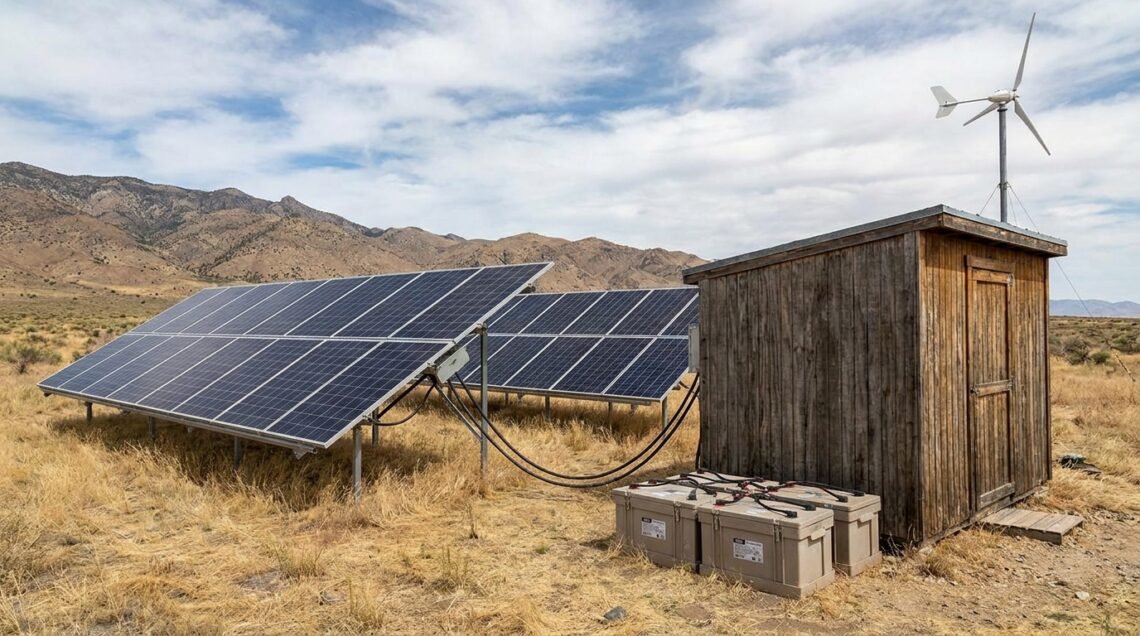
Embarking on an off-grid solar journey for a small home is a fantastic and increasingly popular decision. Realistically, an off-grid solar system cost for a small home will typically run anywhere from $10,000 to $30,000, with some more robust systems reaching upwards of $40,000+. This wide range depends heavily on your specific power needs, the quality of components you choose, and whether you’re tackling the installation yourself or hiring professionals. Let’s break down these costs with some practical examples and considerations.
Before you can even think about prices, you need to understand how much electricity your small home actually consumes. This isn’t just a number; it’s the bedrock upon which your entire system is built and, consequently, its cost. Over-specifying can lead to unnecessary expense, while under-specifying can leave you in the dark.
Table of Contents
Calculating Daily Energy Consumption
The most practical way to do this is to list every electrical appliance you plan to use, how many hours per day you’ll use it, and its wattage. Don’t eyeball it; look at the appliance labels or manufacturer specifications.
- Example 1: The Essentialist Camper
- Laptop (60W x 4 hours/day) = 240Wh
- LED Lighting (20W x 5 hours/day) = 100Wh
- Water Pump (100W x 1 hour/day) = 100Wh
- Small Mini-Fridge (50W x 24 hours/day) = 1200Wh (this is a big one!)
- Phone Charger (10W x 2 hours/day) = 20Wh
- Total Daily Consumption: ~1660Wh (1.66 kWh)
- Example 2: The Modest Remote Worker
- Laptop (60W x 8 hours/day) = 480Wh
- Desktop Monitor (20W x 8 hours/day) = 160Wh
- Starlink Router/Dish (50W x 24 hours/day) = 1200Wh
- LED Lighting (30W x 6 hours/day) = 180Wh
- Energy-Efficient Refrigerator (60W x 24 hours/day) = 1440Wh
- Microwave (1000W x 0.1 hours/day – quick bursts) = 100Wh
- Well Pump (300W x 0.5 hours/day) = 150Wh
- Total Daily Consumption: ~3710Wh (3.71 kWh)
Considering Peak Loads
Beyond daily consumption, you also need to think about peak loads. This is the maximum wattage all your appliances combined could draw at one time. This directly impacts the size of your inverter. If your well pump (300W) and microwave (1000W) could run simultaneously with your fridge (60W) and lights (30W), your peak load is roughly 1390W, even if only for a short period. This is critical for inverter sizing.
If you’re considering the financial aspects of transitioning to an off-grid lifestyle, understanding the costs associated with an off-grid solar system for a small home is crucial. For a comprehensive guide that complements this topic, you might find the article on essential items for moving off-grid particularly useful. It provides a detailed moving off-grid checklist with 25 essentials that can help you prepare for your new lifestyle while also highlighting additional costs you may encounter along the way.
Core Components and Their Costs
An off-grid solar system isn’t just panels; it’s an interconnected network of equipment. Each component plays a vital role and contributes significantly to the overall cost.
Solar Panels
Panels are usually the most visible part of the system. Their cost depends on wattage, efficiency, and brand.
- Cost Range: $1.00 to $1.50 per watt (new).
- Example 1 (Essentialist Camper): To comfortably generate 1.66 kWh/day, assuming 5 hours of peak sun, you’d need about 332W of panels (1660Wh / 5h). This translates to roughly two 200W panels or one 400W panel.
- Cost: 400W x $1.25/W = ~$500
- Example 2 (Modest Remote Worker): For 3.71 kWh/day, you’d need about 742W of panels (3710Wh / 5h). This might be two 400W panels.
- Cost: 800W x $1.25/W = ~$1000
- Real-World Considerations: Always aim for at least 20-30% more panel capacity than your theoretical minimum to account for less-than-perfect sun conditions, panel degradation, and system losses. So for the Modest Remote Worker, closer to 1000W-1200W of panels would be a safer bet, pushing panel costs to $1250 – $1500.
Batteries: The Heart of Your Off-Grid System
This is often the most expensive component, and for good reason. Batteries store the energy your panels generate so you have power at night or on cloudy days. Lithium Iron Phosphate (LiFePO4) batteries are now the gold standard for off-grid due to their longevity, efficiency, and depth of discharge.
- Cost Range (LiFePO4): $400 to $1000+ per kWh of usable capacity.
- Sizing Rule of Thumb: Aim for at least 2-3 days of autonomy (power without sun).
- Example 1 (Essentialist Camper):
- Daily consumption: 1.66 kWh
- 3 days autonomy: 1.66 kWh x 3 = 4.98 kWh needed.
- Cost: 5 kWh x $600/kWh = ~$3000
- Practical Solution: Two 100Ah 12V LiFePO4 batteries in series for 24V (2 x 1.28 kWh = 2.56 kWh total usable) might be sufficient if they are careful with usage, costing around $1000 – $1500 per battery ($2000 – $3000). A single large 200Ah 24V battery could be $2000 – $2500.
- Example 2 (Modest Remote Worker):
- Daily consumption: 3.71 kWh
- 3 days autonomy: 3.71 kWh x 3 = 11.13 kWh needed.
- Cost: 11 kWh x $600/kWh = ~$6600
- Practical Solution: This would likely involve multiple 100Ah or 200Ah 48V LiFePO4 server rack batteries or a dedicated all-in-one system like a server rack battery bank. If we go with 48V, a 100Ah battery stores 4.8 kWh. You’d need 2-3 of these. At $2000-$3000 per 4.8kWh battery, this could easily be $4000-$9000.
Inverter/Charger
This critical component converts the DC power from your batteries into the AC power your home appliances use. An inverter/charger also manages charging from solar and potentially a generator. For off-grid, a pure sine wave inverter is essential.
- Cost Range: $800 to $4000+ (depending on size and features).
- Sizing Rule: Your inverter’s continuous wattage rating must be higher than your peak load.
- Example 1 (Essentialist Camper): Peak load might be around 1000W (small microwave).
- Required Inverter: 1500W – 2000W pure sine wave inverter.
- Cost: ~$800 – $1200
- Example 2 (Modest Remote Worker): Peak load could be 2000W-3000W (well pump, microwave, fridge, lights).
- Required Inverter: 3000W – 5000W pure sine wave inverter, potentially a hybrid inverter/charger combination.
- Cost: ~$1500 – $3500
Charge Controller
The charge controller optimizes the power from your solar panels to efficiently charge your batteries and protects them from overcharging. MPPT (Maximum Power Point Tracking) controllers are highly recommended for higher efficiency.
- Cost Range: $200 to $800+
- Sizing: Depends on your panel wattage and battery voltage.
- Example 1 (Essentialist Camper): For 400W panels on a 24V battery bank.
- Required Controller: A 20-30A MPPT charge controller.
- Cost: ~$200 – $350
- Example 2 (Modest Remote Worker): For 1200W panels on a 48V battery bank.
- Required Controller: A 60-80A MPPT charge controller.
- Cost: ~$400 – $800
Other Essential Costs and Considerations
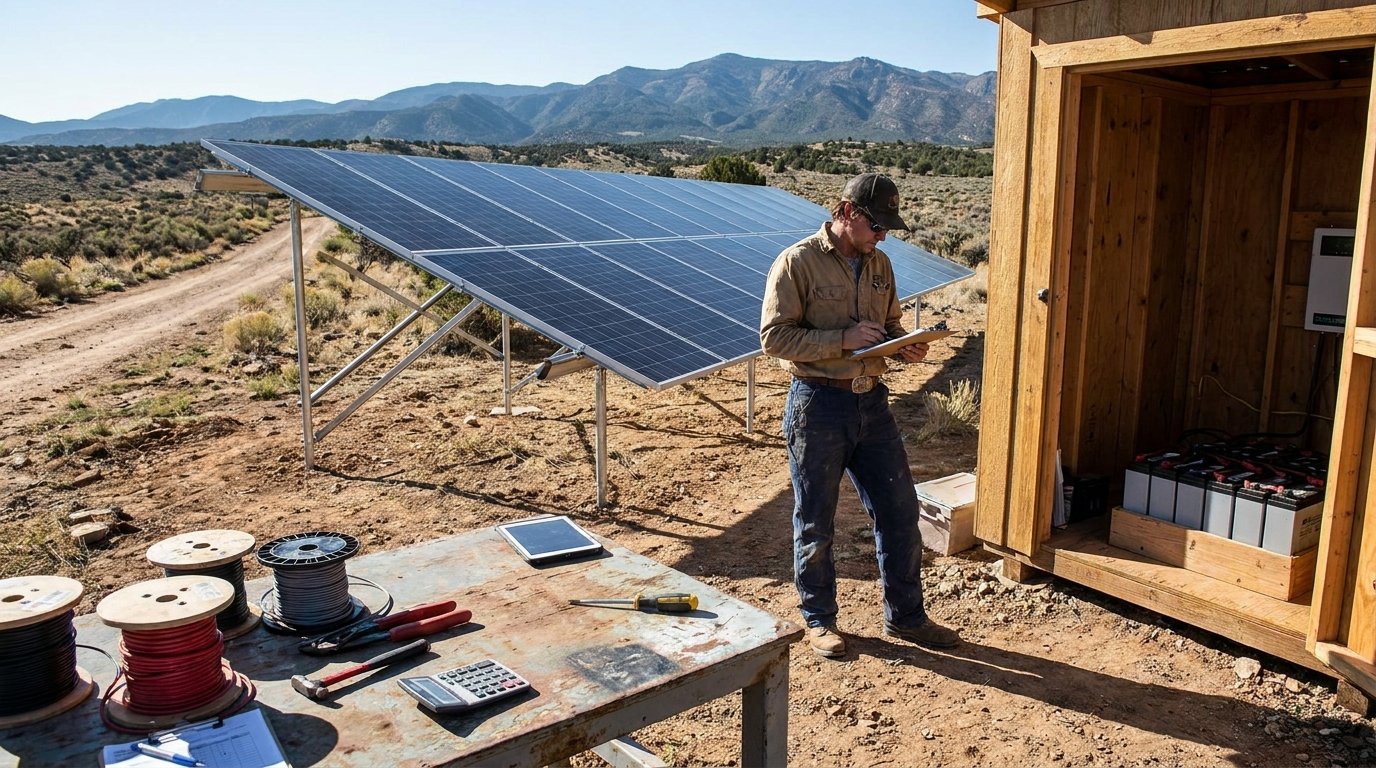
It’s easy to focus solely on the big four components, but there are numerous other critical (and costly) items that make an off-grid system safe and functional. Don’t forget these “hidden” expenses.
Wiring, Fuses, Breakers, and Connectors
These aren’t glamorous, but they are absolutely non-negotiable for safety and system performance. Skimping here can lead to fires or system failures.
- Cost Range: $500 to $2000+ depending on system size and layout.
- Details:
- Solar Cable: UV-resistant, appropriately gauged for your panel string voltage and current.
- Battery Cable: Thick, low-resistance cable for connecting batteries to each other and to the inverter.
- Fuses and Breakers: DC-rated fuses (e.g., ANL, Class T) for battery protection, DC circuit breakers for solar strings, and AC breakers for inverter output.
- MC4 Connectors: For weatherproof panel interconnections.
- Bus Bars and Combiner Boxes: For organizing multiple panel strings and battery connections.
- Practical Example: A small system might get away with $500-$800, while a larger system with a complex wiring setup and proper fusing for every component could easily climb to $1500+.
Mounting Hardware (Racking)
How will those panels stay put? Good quality racking ensures your panels are secure, correctly angled, and can withstand local weather.
- Cost Range: $0.50 to $1.50 per watt of panels.
- Details:
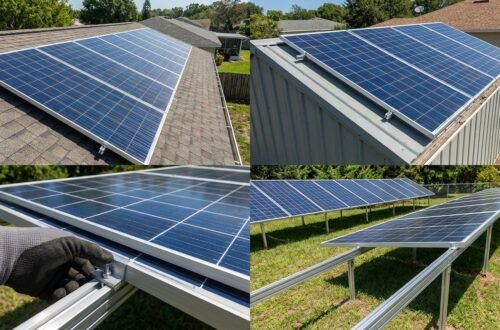
- Roof Mount: Common for small homes, often less material.
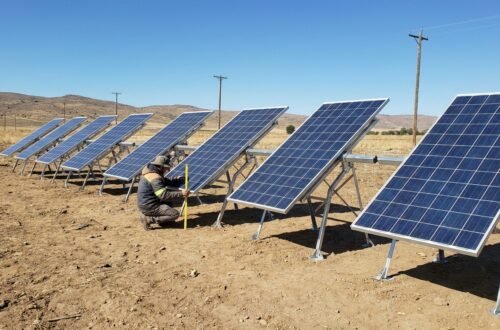
- Ground Mount: More labor-intensive for installation, but often allows for optimal tilt and orientation adjustment. Can be fixed or tracking (tracking greatly increases cost and complexity).
- Pole Mount: Good for smaller arrays, can get panels above obstructions.
- Practical Example: For 800W of panels, a basic roof mount kit might be $400-$600. A sturdy ground mount could be $800-$1200.
Generator (Backup Power)
While not strictly “solar,” a backup generator is almost universally recommended for an off-grid system, especially in regions with unreliable sun or for peak demand. It provides peace of mind and covers those extended cloudy spells.
- Cost Range: $500 (small portable) to $5000+ (large whole-home standby).
- Details:
- Fuel Type: Gasoline, propane, diesel. Propane is often preferred for long-term storage and cleaner burn.
- Automatic Start: Many off-grid inverters can signal a generator to start automatically when batteries are low.
- Practical Example: A good quality 3000W-5000W inverter generator (like a Honda EU3000i or similar) capable of charging your batteries through your inverter/charger might run $1500-$3000. Larger systems often pair with dedicated “off-grid” generators like Generac EcoGen or Kohler, running $4000+.
System Monitoring
Knowing how your system is performing is crucial for longevity and troubleshooting. Most modern inverters and charge controllers come with some form of monitoring, often via a smartphone app or web portal.
- Cost Range: Often included with core components or minimal added cost ($100-$300 for external shunts/meters).
- Details: Monitors battery state of charge, current draw, power generation, and faults.
- Benefit: Helps you optimize usage and catch issues early.
Real-World Example Breakdowns
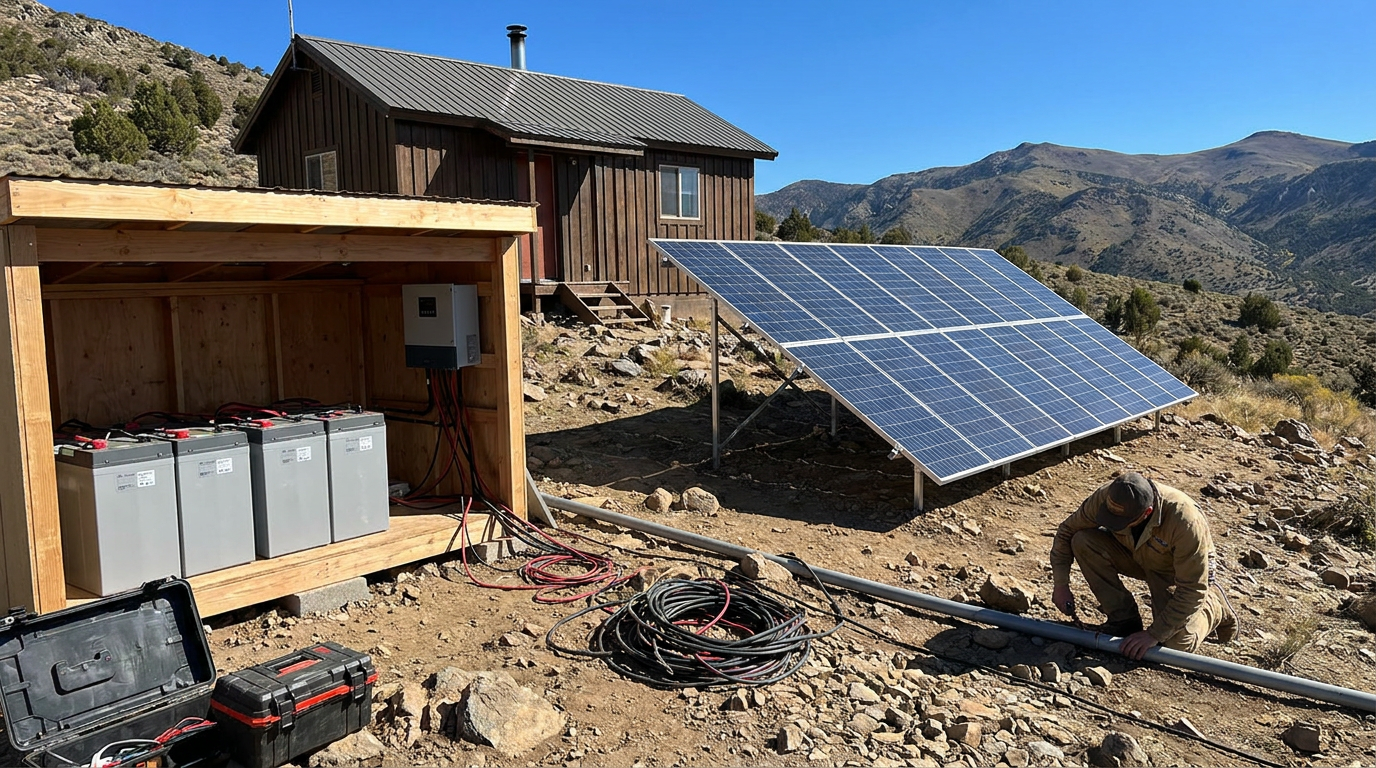
Let’s put some numbers together for our example scenarios, including all the “other” costs. These are conceptual and will vary based on your shopping savvy and specific brand choices.
Scenario A: Basic Off-Grid Cabin/Tiny Home (Essentialist Camper)
- Daily Consumption: ~1.7 kWh
- Autonomy: 3 days (~5 kWh usable battery)
- Peak Load: 1000-1200W
| Component | Estimated Cost | Notes |
| :– | :- | :– |
| Solar Panels (500W-600W) | $600 – $800 | 2x 300W panels or similar, accounting for losses. |
| LiFePO4 Batteries (5 kWh) | $3000 – $4000 | e.g., 2-3x 100Ah 24V batteries, or a 5 kWh 48V drop-in battery. |
| Inverter/Charger (2000W) | $1000 – $1500 | Quality 24V or 48V pure sine wave, with integrated charger. |
| MPPT Charge Controller (30A)| $250 – $400 | Sized for panels and battery voltage. |
| Wiring, Fuses, Breakers | $600 – $900 | DC/AC breakers, battery cut-off switch, appropriately gauged cables. |
| Panel Mounting Hardware | $400 – $600 | Basic roof or ground mount. |
| Backup Generator (3000W) | $1500 – $2500 | Honda EU2200i or similar, with connection to inverter. |
| Monitoring | Included | Via inverter functionality. |
| DIY Total (Materials Only) | $7350 – $10,700 | |
| Professional Installation | $3000 – $6000 | If hiring, varies widely by region and complexity. |
| Total with Installation | $10,350 – $16,700 | |
Scenario B: Small Remote Home (Modest Remote Worker)
- Daily Consumption: ~3.7 kWh
- Autonomy: 3 days (~11 kWh usable battery)
- Peak Load: 3000-4000W
| Component | Estimated Cost | Notes |
| :– | :- | :– |
| Solar Panels (1500W-2000W) | $1800 – $2500 | 4-5x 400W panels, depending on site. |
| LiFePO4 Batteries (11 kWh) | $6600 – $9000 | e.g., 2-3x 48V 100-150Ah server rack batteries. |
| Inverter/Charger (5000W) | $2500 – $4000 | 48V hybrid inverter/charger with robust AC output. |
| MPPT Charge Controller (80A)| $600 – $1000 | Can be integrated into some hybrid inverters, or standalone. |
| Wiring, Fuses, Breakers | $1200 – $2000 | More complex electrical due to higher power and multiple components. |
| Panel Mounting Hardware | $1000 – $1500 | Sturdier ground mount or larger roof array. |
| Backup Generator (5000W-7000W)| $3000 – $5000 | Larger, possibly propane-ready, with auto-start capability. |
| Monitoring | Included – $300| Enhanced monitoring systems sometimes have extra cost. |
| DIY Total (Materials Only) | $16,700 – $25,300 | |
| Professional Installation | $6000 – $12,000| Significant labor for a larger/more complex system. |
| Total with Installation | $22,700 – $37,300 | |
If you’re considering an off-grid solar system for your small home, understanding the costs involved is crucial for making an informed decision. A great resource that complements this topic is an article that provides a comprehensive overview of off-grid living, which can help you grasp the broader context of your investment. You can find it in this ultimate beginner’s guide to off-grid living, where you’ll discover valuable insights and tips that can enhance your off-grid experience.
Installation: DIY vs. Professional
| Location | System Size (kW) | Total Cost | Cost per Watt |
|---|---|---|---|
| California, USA | 2.5 | 10,000 | 4 |
| Kenya | 1.2 | 3,500 | 2.9 |
| India | 3 | 8,000 | 2.7 |
This is a massive determinant of your final cost and a critical decision.
DIY (Do It Yourself)
If you’re handy, comfortable with electrical work, and willing to spend considerable time researching and learning, going DIY can save you 20-50% on the overall cost.
- Pros: Significant cost savings, deep understanding of your system, sense of accomplishment.
- Cons: Requires electrical knowledge, potential for errors (dangerous if critical mistakes are made), time-consuming, no professional warranty on labor, permitting challenges in some areas.
- Reality Check: While you can DIY the assembly, it’s often wise to at least have a qualified electrician review your plans and connections, especially for the AC side and safety.
Professional Installation
Hiring certified solar installers ensures the system is designed, installed, and permitted correctly and safely.
- Pros: Professional expertise, safety, compliance with codes, warranties on labor and components, peace of mind, potential for faster installation.
- Cons: Significantly higher upfront cost (labor can be 20-50% of the total project), dependency on installer’s schedule.
- Picking a Pro: Get multiple quotes, check references, ensure they are experienced with off-grid systems (it’s different from grid-tied), and verify their licensing and insurance.
If you’re considering the financial aspects of installing an off-grid solar system for your small home, you might find it helpful to explore a related article that discusses various real-life examples and their costs. This resource provides valuable insights into the factors that influence pricing and can help you make an informed decision. For more information, check out this article on off-grid solar systems to see how others have navigated their solar journeys.
Potential Cost Saving Tips
Even with the breakdown above, there are ways to manage costs without compromising safety or reliability.
Shop Smart for Components
- Used Panels: Sometimes you can find good deals on used or “refurbished” panels, but inspect them thoroughly for damage and verify performance.
- Sales and Deals: Keep an eye out for sales from reputable solar component suppliers. Holidays or end-of-quarter can sometimes yield discounts.
- Buy in Bulk: If you have friends also going off-grid, buying multiple items together (e.g., batteries) might get you a better price.
Gradual System Build (Modular Approach)
You don’t have to buy everything at once. You can start with a smaller system and expand later.
- Start Small: Begin with panels, an inverter, and enough batteries for critical loads.
- Plan for Expansion: Ensure your inverter, charge controller, and wiring are sized to handle future additions of panels and batteries. This means buying a slightly oversized inverter/charge controller upfront, which is a small added cost now that saves a much larger replacement cost later.
- Add Batteries: When budget allows or needs increase, add more battery bank capacity.
- Add Panels: Similarly, add more solar panels if you find yourself running low on power frequently.
Optimize Energy Efficiency in Your Home
This is the most impactful way to reduce your overall system cost because it directly reduces the amount of solar and battery capacity you need.
- LED Lighting: A no-brainer.
- Energy Star Appliances: When buying new appliances (refrigerator, freezer, washing machine), prioritize Energy Star ratings to minimize consumption.
- Passive Heating/Cooling: Good insulation, strategic window placement, and shading can dramatically reduce heating and cooling loads, which are often the biggest energy hogs.
- Minimizing Phantom Loads: Unplug electronics that aren’t in use. Use power strips with on/off switches.
Going off-grid is a significant investment, but it’s an investment in energy independence and often a quieter, more self-sufficient lifestyle. By carefully planning, understanding your needs, and making informed choices about components and installation, you can create a reliable and cost-effective solar system for your small home.
FAQs
What is an off-grid solar system?
An off-grid solar system is a standalone power system that generates and stores electricity from solar panels, typically used in remote areas where access to the main power grid is limited or unavailable.
How much does an off-grid solar system cost for a small home?
The cost of an off-grid solar system for a small home can vary depending on factors such as the size of the home, energy consumption, location, and specific system components. On average, the cost can range from $10,000 to $30,000 for a small home.
What are the components of an off-grid solar system?
The main components of an off-grid solar system include solar panels, charge controller, battery bank, inverter, and backup generator. These components work together to capture, store, and convert solar energy into usable electricity for the home.
What are some real examples of off-grid solar system costs for small homes?
Real examples of off-grid solar system costs for small homes include a 2kW system in a remote cabin costing around $10,000, and a 5kW system for a small off-grid home costing around $20,000. These costs can vary based on specific energy needs and location.
What are the benefits of installing an off-grid solar system for a small home?
Some benefits of installing an off-grid solar system for a small home include energy independence, reduced electricity bills, environmental sustainability, and the ability to power remote or off-grid locations where traditional power sources are not available.


4 Comments on “Off-Grid Solar System Cost for a Small Home (Real Examples)”