
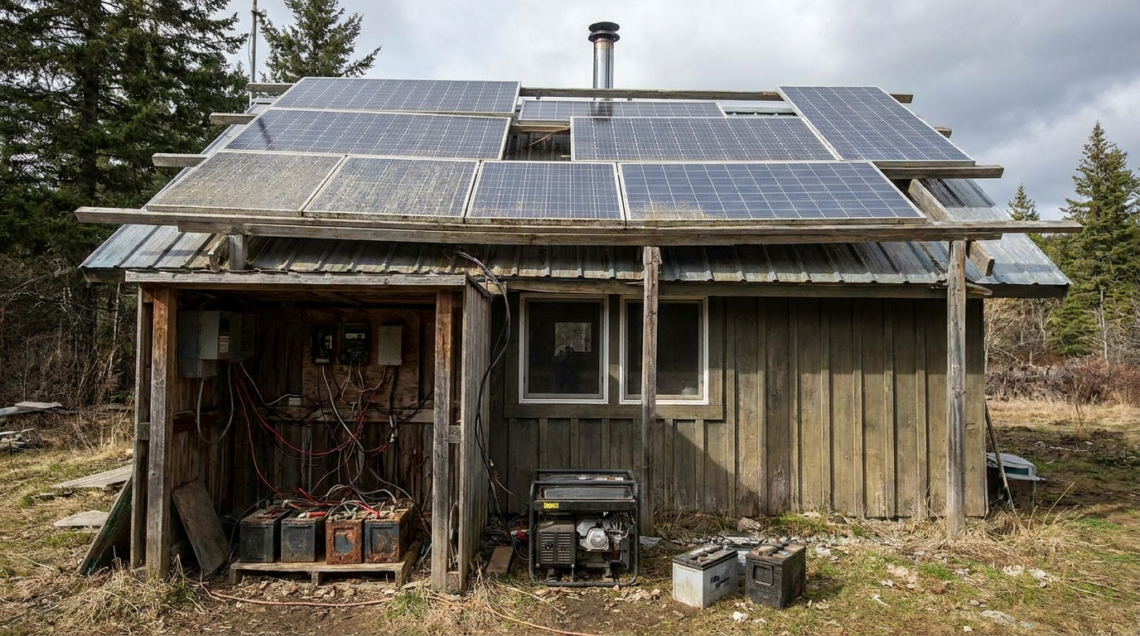
Thinking about going off-grid with solar? That’s a fantastic move towards self-sufficiency! But as with any big project, especially one that involves electricity and surviving without a utility company, there are definitely some common off-grid solar mistakes that beginners stumble into. Let’s dive into those and how to sidestep them. The good news is, with a bit of planning and awareness, you can avoid these common off-grid solar mistakes and set yourself up for success.
This is probably the most frequent and most frustrating mistake beginners make. They either guess or grossly underestimate how much power they actually use. It’s easy to look at your current electricity bill and think, “Okay, I use X kilowatt-hours a month.” But off-grid is different. You’re not just powering a few lights and a TV; you’re responsible for everything.
Table of Contents
The “Vague Guessing” Game
Many people just throw a number out there without really analyzing their consumption. “I’ll probably need a 2kW system.” This is like saying you need “a lot” of groceries without checking your pantry. You need to be specific.
- The Appliance Audit is Non-Negotiable: Seriously, get a notebook or a spreadsheet. Go through your home, room by room, and list every single appliance and electronic device you plan to power.
- Wattage Wars: Find the wattage of each item. This is usually on a sticker on the back or bottom of the appliance, or in its manual. If you can’t find it, a quick online search for “[appliance name] wattage” will usually give you a good estimate.
- Usage Hours Matter More Than You Think: A high-wattage appliance used for just 5 minutes a day might draw less overall energy than a low-wattage appliance running for 12 hours. Estimate how many hours per day (or week) you’ll use each item.
- The Daily Energy Equation: Multiply the wattage of an appliance by the hours it’s used per day to get its daily watt-hour (Wh) consumption. For example, a 100W light bulb on for 4 hours uses 400Wh.
- Summing It Up: Add up the daily Wh for all your appliances. This gives you your total daily energy consumption in watt-hours. Then multiply by 30 for a rough monthly estimate.
- Don’t Forget “Phantom Loads”: Many electronics draw power even when they’re “off” – think chargers, TVs in standby mode, smart home devices. Factor these in, or commit to unplugging things you’re not using.
The “Wishful Thinking” Syndrome
People often overestimate the output of their solar panels. They think, “It’s sunny, so my panels will produce their maximum rated output all day.” This is rarely the case.
- “Peak Sun Hours” Are Just That: Peak: The rated output of a solar panel is under ideal lab conditions (STC – Standard Test Conditions). In reality, you’ll have cloudy days, shade from trees, and the sun’s angle changes throughout the day and year. The concept of “peak sun hours” (the equivalent number of hours per day when sunlight intensity averages 1000 W/m²) is a more realistic way to estimate potential output.
- Location, Location, Location: Your geographic location dictates how much sun you get on average. You can find “peak sun hours” maps for your region online.
- Shading is the Enemy: Even a small amount of shade on a panel can significantly reduce its output, especially in a string of panels. Be ruthless about identifying and mitigating potential shading issues.
- Panel Degradation: Solar panels degrade slowly over time, typically losing a small percentage of their output each year. Most manufacturers guarantee around 80% of their original output after 25 years.
The practical takeaway? Over-spec your system slightly. It’s much better to have a little extra capacity than to constantly run out of power and be uncomfortably cold or unable to charge essential devices.
When venturing into off-grid solar living, it’s crucial to be aware of common pitfalls that beginners often encounter. For instance, many new users underestimate the importance of understanding local regulations and legalities surrounding off-grid living. To gain a deeper insight into this aspect, you can read the article on essential laws related to off-grid living at this link. This resource will help you navigate the legal landscape, ensuring that your off-grid solar setup is not only efficient but also compliant with local laws.
The Battery Blues: Not Enough (Or Too Much!) Storage
Batteries are the heart of an off-grid solar system. They store the energy generated during the day for use at night and on cloudy days. This is where many beginners go wrong because sizing a battery bank is a bit of an art and a science.
The “Bare Minimum” Mentality
Some people think they only need enough battery storage for a single night. This is a recipe for disaster when you hit a few days of bad weather.
- “Days of Autonomy” is Key: This is the number of days your system can run solely on battery power without any solar input. For most off-grid systems, aim for at least 2-3 days of autonomy. In areas with very unreliable sun, you might want 4-5 days.
- Calculate Your Daily Energy Duty: Remember that daily energy consumption figure you calculated earlier? Multiply that by your desired “days of autonomy.” This gives you your minimum required usable battery capacity. For example, if you use 5 kWh per day and want 3 days of autonomy, you need 15 kWh of usable battery capacity.
The “Depth of Discharge” Dilemma
This is a critical concept that many beginners overlook, leading to batteries that die prematurely.
- Don’t Drain Them Dry: You can’t and shouldn’t use 100% of a battery’s listed capacity. Each battery technology has a recommended “Depth of Discharge” (DoD). Draining a battery too deeply dramatically shortens its lifespan and performance.
- Lead-Acid vs. Lithium:
- Lead-acid batteries (like deep-cycle marine or RV batteries): Generally, you should aim for a maximum DoD of 50%. This means if you have a 10 kWh lead-acid battery bank, you can only safely use 5 kWh. To get 15 kWh of usable capacity, you’d need a 30 kWh total lead-acid battery bank. This is why lead-acid systems become very large and heavy.
- Lithium-ion batteries (like LiFePO4): These are much more forgiving and can often handle 80-90% DoD, sometimes even higher for specific chemistries. For that same 15 kWh usable capacity, you’d only need around 17-19 kWh of total lithium battery capacity. This is a significant difference in size, weight, and cost over the long run, though the upfront cost is higher.
- The “Usable Capacity” Calculation: To get your total battery capacity requirement, divide your minimum required usable battery capacity by your battery’s maximum allowed Depth of Discharge.
- For a lead-acid system needing 15 kWh usable at 50% DoD: 15 kWh / 0.50 = 30 kWh total capacity needed.
- For a lithium system needing 15 kWh usable at 80% DoD: 15 kWh / 0.80 = 18.75 kWh total capacity needed.
The “Cheapest is Best” Trap
While budget is always a concern, opting for the absolute cheapest batteries can be a costly mistake in the long run.
- Lifespan is Everything: More expensive, higher-quality batteries, especially lithium, often have significantly longer lifespans (more cycles) than cheaper alternatives. This means you’ll replace them less often, making them more cost-effective over time.
- Performance Matters: Lower-quality batteries may not deliver their advertised capacity or may have higher internal resistance, affecting your system’s overall efficiency.
The practical takeaway? Invest wisely in your battery bank. Size it for your needs plus a buffer for bad weather, and understand the DoD of your chosen battery chemistry. Lithium batteries are often a better long-term investment despite the higher initial cost.
The “Set It and Forget It” Fantasy: System Maintenance Neglect
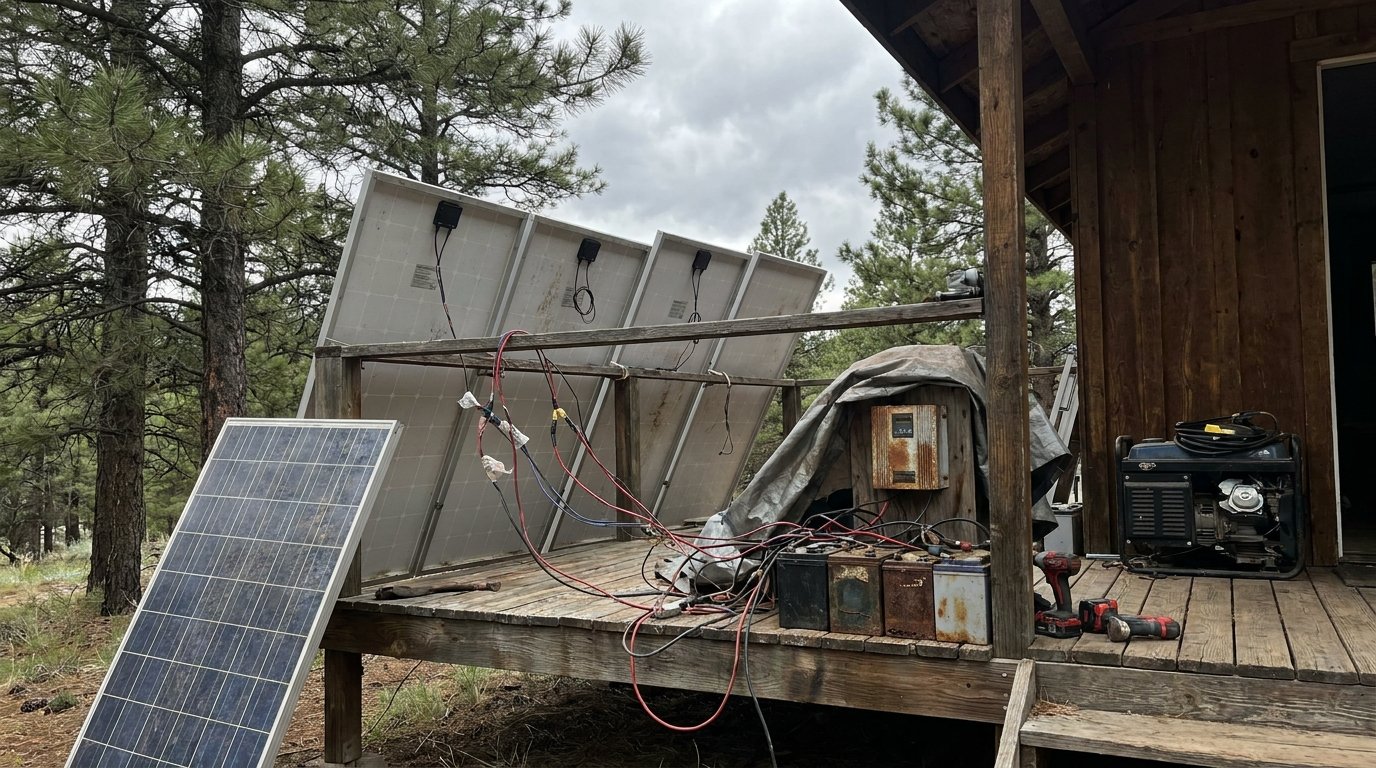
This is a big one. An off-grid solar system isn’t a magical perpetual motion machine. It requires regular attention. Forgetting about maintenance is a surefire way to have your system fail when you need it most.
Ignoring the Guts: Battery Health Checks
Batteries are complex and sensitive. Neglecting them is a fast track to a dead system.
- Terminal Corrosion: Check battery terminals regularly for any signs of corrosion. Clean them with a wire brush and apply a protective coating if needed.
- Water Levels (for flooded lead-acid): If you have flooded lead-acid batteries, you must check and top up the water levels with distilled water regularly. Low water levels can be catastrophic for the cells.
- Voltage and State of Charge Monitoring: Regularly check your battery’s voltage and state of charge using your battery monitor. Look for any unusual drops or patterns that might indicate a problem.
- Temperature: Batteries don’t like extreme temperatures. Ensure they’re in a well-ventilated area, protected from direct sun and freezing conditions.
The Dusty Truth: Dirty Solar Panels
It’s simple: dirt, dust, pollen, and bird droppings on your solar panels reduce their efficiency.
- Regular Cleaning: Depending on your environment, you might need to clean your panels every few months or even more frequently. Use a soft brush or squeegee and plain water. Avoid harsh chemicals.
- Access and Safety: More importantly, ensure you can safely access your panels for cleaning. Falling off a roof is a much worse outcome than dirty panels.
- “Self-Cleaning” is a Myth: While rain helps, it’s rarely enough to keep panels at peak performance in many areas.
The “Wire It Once” Mentality: Connections and Wiring Issues
Loose connections, corrosion on wire terminals, or damaged wiring are common causes of system failures.
- Visual Inspections: Regularly inspect all wiring connections, from the panels to the charge controller, inverter, and batteries. Look for any signs of damage, fraying, or corrosion.
- Tighten When Needed: Periodically check that all connections are secure, especially those at the battery terminals and inverter.
- Surge Protection: Ensure your system has proper surge protection. Lightning strikes or power surges can fry your equipment if not protected.
The “Set and Forget” Trap: Software and Firmware Updates
Many modern charge controllers and inverters have software or firmware that can receive updates.
- Check Manufacturer Websites: Periodically visit the manufacturer’s website for your equipment to see if any updates are available. These updates can improve performance, fix bugs, or add new features.
The practical takeaway? Create a maintenance schedule. It doesn’t have to be overly complicated, but it should include regular checks of your batteries, panels, and wiring. Treat your system like a valuable asset that needs upkeep.
The “One Size Fits All” Fallacy: Inadequate or Incompatible Components
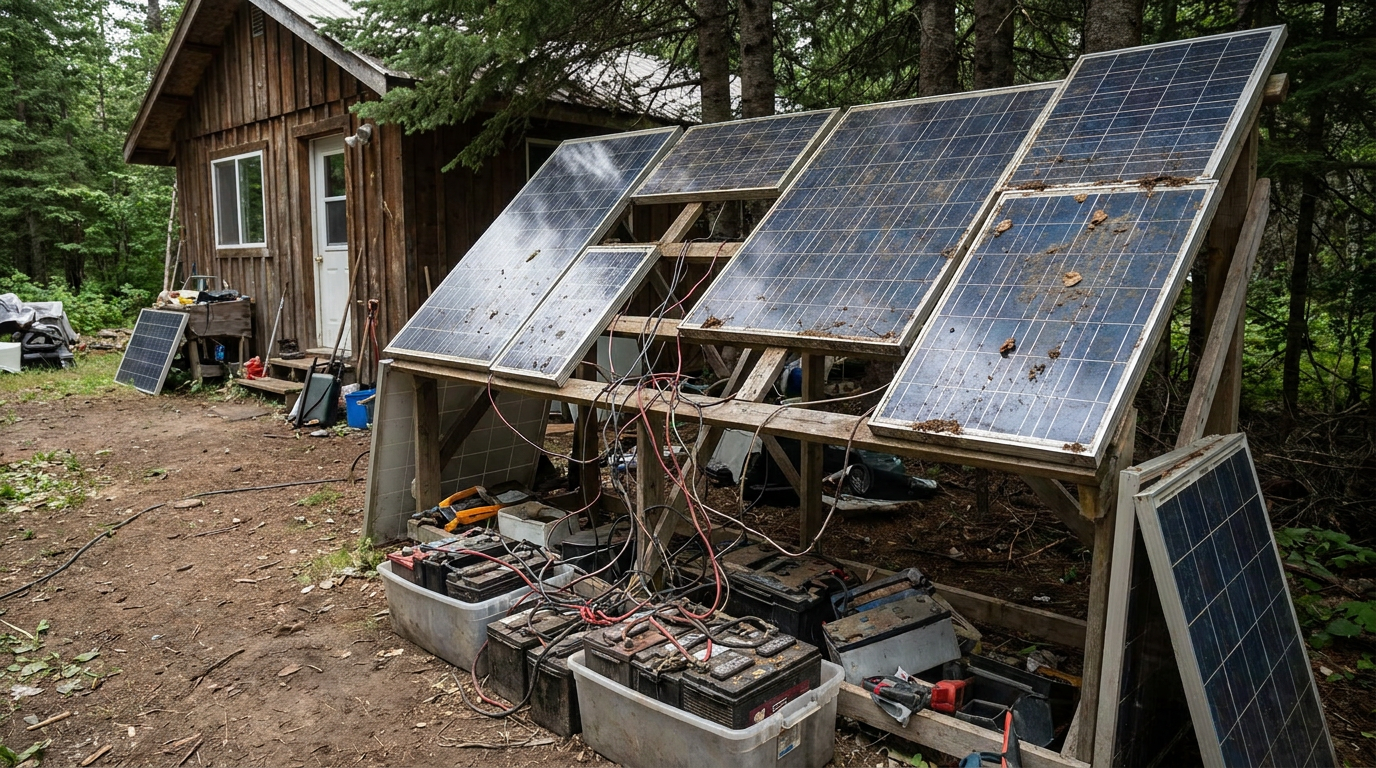
Trying to piece together an off-grid system with whatever parts you can find without considering compatibility is a recipe for frustration and expensive failures.
The Mismatched Marriage: Panel and Charge Controller Synergy
Not all charge controllers work with all types of solar panels, and not all are sized correctly.
- MPPT vs. PWM:
- PWM (Pulse Width Modulation): These are simpler and generally less expensive. They work best when your panel’s voltage is very close to your battery bank’s voltage. They can be less efficient in certain conditions.
- MPPT (Maximum Power Point Tracking): These are more advanced and significantly more efficient, especially in varying light conditions or when your panel voltage is much higher than your battery voltage. They can extract more power from your panels.
- Voltage and Amperage Ratings: Your charge controller must be rated to handle the maximum voltage and amperage your solar array can produce, as well as the voltage of your battery bank. Overlooking these ratings can lead to the controller frying itself.
- Panel Configuration: The way you wire your panels (series, parallel, or a combination) affects the total voltage and amperage. This configuration needs to match the capabilities of your charge controller.
The Inverter Incompatibility Conundrum
The inverter converts the DC power from your batteries into the AC power your household appliances use. This is a critical component.
- Pure Sine Wave vs. Modified Sine Wave:
- Modified Sine Wave: These are cheaper but can cause problems for sensitive electronics, motors, and appliances with digital controls (like some newer refrigerators, medical equipment, and even some battery chargers). You might experience humming, reduced efficiency, or outright failure.
- Pure Sine Wave: These produce AC power that is very close to what you get from the utility grid. They are essential for running most modern appliances and electronics reliably and without issue.
- Wattage and Surge Capacity: Your inverter needs to be sized to handle the total wattage of the appliances you might run simultaneously, plus a surge capacity to handle the initial power draw of motors (like refrigerators or pumps) when they start up. An undersized inverter will shut down or damage itself.
The Wire Worries: Undersized or Inferior Wiring
Using the wrong gauge wire is a common mistake that leads to power loss, overheating, and potential fire hazards.
- Voltage Drop: Longer wire runs or undersized wires lead to “voltage drop.” This means power is lost as heat in the wires before it even reaches your appliances, making your system less efficient.
- Amperage Rating: Wires have an amperage rating. If too much current flows through a wire that’s too small, it can overheat and melt or catch fire.
- Environment: Consider the environment. Wires used outdoors or in damp areas need to be rated for those conditions.
The Fuse Fiasco: Incorrect Fusing and Circuit Protection
Fuses and circuit breakers are your system’s safety net. Using the wrong ones can be dangerous.
- Overcurrent Protection: Each component in your system (solar array, charge controller, battery bank, inverter) needs appropriate overcurrent protection (fuses or breakers) sized for that component’s maximum rated current.
- Location: Fuses should be placed as close to the power source as possible to protect the wiring connected to it.
The practical takeaway? Don’t skimp on component compatibility. Research each piece of equipment thoroughly, understand its specifications, and ensure it will work harmoniously with all other parts of your system. When in doubt, consult with an experienced off-grid solar installer or designer.
When venturing into the world of off-grid solar energy, beginners often encounter a variety of challenges that can hinder their success. To help navigate these pitfalls, it’s beneficial to explore related resources that provide valuable insights. For instance, you might find the article on Off-Grid Solar System Setup for Beginners (Complete Guide) particularly enlightening, as it outlines essential tips and strategies to avoid costly errors. By understanding these common missteps, you can enhance your solar setup and ensure a more efficient energy solution. For more information, check out this helpful resource here.
The “DIY Zealot” Syndrome: Not Seeking Professional Help When Needed
| Mistake | Impact |
|---|---|
| Choosing the wrong solar panel size | Insufficient power generation |
| Improper placement of solar panels | Reduced energy efficiency |
| Using incorrect wiring or connections | Risk of electrical hazards |
| Underestimating energy storage needs | Inadequate power supply during low sunlight periods |
| Ignoring maintenance and cleaning | Reduced performance and lifespan of solar panels |
While going off-grid often comes with a DIY spirit, there are times when professional expertise is invaluable, and trying to do everything yourself can lead to costly mistakes or dangerous situations.
Trying to Become an Electrician Overnight
Working with high-voltage DC and AC electricity can be dangerous if you don’t have proper training.
- Risk of Shock: Even though off-grid systems might be lower voltage than grid-tied systems, they can still deliver fatal shocks. Improper wiring or handling can lead to serious injury or death.
- Fire Hazards: Incorrect wiring, loose connections, or undersized components can create fire hazards.
- Code Compliance (if applicable): While off-grid systems often operate outside of strict building codes in remote locations, understanding electrical safety principles is paramount. Some areas may have specific regulations for battery installations or electrical work.
Overlooking the Complexities of System Design
Designing a truly efficient and reliable off-grid system involves understanding electrical engineering principles, component interactions, and local environmental factors.
- Energy Auditing Nuances: Getting a truly accurate energy audit requires a good understanding of how to measure appliance usage and account for all load types.
- Battery Bank Balancing: For larger battery banks, proper series and parallel configurations are crucial for optimal performance and longevity.
- Charge Controller Settings: Many advanced charge controllers have complex settings that, if configured incorrectly, can hinder performance or even damage batteries.
- Inverter Sizing and Selection: Choosing the right inverter requires understanding startup surges, continuous loads, and the specific needs of your appliances.
The “Save a Few Bucks, Lose a Ton” Mentality
While trying to save money is understandable, cutting corners on crucial aspects of the system design or installation can be far more expensive in the long run.
- Component Failures: Incorrectly installed or incompatible components are more likely to fail prematurely, requiring expensive replacements.
- Reduced Efficiency: A poorly designed system will be less efficient, meaning you’ll generate less usable power from your solar panels and batteries, leading to dissatisfaction and potential shortages.
- Repeated Fixes: Trying to patch up a poorly designed system often leads to a cycle of ongoing problems and repairs.
When to Call in the Pros:
- Initial System Design: Especially for your first off-grid system, consider having a professional design it. They can help you accurately assess your energy needs, select appropriate components, and ensure everything is sized correctly.
- Complex Electrical Work: If you’re uncomfortable with electrical wiring, especially dealing with higher voltages or AC connections for your inverter, hire a qualified electrician or solar installer.
- Battery Bank Installation: Installing a large battery bank can be physically demanding and requires care to ensure proper connections and safety.
- Troubleshooting Major Issues: If your system experiences a significant problem you can’t diagnose, don’t hesitate to bring in an expert.
The practical takeaway? Embrace the DIY spirit, but know your limits. Don’t be afraid to seek professional advice or assistance for design, complex electrical work, or major troubleshooting. It’s an investment in safety, reliability, and the long-term success of your off-grid dream.
FAQs
What are some common off-grid solar mistakes beginners make?
Some common mistakes beginners make with off-grid solar systems include underestimating their energy needs, improper system sizing, inadequate battery storage, poor system maintenance, and improper placement of solar panels.
How can underestimating energy needs be a mistake in off-grid solar systems?
Underestimating energy needs can be a mistake because it can lead to a system that does not produce enough power to meet the demands of the user. This can result in frequent power shortages and the need for alternative energy sources.
Why is improper system sizing a common mistake in off-grid solar systems?
Improper system sizing can be a mistake because it can lead to a system that is either too small to meet energy demands or too large, resulting in unnecessary costs. Proper system sizing is crucial for maximizing energy production and efficiency.
What are the consequences of inadequate battery storage in off-grid solar systems?
Inadequate battery storage can lead to a lack of energy storage capacity, which can result in power shortages during periods of low sunlight. This can disrupt daily activities and lead to reliance on backup power sources.
How can poor system maintenance affect off-grid solar systems?
Poor system maintenance can lead to decreased efficiency and performance of off-grid solar systems. Neglecting regular maintenance tasks such as cleaning solar panels and checking battery health can result in reduced energy production and system lifespan.


2 Comments on “Common Off-Grid Solar Mistakes Beginners Make”