
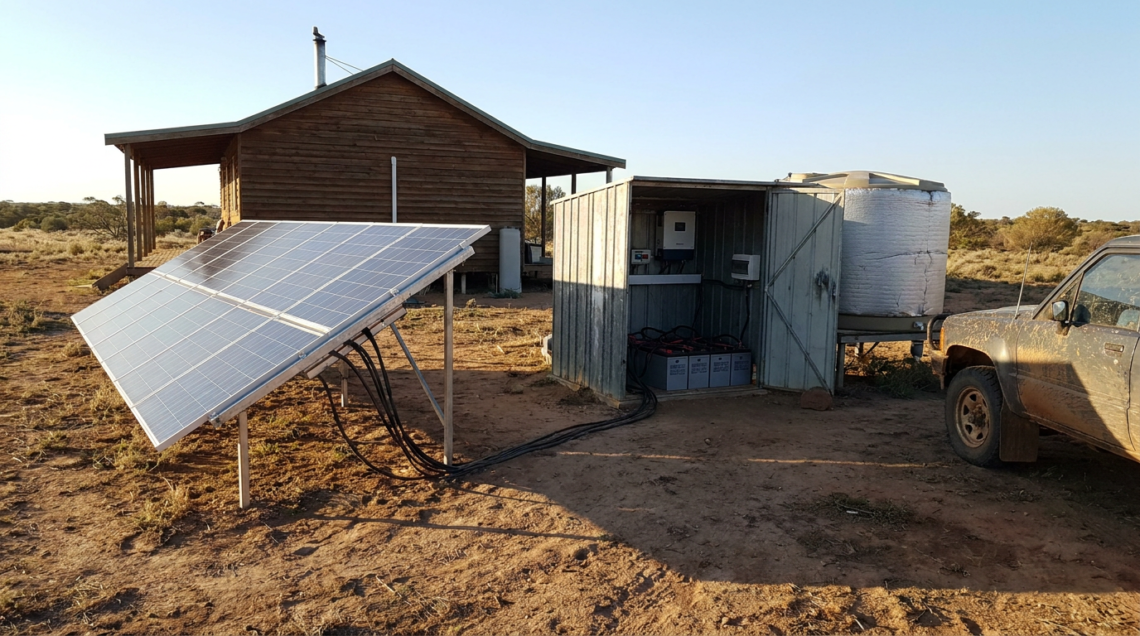
Let’s dive into the world of off-grid solar systems and the burning question: 12V, 24V, or 48V – which one is best for you? The quick answer is this: there’s no single “best” option. It all depends on your specific power needs, budget, and the size of your off-grid setup. Generally, 12V systems are great for small, portable setups, 24V hits a sweet spot for medium-sized homes or cabins, and 48V is the go-to for larger, more demanding off-grid applications. Now, let’s unpack wh
Before we compare, let’s get a handle on what voltage actually means in this context. Think of voltage like the “pressure” that pushes electricity through your system. Higher voltage means you can move more power more efficiently over longer distances, often with smaller wires. Lower voltage means you need thicker wires for the same amount of power to avoid significant energy loss (known as voltage drop).
Table of Contents
Why Voltage Matters for Off-Grid
In an off-grid solar system, voltage is particularly important because it affects almost every component: your solar panels, charge controller, battery bank, and inverter. Choosing the right voltage helps optimize your system’s performance, reduces costs, and ensures long-term reliability.
When considering the best voltage for off-grid solar systems, it’s essential to understand the broader context of off-grid living. For beginners looking to navigate the complexities of this lifestyle, a helpful resource is the article on essential off-grid living FAQs. This article provides valuable insights that can complement your understanding of the differences between 12V, 24V, and 48V systems. You can read more about it here: 10 Essential Off-Grid Living FAQs for Beginners.
12V Off-Grid Solar Systems: Small & Simple
12V systems are often the entry point for many off-grid enthusiasts. They’re characterized by their simplicity and affordability for small applications.
Ideal Applications for 12V
- Vans, RVs, and Campers: Perfect for powering lights, small fridges, and charging devices on the go.
- Small Cabins or Sheds: Can handle basic lighting and a few low-power appliances.
- Portable Solar Kits: Great for weekend trips or emergency backup.
- Boats: Suitable for marine applications with modest power requirements.
Advantages of 12V Systems
- Lower Initial Cost: Components like batteries, charge controllers, and inverters are generally cheaper and more readily available in 12V configurations.
- Wider Component Availability: A vast selection of 12V appliances (fridges, lights, pumps) makes it easy to find what you need without an inverter.
- Simpler Wiring: For smaller systems, wiring is often straightforward, and voltage drop is less of a concern over short distances.
- Easier Troubleshooting: With fewer components and simpler circuits, identifying issues is often quicker.
Disadvantages of 12V Systems
- Higher Amperage for the Same Power: To get the same amount of power as a 24V or 48V system, a 12V system needs to draw twice or four times the current (amps).
- Thicker Wires Required: High amperage leads to significant voltage drop over longer distances, necessitating thicker, more expensive copper wiring to prevent power loss and potential fire hazards.
- Limited Power Capacity: Not ideal for powering medium to large loads or entire homes. You’ll quickly hit limitations if you try to run multiple energy-intensive appliances.
- Less Efficient for Larger Systems: The need for thicker wires and the inherent inefficiency of lower voltage for higher power output make 12V less practical for anything beyond small-scale use.
24V Off-Grid Solar Systems: The Sweet Spot
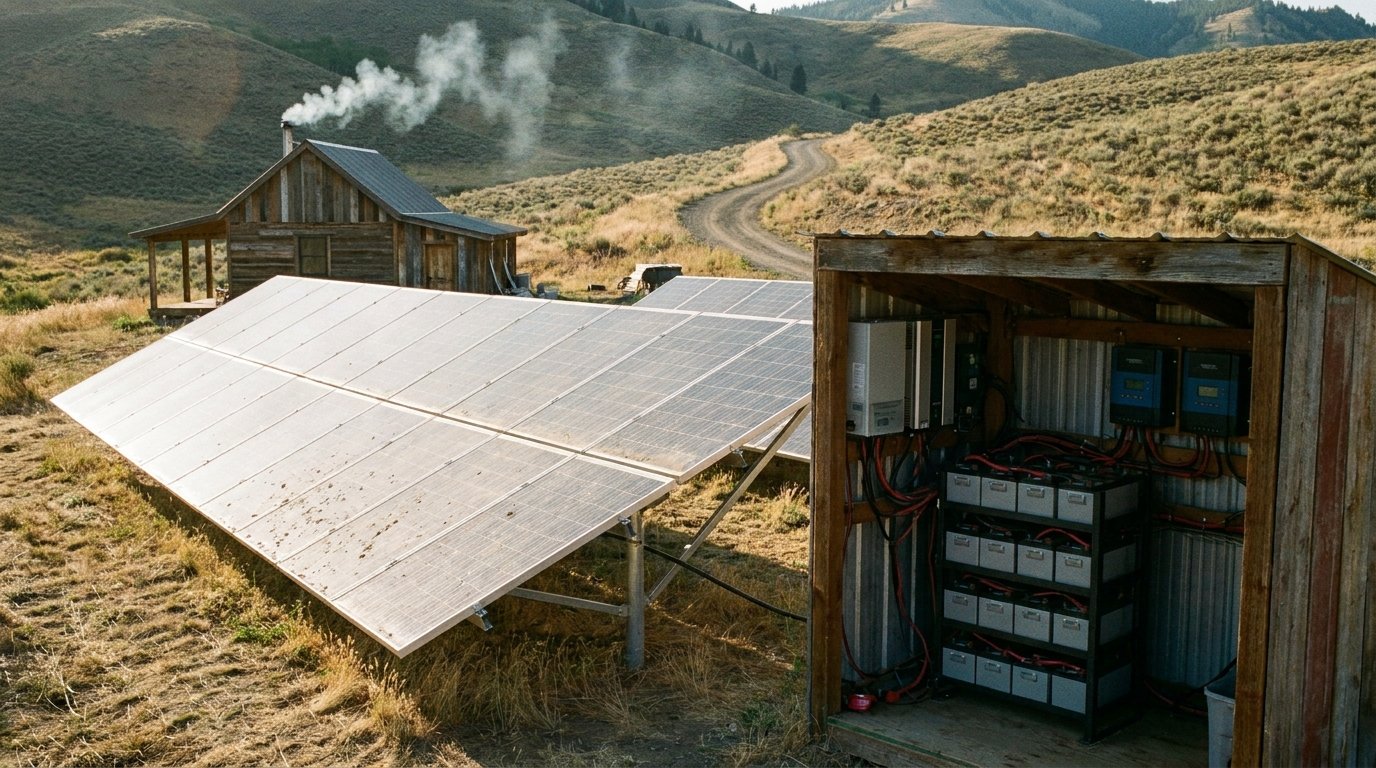
24V systems offer a good balance between cost, efficiency, and power capacity. They’re a popular choice for many medium-sized off-grid setups.
Ideal Applications for 24V
- Medium-Sized Cabins or Tiny Homes: Can comfortably power typical household appliances like a refrigerator, lights, and entertainment.
- Workshops or Garages: Suitable for running power tools and lighting.
- Small Residential Off-Grid Homes: A common choice when daily power consumption is moderate.
- Backup Power Systems: Effective for providing essential power during outages.
Advantages of 24V Systems
- Better Efficiency than 12V: By doubling the voltage, you halve the current for the same power, significantly reducing voltage drop and allowing for thinner, less expensive wiring.
- Good Balance of Cost and Performance: Components are still reasonably priced, but the system can handle more substantial loads than 12V.
- Wider Range of Inverters: More powerful inverters are readily available in 24V.
- Easier to Scale Up: It’s generally simpler and more cost-effective to expand a 24V system than a 12V one when your power needs grow.
- Reduced Battery Wiring Complexity: Instead of having many parallel 12V batteries (which increases the risk of imbalanced charging), you can connect two 12V batteries in series to create a 24V bank, simplifying wiring.
Disadvantages of 24V Systems
- Fewer Native 24V Appliances: While 12V appliances are abundant, dedicated 24V appliances are less common, meaning you’ll likely need an inverter for most common household items.
- Slightly Higher Initial Cost than 12V: Components are a bit more expensive than their 12V counterparts.
- More Complex than 12V: While not overly complicated, it requires a bit more understanding of series and parallel wiring for batteries and panels.
48V Off-Grid Solar Systems: High Power & Efficiency
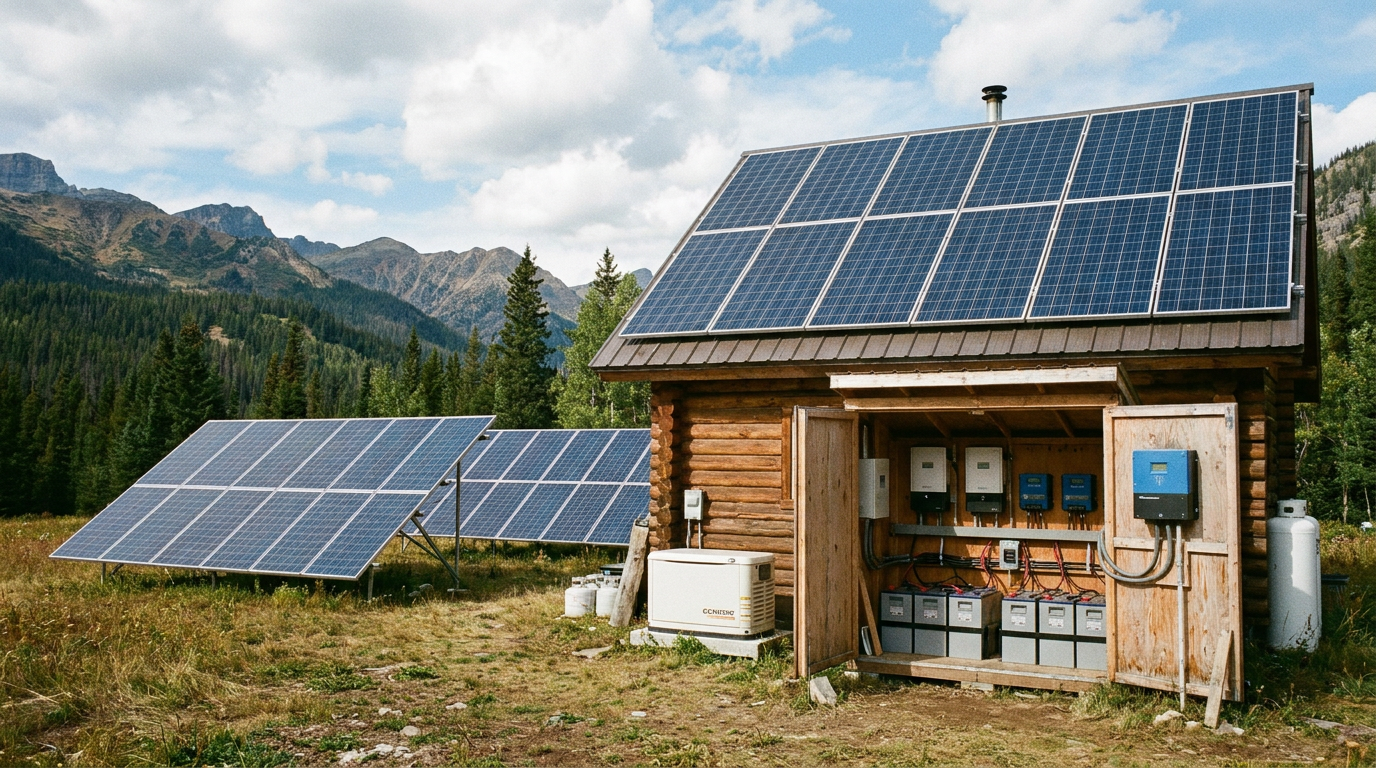
48V systems are designed for serious off-gridders who need substantial power to run a full-sized home with all the modern creature comforts.
Ideal Applications for 48V
- Full-Sized Off-Grid Homes: Can power larger appliances like washing machines, well pumps, or even air conditioning units.
- Commercial Off-Grid Installations: Suitable for businesses or larger properties with significant energy demands.
- Large RVs or Bus Conversions: For those living full-time in larger vehicles with high power needs.
- Remote Homes with High Energy Consumption: Where reliable, high-capacity power is crucial.
Advantages of 48V Systems
- Maximum Efficiency: For higher power loads, 48V systems are significantly more efficient than 12V or 24V. The current is much lower for the same power, leading to minimal voltage drop.
- Thinner Wiring: You can use much thinner and therefore cheaper wiring compared to lower voltage systems for the same power transfer, especially over longer distances from the solar array to the charge controller/battery.
- Higher Power Capacity: Handles high surge loads and continuous power demands with ease.
- Sophisticated Inverters: High-power inverters (3000W+) are often designed as 48V systems to maximize efficiency and reduce internal heat buildup.
- Optimized for Larger Battery Banks: Integrating multiple batteries into a 48V bank often leads to more balanced charging and discharging across the bank, which can prolong battery life.
- Better for High-Powered Solar Arrays: If you have many solar panels, wiring them into a 48V system is more efficient.
Disadvantages of 48V Systems
- Higher Initial Cost: Components, especially charge controllers and inverters, tend to be more expensive.
- Fewer Native 48V Appliances: Almost all your appliances will need to run off an inverter, as dedicated 48V DC appliances are very rare.
- Increased System Complexity: Requires a more thorough understanding of electrical systems for installation and maintenance.
- Safety Concerns: Higher voltage means a greater potential for electrical shock. While still generally safe when handled properly, caution is paramount.
- Battery Configuration: While beneficial, configuring four 12V batteries (or eight 6V ones) in series to create a 48V bank requires careful attention to ensure all batteries are healthy and properly matched.
When considering the best voltage for your off-grid solar system, it’s essential to understand how to size your system effectively to meet your energy needs. A related article that provides valuable insights on this topic is available at How to Size an Off-Grid Solar System, which discusses the factors that influence system sizing and efficiency. By exploring both the voltage options and the sizing process, you can make a more informed decision about whether a 12V, 24V, or 48V system is the right choice for your off-grid setup.
Key Components & How Voltage Affects Them
| Metrics | 12V System | 24V System | 48V System |
|---|---|---|---|
| Efficiency | Lower | Moderate | Higher |
| Cost | Lower | Moderate | Higher |
| Wiring | Thicker | Thinner | Thinnest |
| Power Loss | Higher | Moderate | Lower |
| System Size | Smaller | Moderate | Larger |
The voltage you choose significantly impacts the design and cost of your system’s core components.
Solar Panels
- Voltage Output: While individual panels might be rated for less (e.g., 18V nominal), they are often wired in series to create a combined voltage suitable for your battery bank (e.g., two 18V panels in series for a 24V system, or four for a 48V system).
- MPPT Charge Controllers: With MPPT (Maximum Power Point Tracking) charge controllers, you have greater flexibility. They can take a higher voltage input from your panels and convert it down to efficiently charge a lower voltage battery bank. This is why you often see high voltage solar arrays (e.g., 100V+) charging a 48V or even 24V battery bank. Higher array voltage helps reduce wire gauge between panels and controller.
Charge Controller
- Matching Voltage: The charge controller’s primary job is to regulate the power from your solar panels to safely charge your battery bank. It must be rated for the nominal voltage of your battery bank.
- Current Rating: For a given power output, lower voltage systems require charge controllers with higher current ratings, which are often more expensive. For example, a 1000W solar array feeding a 12V battery needs a charge controller capable of handling over 80 amps, whereas for a 48V battery, it would only need around 20 amps.
Battery Bank
- Series vs. Parallel: Batteries are usually 12V (or 6V). To achieve 24V, you connect two 12V batteries in series. For 48V, you connect four 12V batteries in series. For more capacity at the same voltage, you connect parallel strings of these series groups.
- Cost: While 12V batteries might seem cheaper individually, a 48V system can sometimes reduce the total number of batteries needed if you’re aiming for a certain energy capacity (Watt-hours), as it’s more efficient. However, the complexity of configuring many batteries in series correctly can be a factor.
Inverter
- Input Voltage: The inverter must match the nominal voltage of your battery bank (12V, 24V, or 48V).
- Power Output: High-power inverters (3000W and above) are almost exclusively 24V or, more commonly, 48V. Attempting to draw thousands of watts from a 12V battery bank would require enormous currents and incredibly thick wiring, making it impractical and dangerous.
When considering the best voltage for your off-grid solar system, it’s essential to weigh the pros and cons of 12V, 24V, and 48V setups. Each option has its unique advantages depending on your energy needs and budget. For those looking to minimize initial costs while still achieving efficiency, you might find useful insights in a related article that discusses the most economical ways to begin your off-grid journey. You can read more about it here. Understanding these factors can help you make an informed decision that aligns with your long-term sustainability goals.
Deciding Which is Best for Your Off-Grid Lifestyle
Now that we’ve covered the specifics, how do you make the choice for your own setup?
What Are Your Power Needs?
- Low Power (A Few Lights, Phone Charging): 12V is probably sufficient and most cost-effective.
- Medium Power (Fridge, Lights, TV, Laptop): 24V offers a great balance of efficiency and cost.
- High Power (Washing Machine, Well Pump, AC, Multiple Appliances): 48V is the clear winner for performance and efficiency.
What’s Your Budget?
- Tight Budget: 12V typically has the lowest entry cost for components.
- Moderate Budget: 24V offers better value for money for a more capable system.
- Generous Budget: 48V will give you the most robust and efficient system for high power.
How Far is Your Solar Array From Your Battery Bank?
- Short Distances (e.g., rooftop panels on a van): Voltage drop is less of an issue, so 12V or 24V can work.
- Longer Distances (e.g., ground-mounted array 50+ feet from the cabin): Higher voltage (24V or 48V) becomes crucial to minimize wire gauge and energy loss. Remember, running a high-voltage array into an MPPT charge controller that charges a lower voltage battery bank is an excellent strategy for mitigating wire loss.
What is Your Technical Skill Level?
- Beginner/DIY-Friendly: 12V systems are generally the simplest to design and install.
- Intermediate: 24V systems are manageable for most DIYers with a bit of research.
- Advanced/Professional help: 48V systems, especially larger ones, often benefit from professional design and installation due to their complexity and higher power.
The Bottom Line
Choosing between 12V, 24V, and 48V isn’t about one being inherently “better” but rather about finding the right fit for your specific off-grid adventure. Small, portable setups thrive on 12V simplicity. Mid-range cabins and homes find their ideal match in the balanced efficiency of 24V. And for full-sized, power-hungry off-grid living, 48V offers the robust capability and efficiency needed to keep everything running smoothly. Take the time to honestly assess your needs, and you’ll find the voltage that powers your off-grid dreams.
FAQs
1. What are the differences between 12V, 24V, and 48V off-grid solar systems?
Off-grid solar systems are categorized based on the voltage of the battery bank they use. A 12V system uses a 12V battery bank, a 24V system uses a 24V battery bank, and a 48V system uses a 48V battery bank. The higher the voltage, the more efficient the system can be in terms of power loss and wire size.
2. What are the advantages of a 12V off-grid solar system?
A 12V system is generally more affordable and easier to find components for. It is also suitable for smaller off-grid applications such as RVs, boats, and small cabins.
3. What are the advantages of a 24V off-grid solar system?
A 24V system is more efficient than a 12V system, especially for larger off-grid applications. It allows for longer wire runs and lower power loss, making it a good choice for medium-sized off-grid systems.
4. What are the advantages of a 48V off-grid solar system?
A 48V system is the most efficient option, especially for larger off-grid applications such as residential homes, farms, and commercial buildings. It allows for even longer wire runs and lower power loss compared to 12V and 24V systems.
5. Which off-grid solar system voltage is best for my needs?
The best off-grid solar system voltage for your needs depends on the size of your off-grid application and your budget. A 12V system is suitable for smaller applications, while a 24V or 48V system is more efficient for medium to larger applications. It is recommended to consult with a solar professional to determine the best voltage for your specific needs.


4 Comments on “12V vs 24V vs 48V Off-Grid Solar Systems (Which Is Best?)”