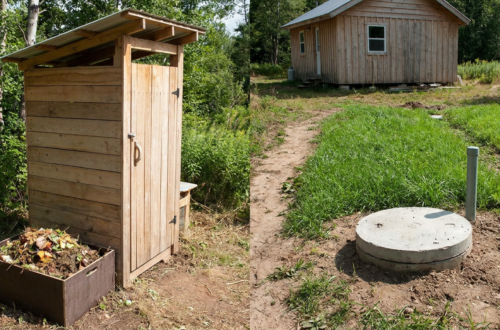
When you’re thinking about living off-grid, one of the big questions that pops up right away is: “What do I do with my trash and wastewater?” It’s not the most glamorous part of the lifestyle, but it’s absolutely crucial for being self-sufficient and responsible. Thankfully, there are some practical and effective ways to handle waste when you’re not connected to regular municipal systems.
Essentially, off-grid waste management boils down to minimizing what you produce and then dealing with what’s left in a way that’s safe for you and the environment. This usually involves a combination of reducing, reusing, composting, and implementing specific systems for liquid and solid waste.
Table of Contents
Composting Toilets: The Gold Standard for Solid Waste
Composting toilets are probably the most common and environmentally friendly solution for dealing with human solid waste when you’re off-grid. The core idea is to break down human waste, much like you would compost kitchen scraps, turning it into a safe, nutrient-rich material.
How They Work: A Closer Look
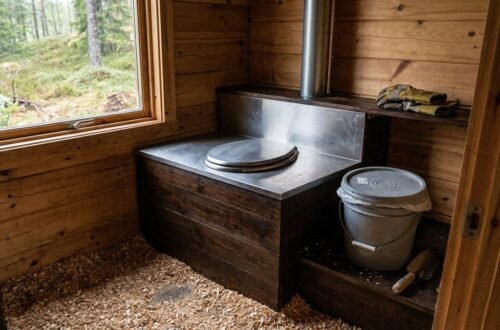
Instead of flushing with water, composting toilets separate solids from liquids and often incorporate materials like sawdust or peat moss to aid in decomposition and absorb moisture. This creates an environment where aerobic bacteria can thrive, breaking down the waste.
Types of Composting Toilets
- Self-Contained Units: These are popular for smaller off-grid setups, cabins, or RVs. They are designed to be directly used without a separate composting chamber. The waste is collected, and you’ll need to periodically empty the compost from a designated section. This often involves a bit more hands-on management, but they’re relatively simple to operate.
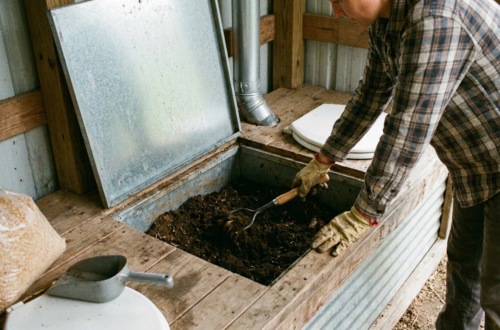
- Central or Remote Composting Systems: In these systems, the toilet is just a fixture, and the waste is piped to a larger, dedicated composting chamber that might be located some distance away. This is a good option for larger homes or situations where you want to minimize the presence of the composting process near the living area. These systems often have larger capacities and can handle more waste volume.
- Incinerating Toilets: While not strictly “composting,” these are another waterless option. They burn waste at very high temperatures, reducing it to ash. They require electricity or gas to operate and the ash still needs to be disposed of, but it significantly reduces volume. They are more expensive upfront and have higher running costs.
Managing the Output: What Happens Next?
Once the composting process is complete, the end product should be a dry, earthy-smelling material that can be safely used as a soil amendment for non-edible plants or ornamental gardens. It’s crucial to follow the manufacturer’s instructions carefully regarding when and how to empty the compost to ensure proper decomposition and safety. Proper curing time is essential to kill any pathogens.
Pros and Cons of Composting Toilets
- Pros: Significant water savings (a huge plus off-grid!), environmentally friendly, creates a valuable soil amendment, reduces reliance on septic systems.
- Cons: Requires understanding and adherence to the process (it’s not “flush and forget”), initial cost can be higher than a traditional toilet, requires periodic emptying and maintenance, not everyone is comfortable with the concept.
For those interested in sustainable living and self-sufficiency, exploring off-grid waste management options is essential. A related article that delves into another critical aspect of off-grid living is the comprehensive guide on setting up an off-grid water system. This resource provides valuable insights for beginners looking to establish a reliable water supply while living off the grid. To learn more about this important topic, you can read the article here: Off-Grid Water System Setup for Beginners.
Greywater Systems: Reusing Your Household Water
Greywater refers to wastewater from sinks (excluding kitchen sinks, which can be too greasy), showers, and washing machines. It’s called “grey” because it’s typically less contaminated than “blackwater” (from toilets). Properly managed greywater can be a fantastic resource for off-grid living, significantly reducing your overall water demand.
What Can and Can’t Go Down the Greywater Drain?
This is key. You want to avoid harsh chemicals, grease, and solids.
- Acceptable: Water from showers, bathroom sinks, laundry machines (using biodegradable detergents), and dishwashers (again, with eco-friendly soaps).
- Not Acceptable: Kitchen sink water (often contains grease and food particles), toilet water (that’s blackwater and requires different treatment), water with harsh cleaning chemicals, bleach, or antibacterial soaps.
Simple Greywater Systems: Direct Reuse
For very basic off-grid needs, you might even have a simple system where greywater is piped directly to a mulch basin around trees or shrubs. This provides irrigation and recharges the soil. However, this is only suitable for minimal use and very specific plant types.
More Advanced Greywater Treatment and Irrigation
More sophisticated systems involve filtering and treating greywater to make it suitable for a wider range of irrigation, like vegetable gardens.
Filtration Methods
- Physical Filters: Screens and gravel beds can remove larger solids.
- Biological Filters: Wetland systems or constructed wetlands use plants and microbes to break down contaminants and improve water quality. These are highly effective but require space.
Subsurface Irrigation
Once treated, greywater is often best applied subsurface to avoid direct contact with edible parts of plants and to reduce evaporation. Trench irrigation or drip systems are common.
Regulations and Considerations
It’s crucial to check local regulations regarding greywater systems. Some areas have strict rules about how greywater can be collected, treated, and used, especially if it’s near a potable water source or public areas. Even off-grid, responsible practices are paramount.
Pros and Cons of Greywater Systems
- Pros: Reduces demand for fresh water, conserves a precious resource, can reduce the size and cost of a septic system, provides irrigation for landscaping and gardens.
- Cons: Requires careful separation of greywater from blackwater, potential health risks if not managed properly, requires maintenance and occasional cleaning of filters/systems, may not be suitable for all types of gardens.
Septic Systems: The Traditional Off-Grid Approach
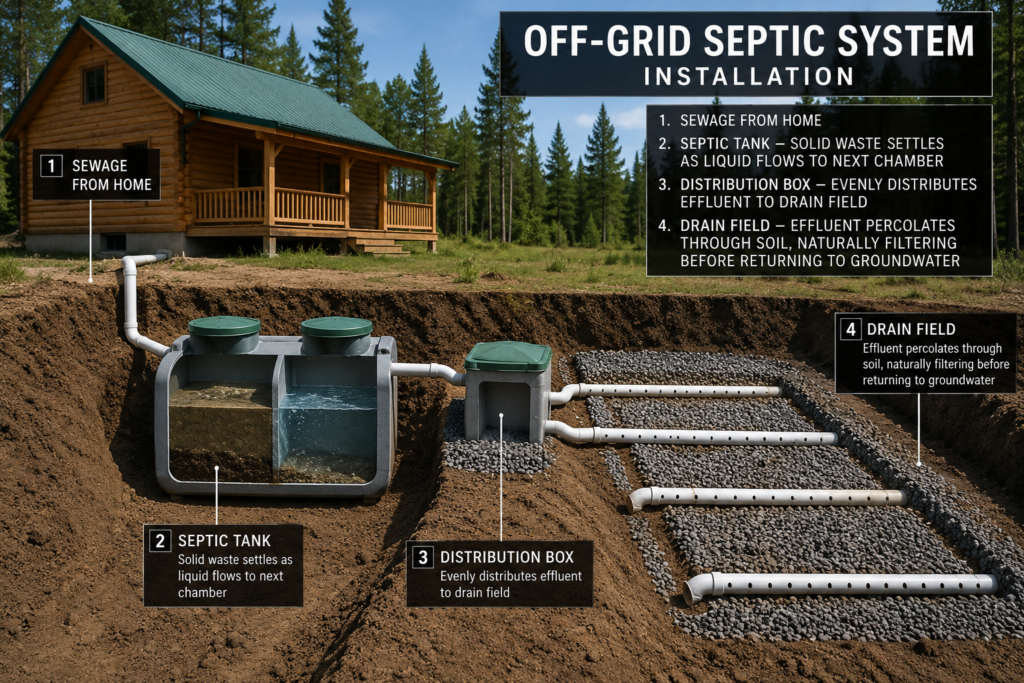
For many, especially those building a more permanent off-grid home, a septic system remains the most reliable and straightforward option for managing household blackwater and greywater together. While it’s a more conventional solution, it’s still a vital part of off-grid waste management.
How a Standard Septic System Works
A septic system consists of two main parts: a septic tank and a drainfield (also called a leach field).
- The Septic Tank: This is where all your household wastewater flows. It’s a buried, watertight container (usually concrete, fiberglass, or plastic). Inside, solids settle to the bottom (forming sludge), lighter materials like grease and oils float to the top (forming scum), and the liquid wastewater (effluent) fills the middle layer. Bacteria in the tank begin to break down some of the solid waste.
- The Drainfield: The liquid effluent from the septic tank then flows into a series of underground pipes laid in gravelly trenches. These pipes have perforations, allowing the effluent to seep slowly into the surrounding soil. The soil and the microorganisms within it act as a natural filter, removing remaining impurities before the water eventually reaches the groundwater.
Types of Septic Systems
- Conventional Septic Systems: This is the most common type, as described above, with a tank and a drainfield. They are generally the most affordable and require minimal electricity.
- Aerobic Treatment Units (ATUs): These systems introduce oxygen into the wastewater, promoting aerobic bacteria that break down waste more efficiently than the anaerobic bacteria in a standard septic tank. ATUs produce a higher quality effluent and are often used in areas with poor soil conditions or when space for a drainfield is limited. They require electricity to run blowers or pumps.
- Mound Systems: If your soil is unsuitable for a standard drainfield (e.g., shallow bedrock or high water table), a mound system can be an option. This involves building an above-ground mound of sand and gravel where the effluent is distributed, allowing it to treat the water as it percolates down. These are more complex and costly.
- Evapotranspiration (ET) Systems: These systems are designed for arid climates. The effluent is sent to a lined bed filled with sand and gravel, where plants help to draw water from the soil through their leaves (transpiration), and the remaining water evaporates from the soil surface. This system is highly effective at conserving water but requires specific climatic conditions and careful design.
Maintenance is Key!
Regardless of the type of septic system, regular maintenance is essential.
- Pumping the Tank: Septic tanks need to be pumped out periodically (typically every 3-5 years, depending on household size and usage) to remove accumulated sludge and scum. If this isn’t done, solids can enter the drainfield and clog it, leading to system failure.
- Regular Inspections: Get your system inspected by a professional every few years to check for any potential issues.
- Mindful Usage: Be conscious of what you put down drains. Avoid flushing non-biodegradable items, excessive grease, or harsh chemicals.
Pros and Cons of Septic Systems
- Pros: Proven technology, reliable for managing both black and greywater, relatively low running costs for conventional systems, can be integrated into a permanent off-grid home.
- Cons: Requires space for a drainfield, initial installation cost can be significant, requires periodic pumping and maintenance, potential for environmental contamination if not properly maintained or designed, can be affected by soil type and water table.
Biodigesters: Harnessing Biogas for Energy
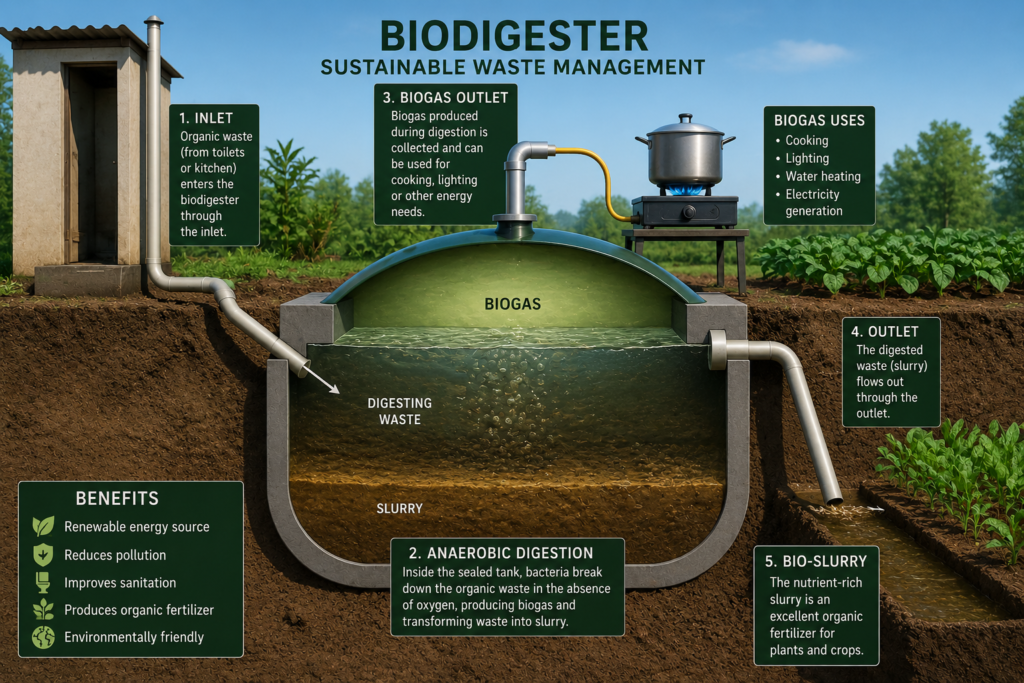
Biodigesters are a more advanced off-grid waste management option that not only handles waste but also generates a usable byproduct: biogas. This is a fantastic way to get a double win from your waste stream.
What is a Biodigester?
A biodigester is a sealed container where organic waste (humanure, animal manure, food scraps) is broken down by anaerobic bacteria in the absence of oxygen. This process produces biogas, which is primarily methane and carbon dioxide, and a nutrient-rich liquid fertilizer called digestate.
How the System Works
- Feeding: Organic waste is introduced into the digester.
- Digestion: Bacteria break down the waste in an oxygen-free environment.
- Biogas Production: Methane-rich biogas is collected from the top of the digester.
- Digestate Collection: The leftover liquid fertilizer is stored.
Using the Biogas and Digestate
- Biogas: This gas can be used for cooking, heating, or even generating electricity (though this requires more specialized equipment). It’s a renewable energy source that can significantly reduce your reliance on fossil fuels.
- Digestate: The liquid fertilizer is packed with nutrients and can be used to fertilize gardens and crops, providing a sustainable source of plant food.
Types of Biodigesters
- Small-Scale Home Digesters: These are designed for individual households, often handling waste from a few people and kitchen scraps. They are becoming more accessible and are a popular choice for those looking for energy independence.
- Larger Community or Farm Digesters: These handle greater volumes of waste, often from multiple households, livestock operations, or agricultural waste.
Important Considerations for Biodigesters
- Temperature and Environment: Biodigesters work best within a specific temperature range, so insulation or heating might be necessary in colder climates.
- Feeding Ratio: The type and proportion of waste fed into the digester can affect the efficiency of biogas production.
- Safety: Biogas is flammable, so proper handling and safety measures are crucial.
Pros and Cons of Biodigesters
- Pros: Produces renewable energy (biogas) for cooking/heating, creates valuable liquid fertilizer, significantly reduces the volume of waste, environmentally friendly.
- Cons: Higher initial cost than many other systems, requires consistent feeding of organic material, biogas needs to be managed safely, temperature sensitive, digestate can be potent and requires careful application.
For those interested in sustainable living, exploring off-grid waste management options can be complemented by understanding energy solutions as well. A related article discusses the number of batteries needed for off-grid solar systems, which is crucial for maintaining a self-sufficient lifestyle. By integrating effective waste management with reliable energy sources, you can create a more harmonious and eco-friendly living environment. To learn more about energy needs, check out this insightful piece on how many batteries you need for off-grid solar.
Waste Minimization: The First and Best Strategy
Before you even think about the systems above, the most effective off-grid waste management strategy is undoubtedly to produce as little waste as possible in the first place. This philosophy underpins much of the off-grid lifestyle.
Reduce, Reuse, Recycle (and Repair!)
This classic mantra is amplified when you’re living remotely.
- Reduce: Buy in bulk to minimize packaging. Choose products with minimal or no packaging. Avoid single-use items whenever possible. Think before you buy – do you truly need it?
- Reuse: Repurpose containers, bags, and other items. Find creative ways to give old items new life.
- Recycle: While recycling infrastructure can be challenging off-grid, it’s still worth considering for items that cannot be reused or repurposed. Plan trips to recycling centers if they are accessible.
- Repair: Instead of replacing broken items, learn to fix them. This saves money, resources, and reduces waste.
Composting Organics (Beyond Humanure)
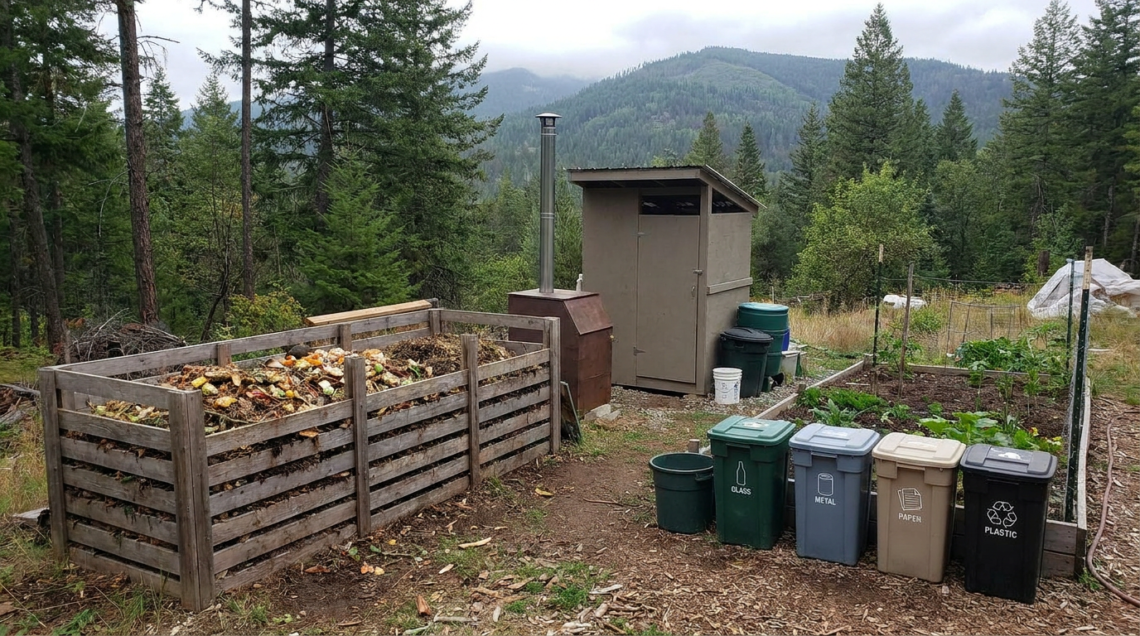
Beyond composting toilets, diligently composting all your kitchen scraps (vegetable peels, fruit waste, coffee grounds, eggshells) is vital. This reduces the amount of waste going to any potential landfill or processing system and creates valuable compost for your garden.
Conscious Consumption and Lifestyle Choices
Your everyday choices have a direct impact on your waste stream.
- Bulk Buying: Invest in storage containers and buy staples like grains, beans, and nuts in bulk.
- Reusable Bags and Containers: Make it a habit to carry reusable shopping bags, produce bags, and water bottles.
- Durable Goods: Invest in high-quality, durable items that will last, rather than cheap, disposable alternatives.
- DIY and Homemade: Making your own cleaning products, toiletries, or even some foods can significantly cut down on packaging waste.
By focusing on waste minimization, you not only reduce the burden on your waste management systems but also align with the core principles of self-sufficiency and environmental stewardship inherent in off-grid living. It’s about being more mindful and intentional with every resource you consume.
FAQs
What is off-grid waste management?
Off-grid waste management refers to the management of waste in areas that are not connected to the main electricity or water supply. This can include rural areas, remote locations, or off-grid homes and properties.
What are some off-grid waste management options?
Some off-grid waste management options include composting, incineration, and recycling. Composting involves the natural decomposition of organic waste, while incineration involves burning waste at high temperatures. Recycling involves reusing materials to create new products.
What are the benefits of off-grid waste management?
Off-grid waste management helps to reduce the environmental impact of waste by minimizing the amount of waste sent to landfills. It also promotes sustainability and self-sufficiency in off-grid communities.
What are the challenges of off-grid waste management?
Challenges of off-grid waste management include limited access to waste disposal facilities, lack of infrastructure for recycling and composting, and the need for alternative waste management solutions in remote areas.
How can off-grid waste management be implemented effectively?
Off-grid waste management can be implemented effectively through education and awareness programs, community involvement, and the use of appropriate waste management technologies and practices. It is important to tailor solutions to the specific needs and resources of each off-grid location.